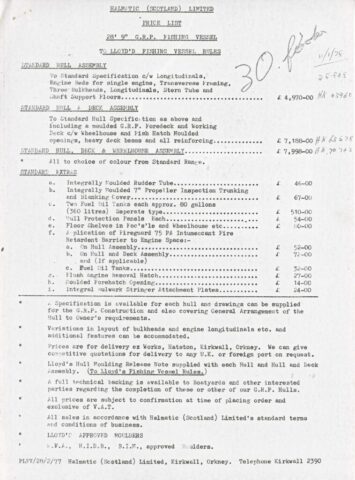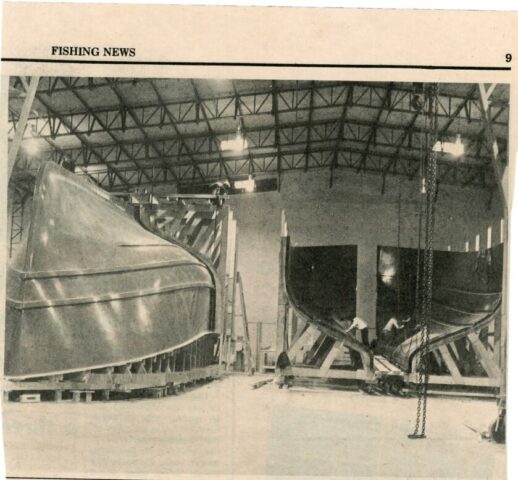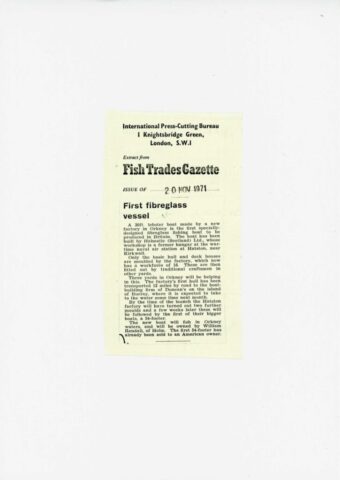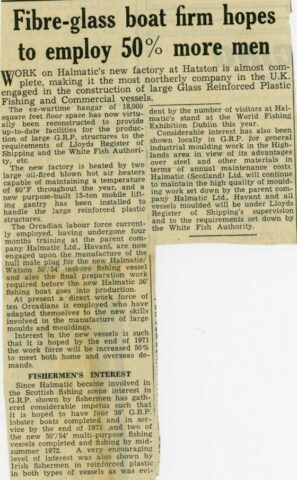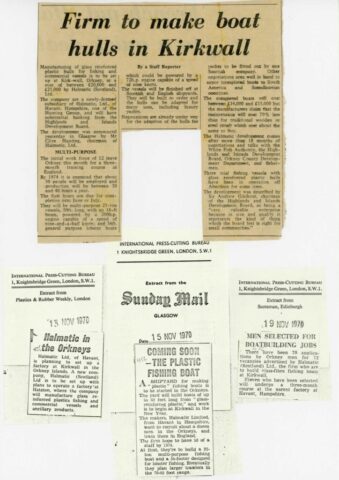

Halmatic Ltd, a major Glass Reinforced Polyester (GRP) boat building company based in Havant, Hampshire, decided in 1968 to explore the possibility of diversifying their operations by building fishing vessels in GRP—a material that had seen few attempts in this application at the time.
By late 1969, the company’s research was completed, and the final report concluded that GRP could be readily fabricated to build fishing vessels up to 60 feet in length, with adequate strength and a life expectancy of 15 to 18 years.
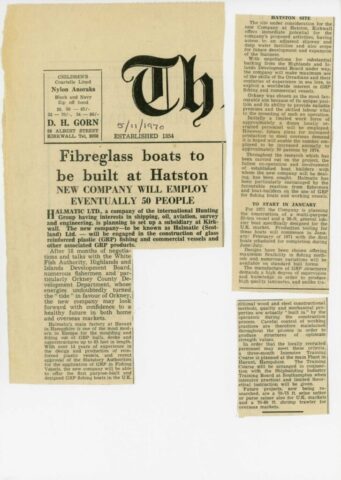
In July 1969, the decision was made to proceed with the new company in Orkney, named Halmatic Scotland Ltd.
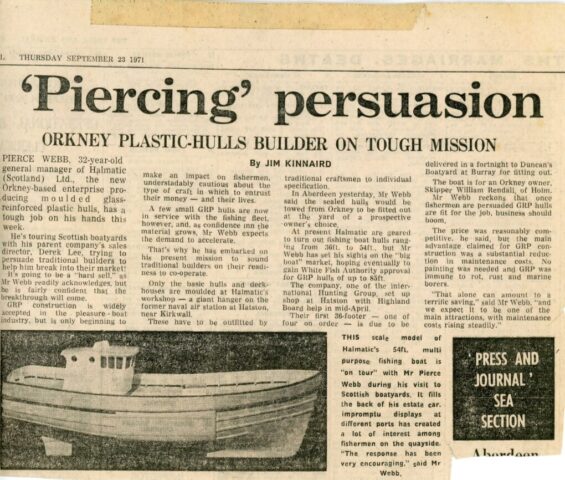
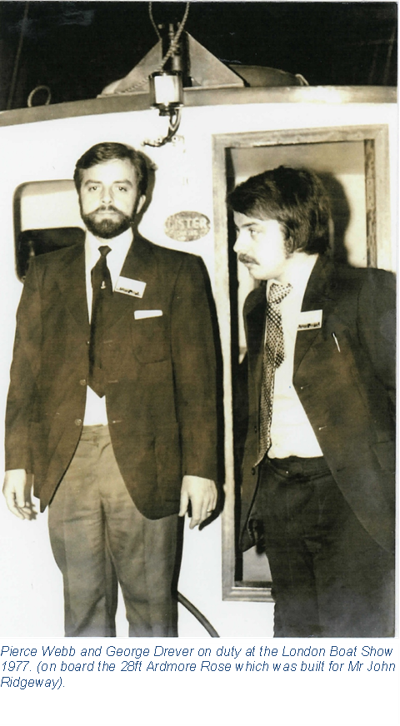
Pierce Webb
A Halmatic chief designer and workshop manager, Mr Pierce M P Webb (12/12/1939 – 15/03/1997) at 29 years old, was assigned the task of establishing the GRP boatbuilding factory in Orkney. (More on Pierce further on in this article).
George Drever
Soon after the factory went into production George Drever joined the workforce, initially as a laminator, but soon was tasked with establishing a design and drawing office in the factory
He spent the rest of his time at Halmatic designing and drawing everything the factory produced.
George was Pierce’s main man and worked very closely with Pierce on all their projects.
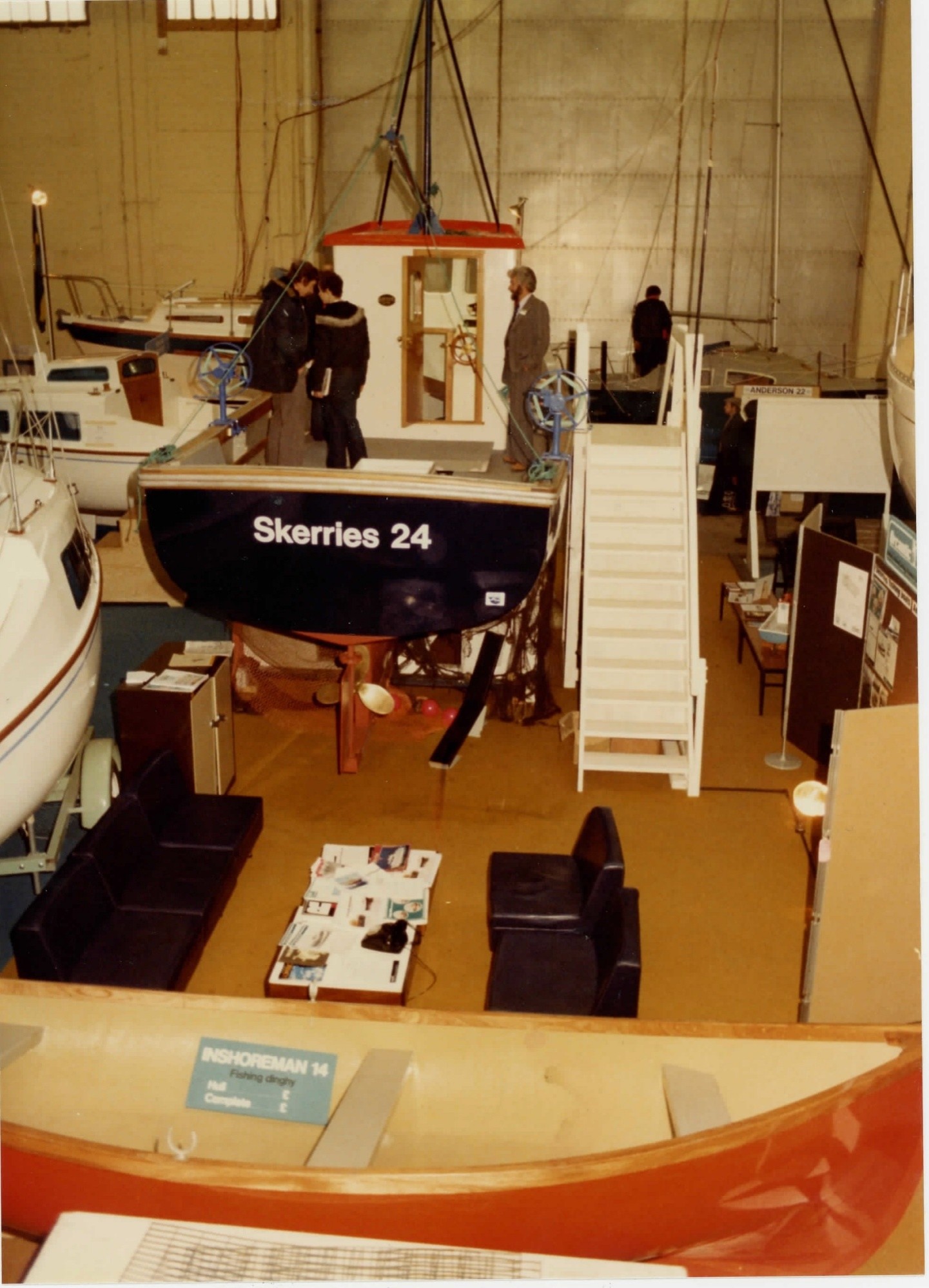
George accompanied Pierce on promotional visits to various Boat Shows to exhibit the Halmatic range of fishing boats.
George even went to Iceland to help a team establish a GRP boatbuilding Factory
Listen to George talk to Jimmy Clouston about his time at Halmatic.
Pierce Michael Patrick Webb
Birth: 12/12/1939 — Samford, Suffolk
Death: 15/03/1997 — Kirkwall, Orkney, Scotland
Mother: Olive Ellen Farthing. 1899–1993. Born in Dovercourt, Essex, England, in 1899.
Father: Harry Burgell Webb. 1899–1972. Born in Great Yarmouth, Norfolk, in 1899.
Pierce enjoyed a privileged upbringing in unusual surroundings which were to influence the rest of his life. His father, Harry Burgell Webb, was Estates Manager of the Royal Hospital School in Holbrook, an independent school steeped in naval tradition. Although Pierce was not a pupil there, the family lived within the school grounds, giving him full access to its facilities and an early connection with the maritime world that would shape his future.
In July 1961, Pierce married Clara R. Bird in Maldon, Essex, beginning a family story with strong ties to Orkney. Clara’s mother was a Duncan from the islands, and her parents had first met there during the war. While serving in the forces and stationed in Orkney, Clara’s father attended a weekly evening art class, where he met her mother. After the war, she moved south to make her home in Burnham-on-Crouch.
Shortly before his 17th birthday, Pierce embarked on a five-year indentured apprenticeship as a naval architect and surveyor, including two years of practical boatbuilding experience. After completing his apprenticeship, he remained with Alan H. Buchanan Ltd, Naval Architects and Surveyors, working as a design draughtsman.
A new chapter began in 1964, when Pierce joined Halmatic Ltd in Portsmouth as a project engineer, developing designs for new ventures. His progress was swift: he advanced first to chief designer and then to works manager, taking charge of all GRP moulding and fitting-out work.
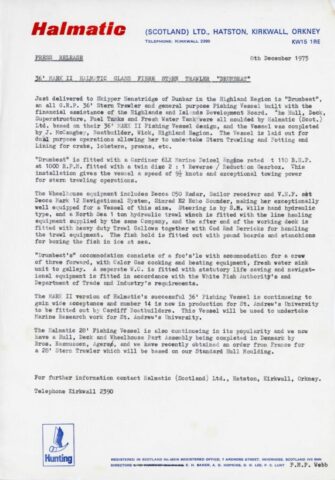
By 1969–70, Pierce’s work was drawing him north. A secondment to the Fishing Vessel Project led him to establish Halmatic (Scotland) Ltd at Hatston in Kirkwall, Orkney, where the project pioneered the use of GRP in the UK fishing industry. As general manager and director, Pierce’s role extended far beyond design: he also took responsibility for marketing, production and finance.
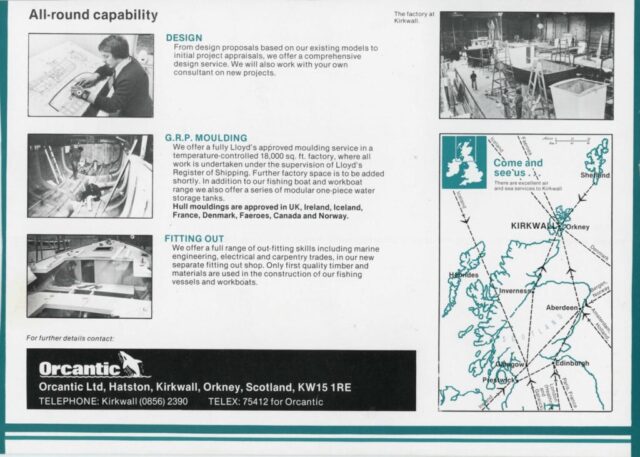
His responsibilities continued to grow. In 1976–77, Pierce became managing director of Orcantic Ltd, a company formed in partnership with OIC to complete Halmatic GRP hulls. Under this arrangement, the company secured a contract in Iceland to supply moulds and help establish a GRP plant in the north of the country.
When Halmatic (Scotland) Ltd, also known as Orcantic, went into liquidation in 1979, Pierce’s career took him even farther afield. He joined Dashwood Shipyard Co. Ltd in Hong Kong, an offshoot of Halmatic Ltd, initially as a consultant. Before long, he was appointed managing director, and his wife and family, Fiona, Catherine and Philip, later joined him to begin a new chapter of family life in Hong Kong.
In 1985, the family returned to Orkney. Pierce joined John Jolly Orkney, shipping agents, while also establishing his own consultancy, Sinolink Associates Ltd of Orkney. The work brought him into a range of projects, including the ambitious lengthening of the whitefish trawler Orkney Reiver (K49) in the mid-1980s. Owned by Tam Harcus and his partners in Westray, the vessel was extended from 80 feet to 95 feet.
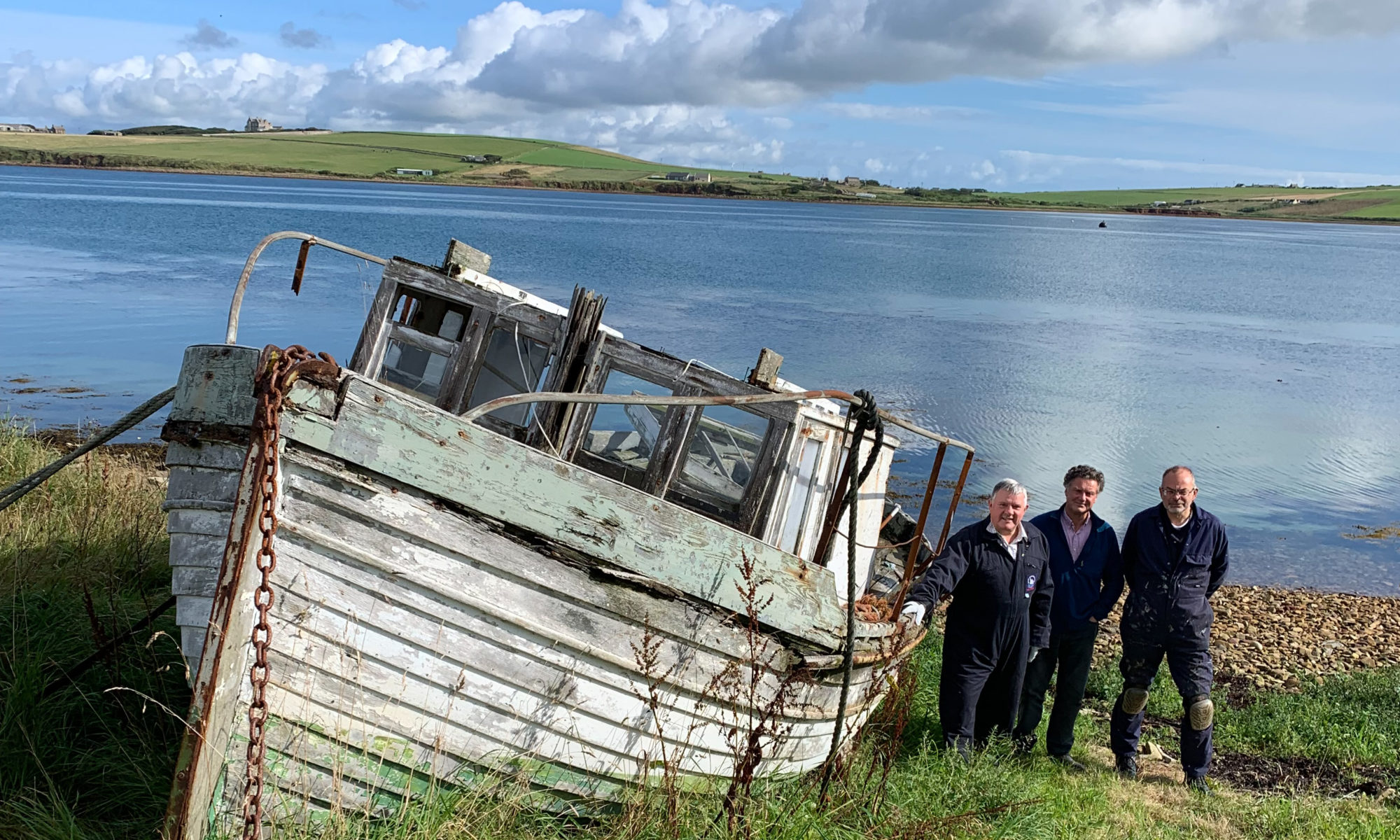
Away from his professional work, Pierce’s fascination with the sea never faded. He loved boats and maritime subjects, and he took a keen interest in the fishing industry—its history, customs, characters and craft. In 1993, that lifelong enthusiasm inspired him to purchase a classic Orkney yole in need of restoration from Roy Marsden of Linkshouse, Westray.
Pierce’s life came to a sudden and untimely end in 1997, when he died at the age of 58. His death was all the more unexpected because he was a fit man who exercised regularly and neither smoked nor drank. He left behind a life defined by family, enterprise, and an enduring devotion to the sea.
HALMATIC
(SCOTLAND) LIMITED
Hatston, Kirkwall, Orkney, Scotland.
P. M. P. Webb
Director and General Manager
Business: 0856 2390
Home: 0856 2566
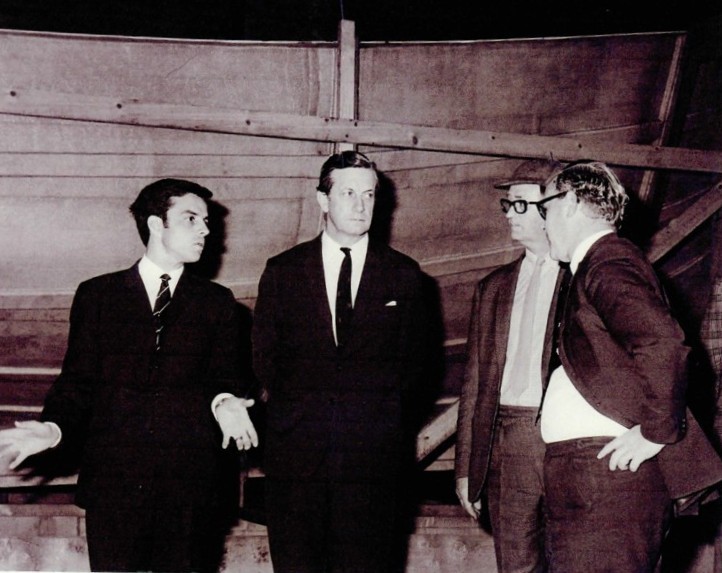
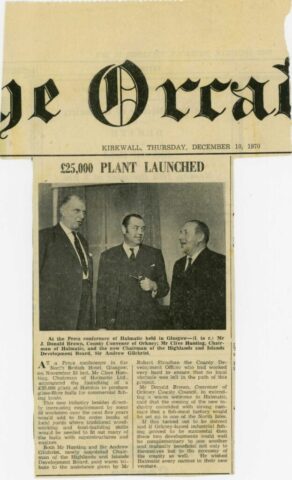
A young Mr Pierce Webb (left) in early conversation on the future Halmatic (Scotland} Ltd venture
Halmatic (Scotland) Ltd – 1968 – July 1979
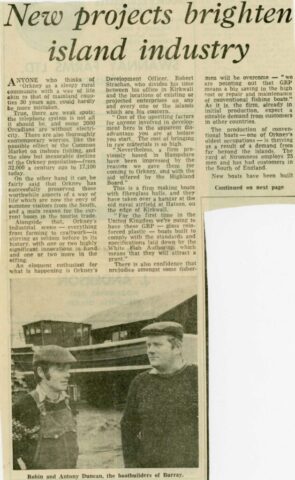
Mr Pierce M P Webb was 29 years old when he came to Orkney to establish a GRP boatbuilding factory. At that time Orkney was the major Centre for building wooden inshore fishing boats with four busy building yards all producing the classic Orkney inshore fishing boats. These boatyards were getting orders from all over Britain. Pierces’ wife had Orkney connections (her mother was a Duncan to name) which made the move almost a homecoming for the family.
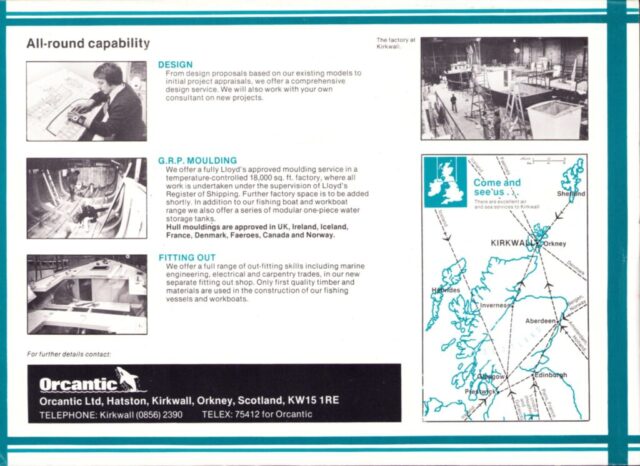
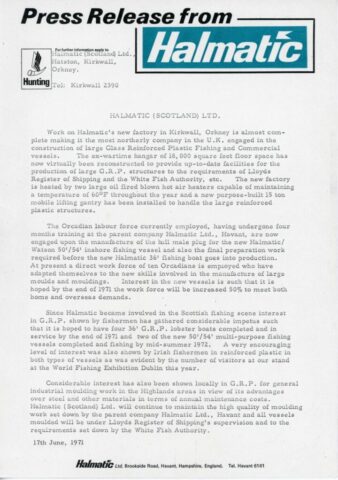
Halmatic Ltd, a major glass reinforced polyester (GRP) boat building company based in Havant, Hampshire, decided in 1968 to explore the possibility of diversifying their operations by building fishing vessels in GRP—a material that had seen few attempts in this application at the time. Halmatic Ltd was already a leading manufacturer in the moulding and completion of a range of GRP yachts, pilot vessels, and launches. The company initiated an extensive investigation and research program in 1969 to assess the viability of producing GRP fishing boats. This program included laboratory tests into the structural properties and long-term durability of GRP, as well as a countrywide survey of the inshore fishing industry, which involved visits to many fishing ports, companies, and cooperatives to gauge the reaction of end users to GRP as a construction material.
Meetings were held with the White Fish Authority (now SFIA), the Department of Trade and Industry, and Lloyds Register of Shipping to establish acceptable construction standards for the proposed vessels, ensuring compliance with national and international regulations. The Highlands and Islands Development Board (HIDB) and the Scottish Office for Trade and Industry were consulted to determine the extent and location of development areas with financial incentives for new industries. Local authorities in Scotland with active fishing industries were approached to research possible sites for the development, and the Department of Employment and local authority development departments were involved to locate areas with available labour resources and necessary skills. Desk research was also conducted to identify markets and likely competition.
By late 1969, the company’s research was completed, and the final report concluded that GRP could be readily fabricated to build fishing vessels up to 60 feet in length, with adequate strength and a life expectancy of 15 to 18 years. The report noted that fishermen and fishing companies were extremely conservative and held some prejudices against new materials and products. However, younger fishermen entering the industry were more open-minded and willing to try new materials, designs, and products, suggesting that acceptance of GRP would be slow and require aggressive marketing. The development was recommended to be sited within the main home market for the completed vessels, namely Scotland. Statutory government departments generally encouraged the development of GRP in the fishing industry and indicated full cooperation on construction safety standards, with support available through grants and loans to potential customers. The HIDB expressed willingness to assist any venture bringing GRP boatbuilding technology to their area with financial grants and loans.
Due to restrictions on their own investment, Halmatic concluded that constructing new buildings was not feasible, so existing buildings would have to be adapted or modified. Two sites were researched: Nigg in Ross and Cromarty, which had a small building and slipway needing extensive renovation and repairs, and the building and public slipway at Hatston, Kirkwall, Orkney. The Hatston site was proposed as it more adequately fulfilled the needs of the development, despite concerns about its remote location and distance from suppliers. Orkney offered an excellent building and slipway needing little repair or modification, a tradition in boatbuilding skills, an adequate supply of skilled and semi-skilled labour, other boatbuilding concerns that could complete the moulded hulls, and adequate power and water services. The main disadvantages were its distance from raw material suppliers and some markets, but these were not considered insurmountable at the time.
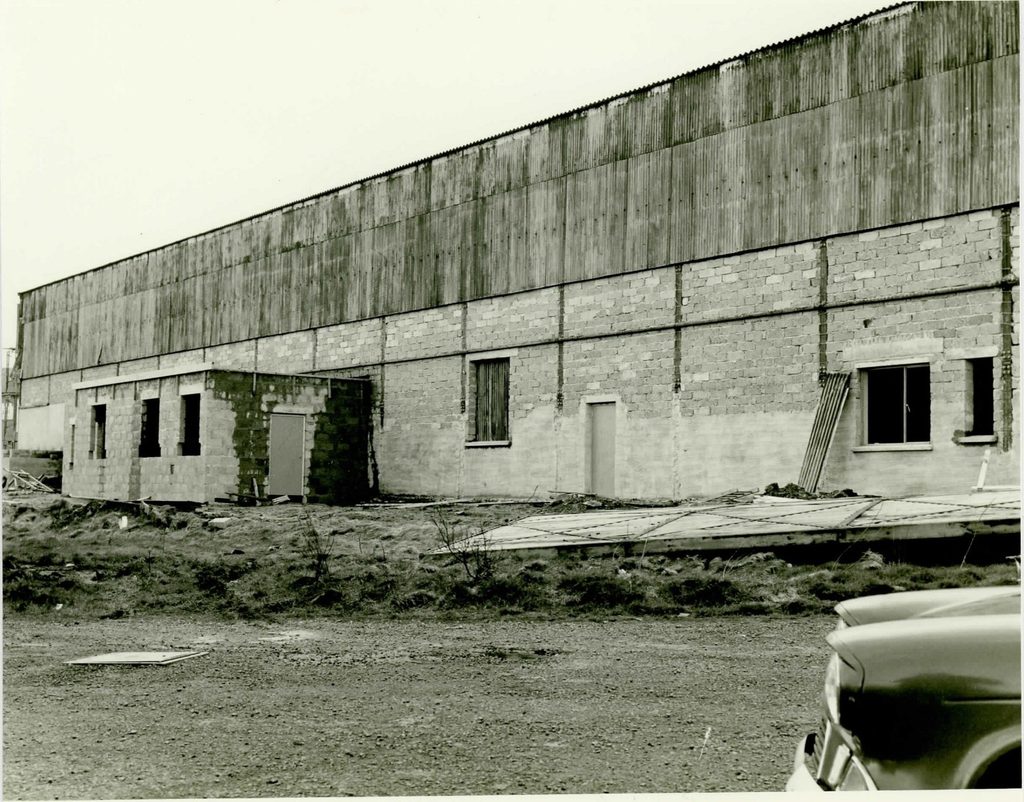
The ‘Halmatic Hangar’. All corrugated sheeting was removed and infilled with blocks by Orkney Builders. A new roof and large doors on the front of the building were also fitted.
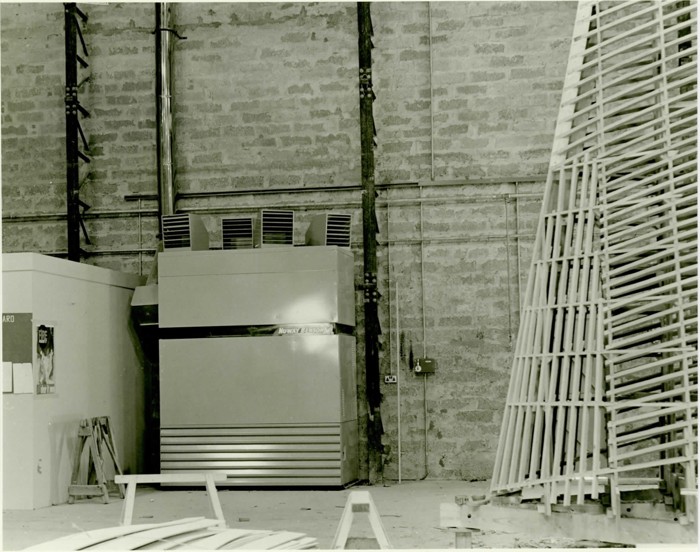
One of the two diesel fired heaters/ blowers which were installed to temperature control the building
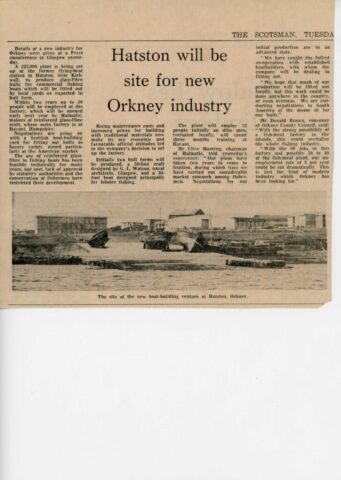
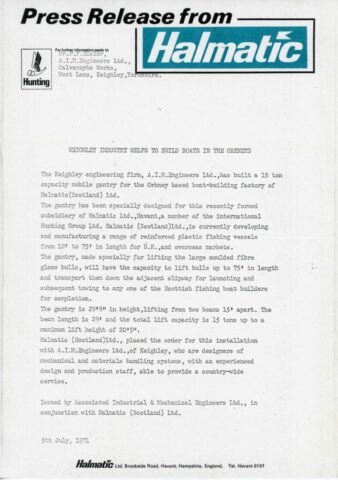
In July 1969, the decision was made to proceed with the new company in Orkney, named Halmatic Scotland Ltd. The old wartime hangar at the top of the Hatston slip was made available, and work began on stripping the old steel cladding and rebuilding the walls with concrete blocks, along with adding a new roof.
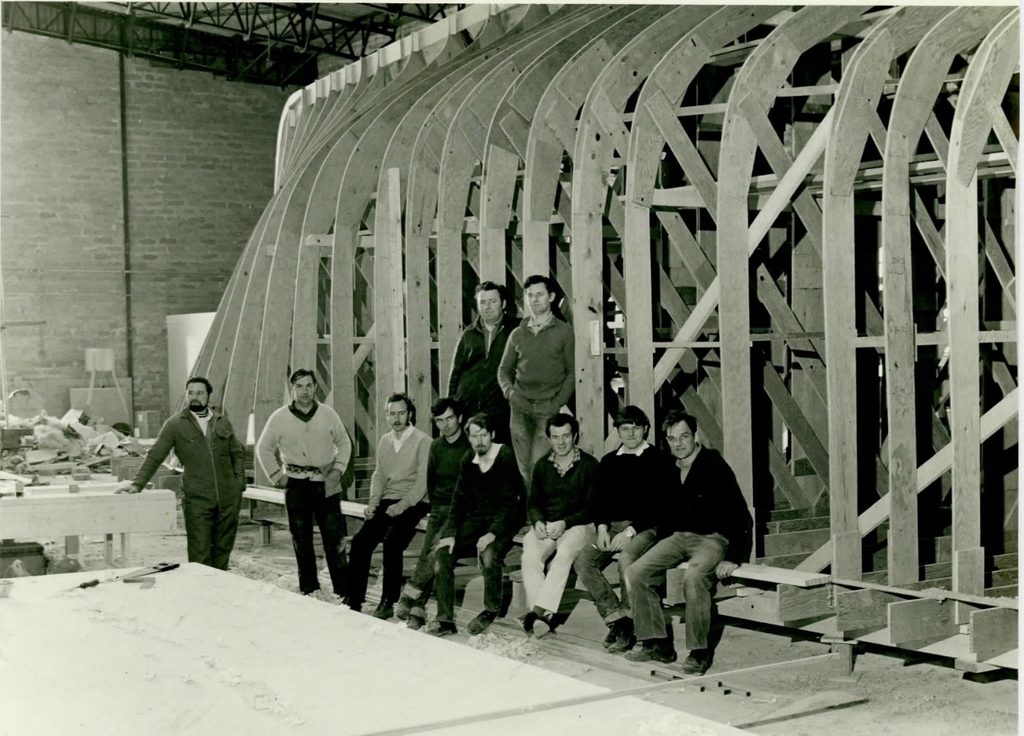
The original crew that trained for three months in 1970 in Halmatic’s factory in Havant prior to starting in Orkney.
Back row-from left to right – Jim Tait, Jim Scott Standing-Alistair Macleod, Fred Linklater
Seated – Geoff Davies (foreman Ex Havant), George Rosie, John Miller, Colin Eunson, Lenny Scott, Maurice Robertson. Missing- Denis Leonard
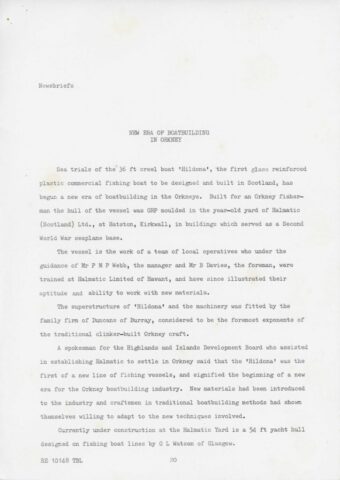
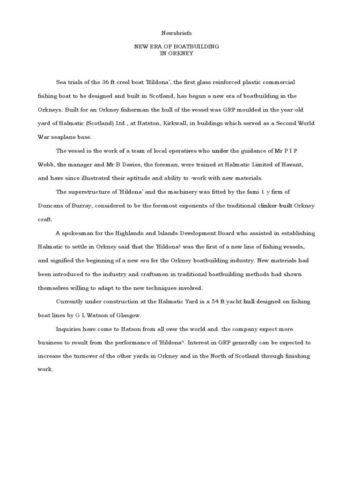
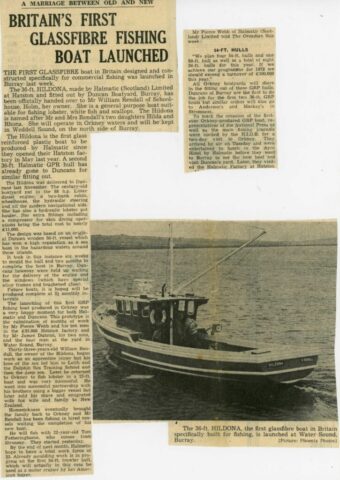
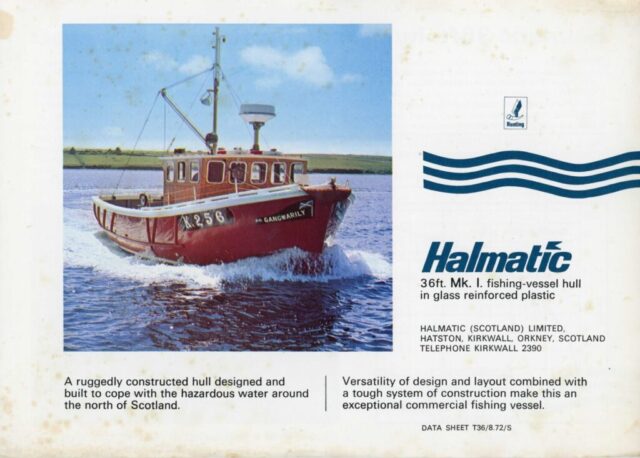
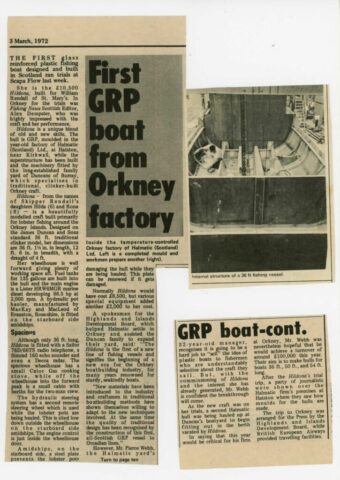
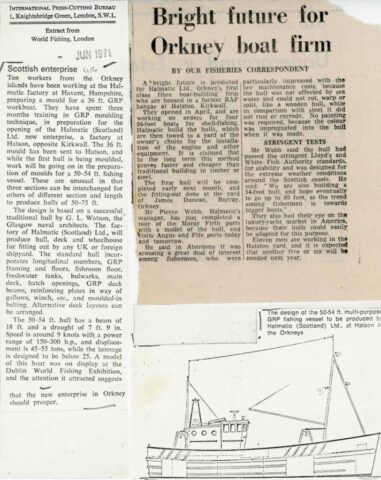
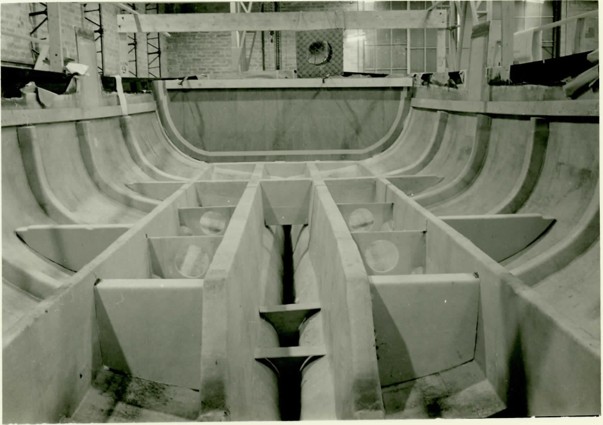
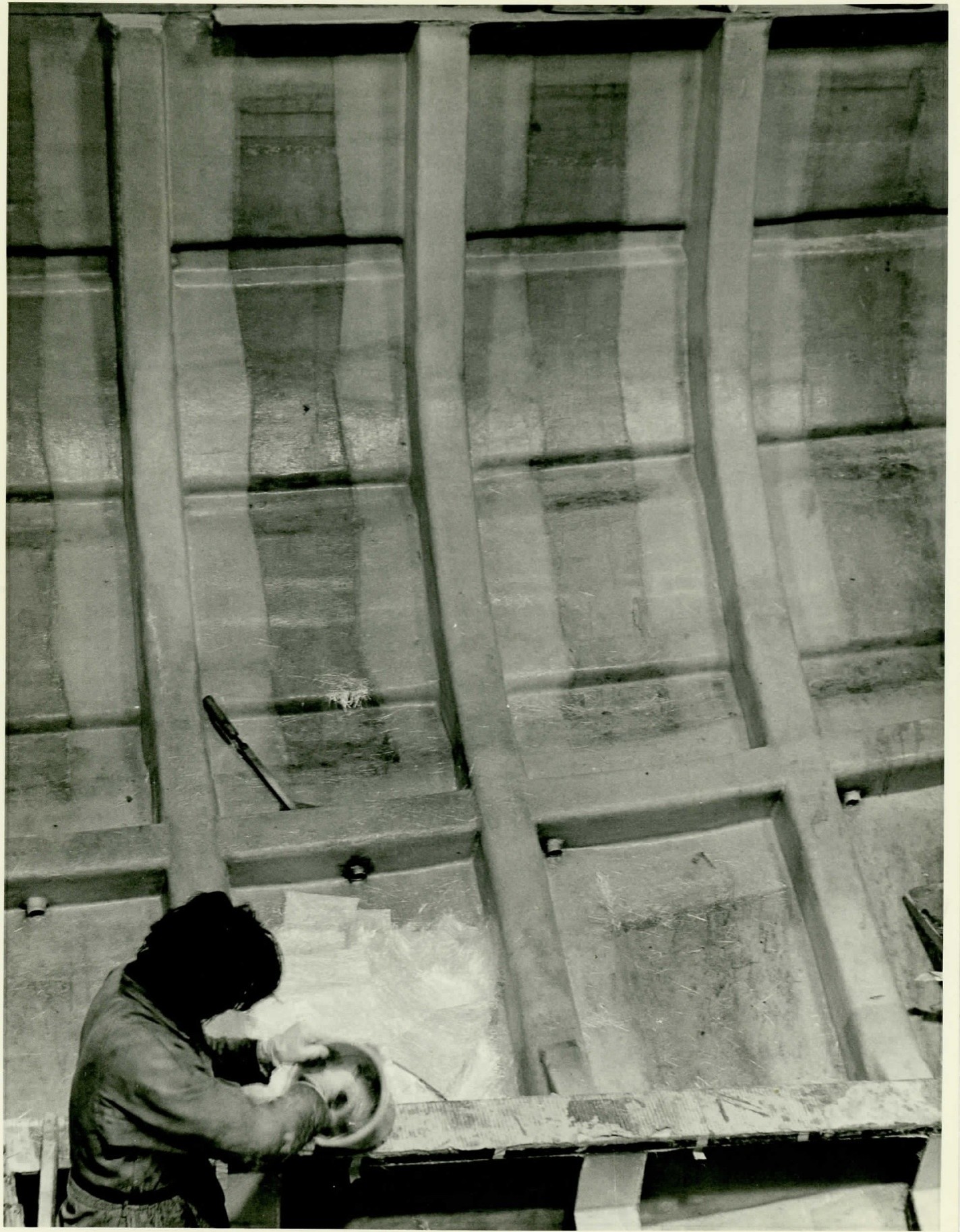
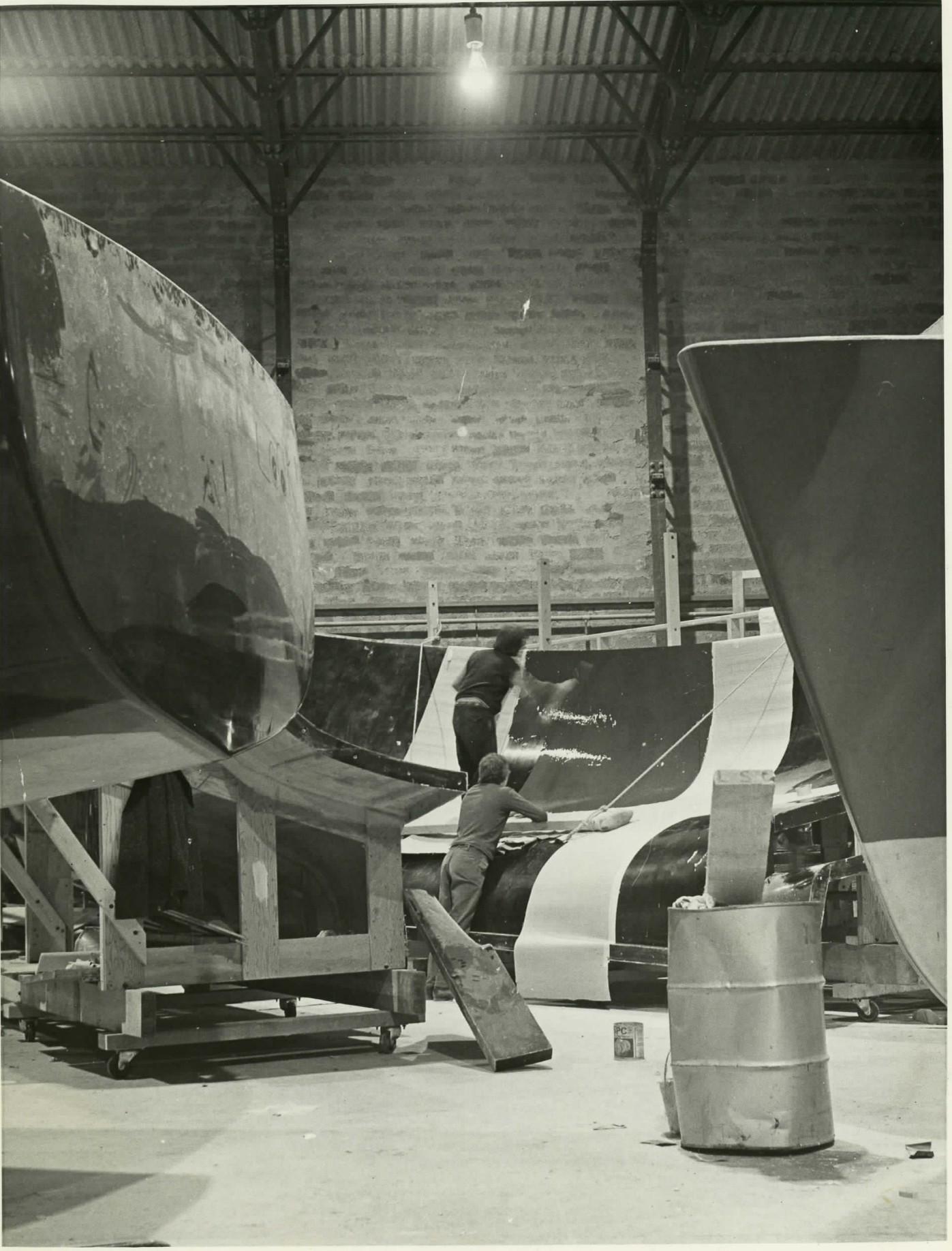
Recruitment for the initial labour force began in September 1969, with over 120 applications for 10 jobs. The selected 10 were sent to Havant, Hampshire, for approximately four months in early November 1969, where they underwent intensive on-the-job training, including making the male plugs and female moulds for the first vessel to be produced—a 36-foot creel boat. The lines for this boat were taken from a Duncan’s of Burray design and slightly adapted. Grants for the training program were received from the Department of Employment, and a progressive system of measuring progress was implemented to ensure high achievement standards for each trainee. One of the original 10 failed the halfway progress test and was replaced.
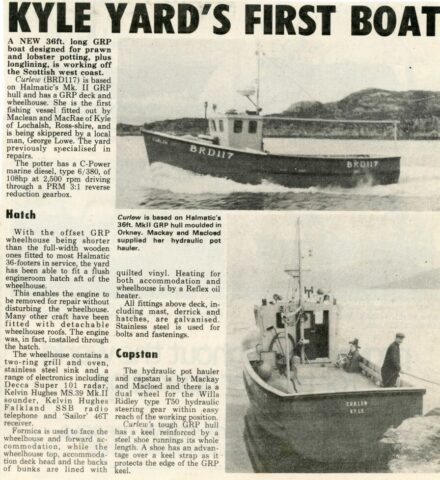
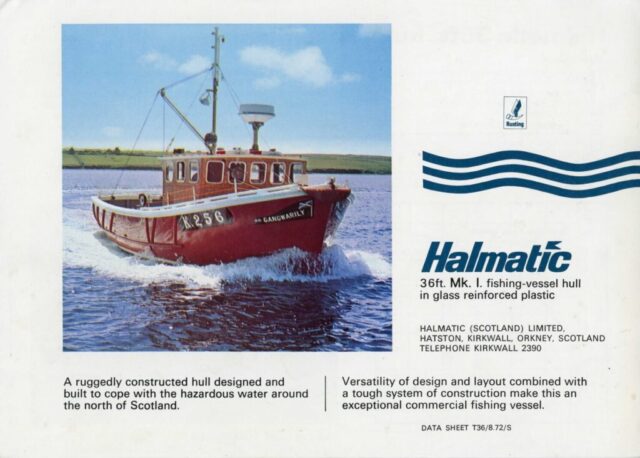
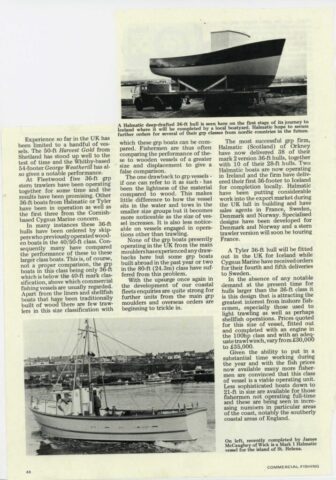
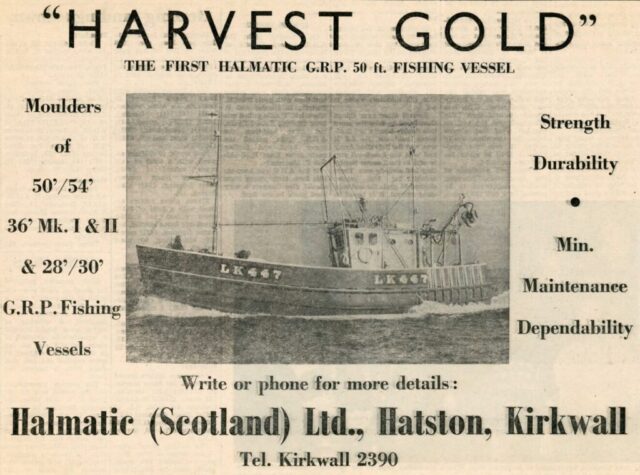
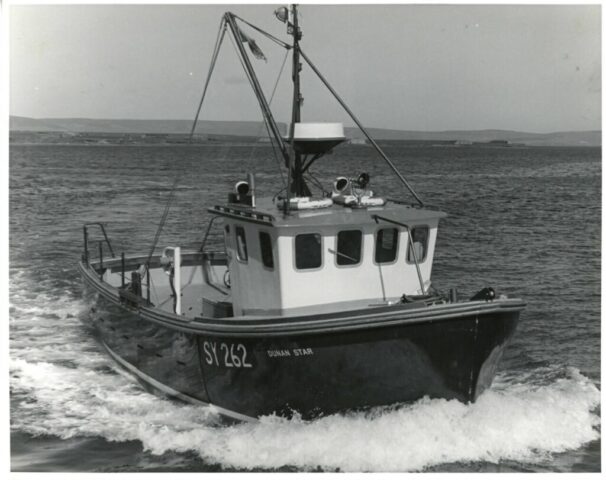
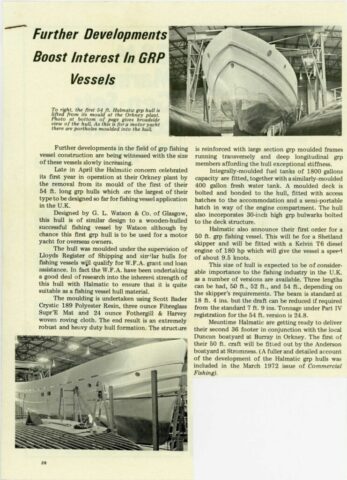
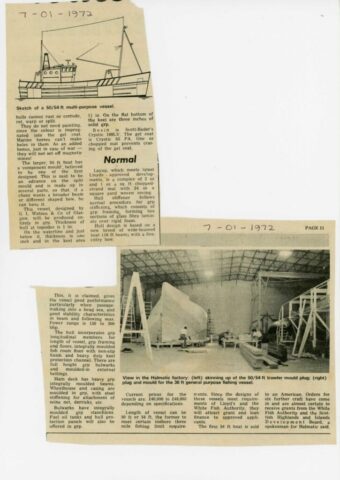
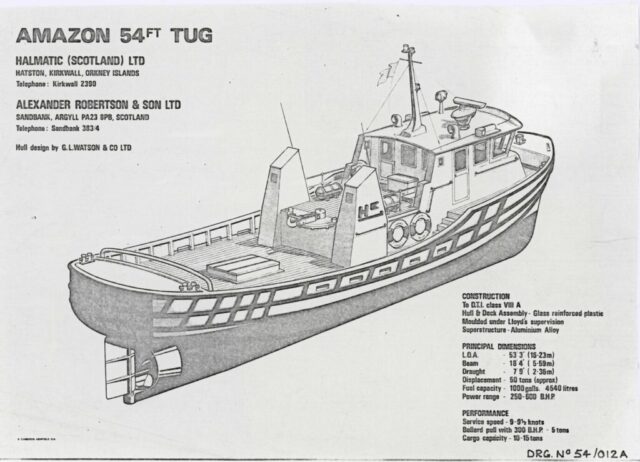
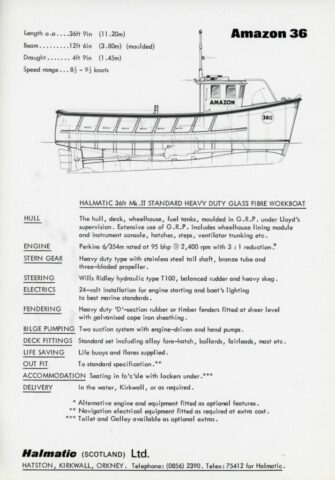
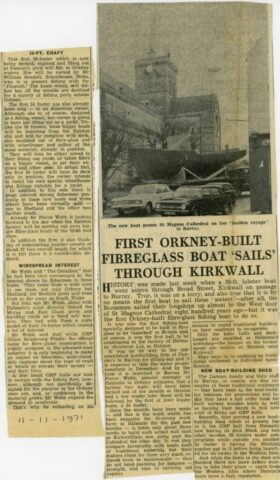
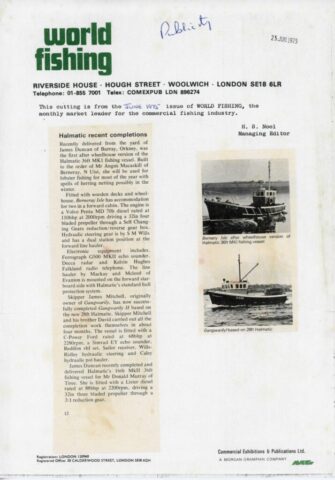
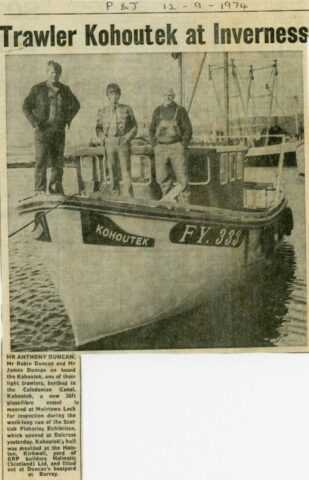
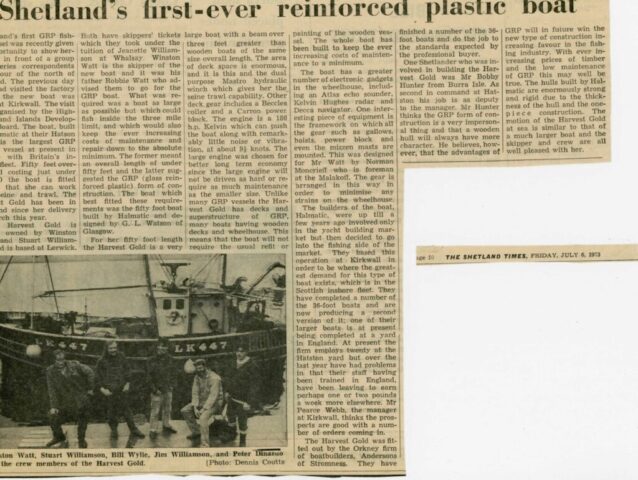
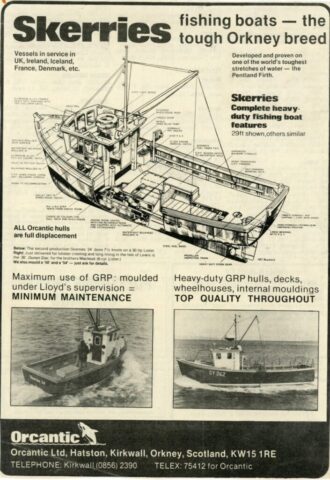
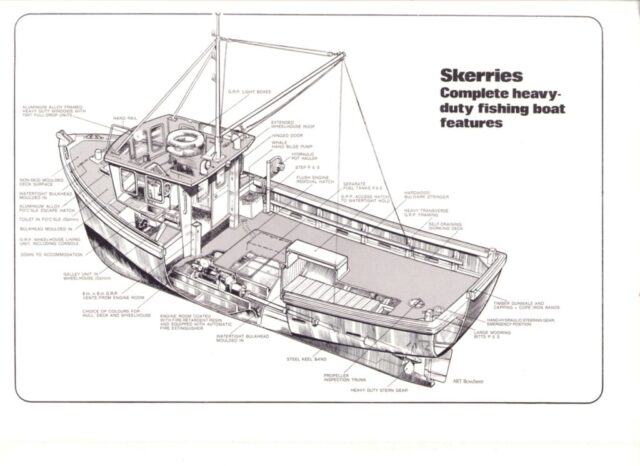
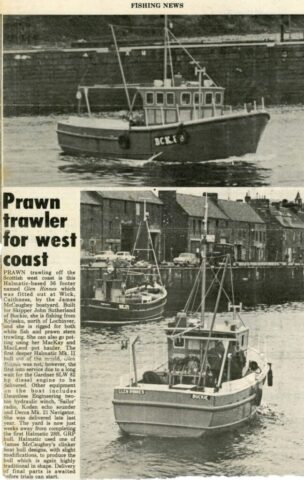
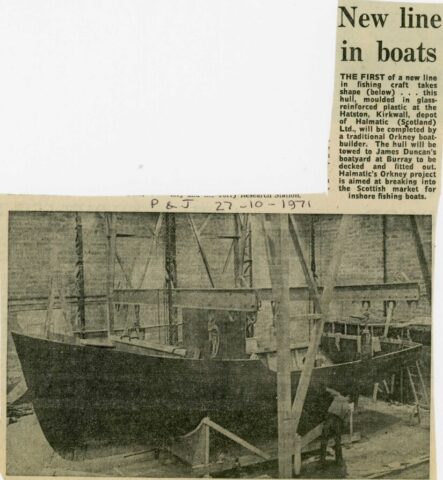
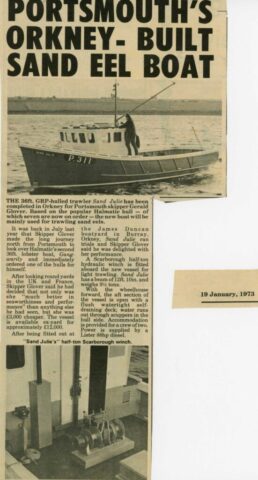
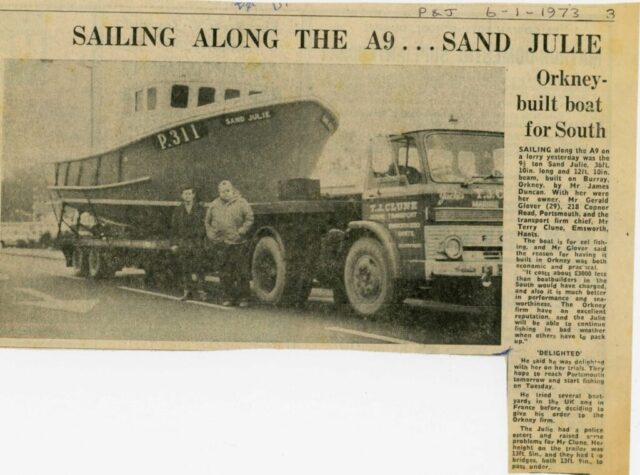
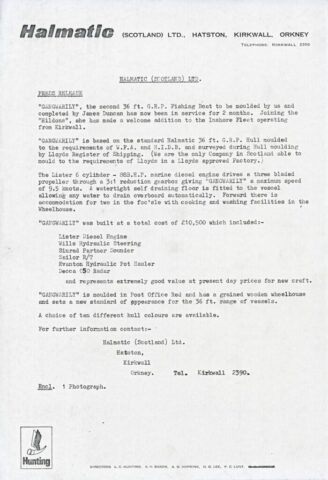
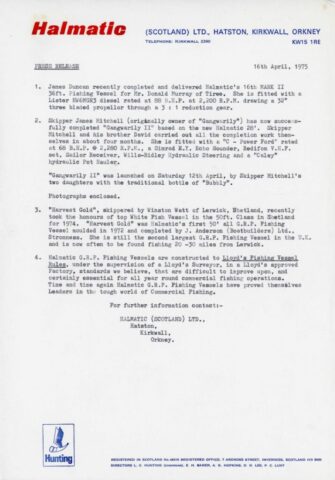
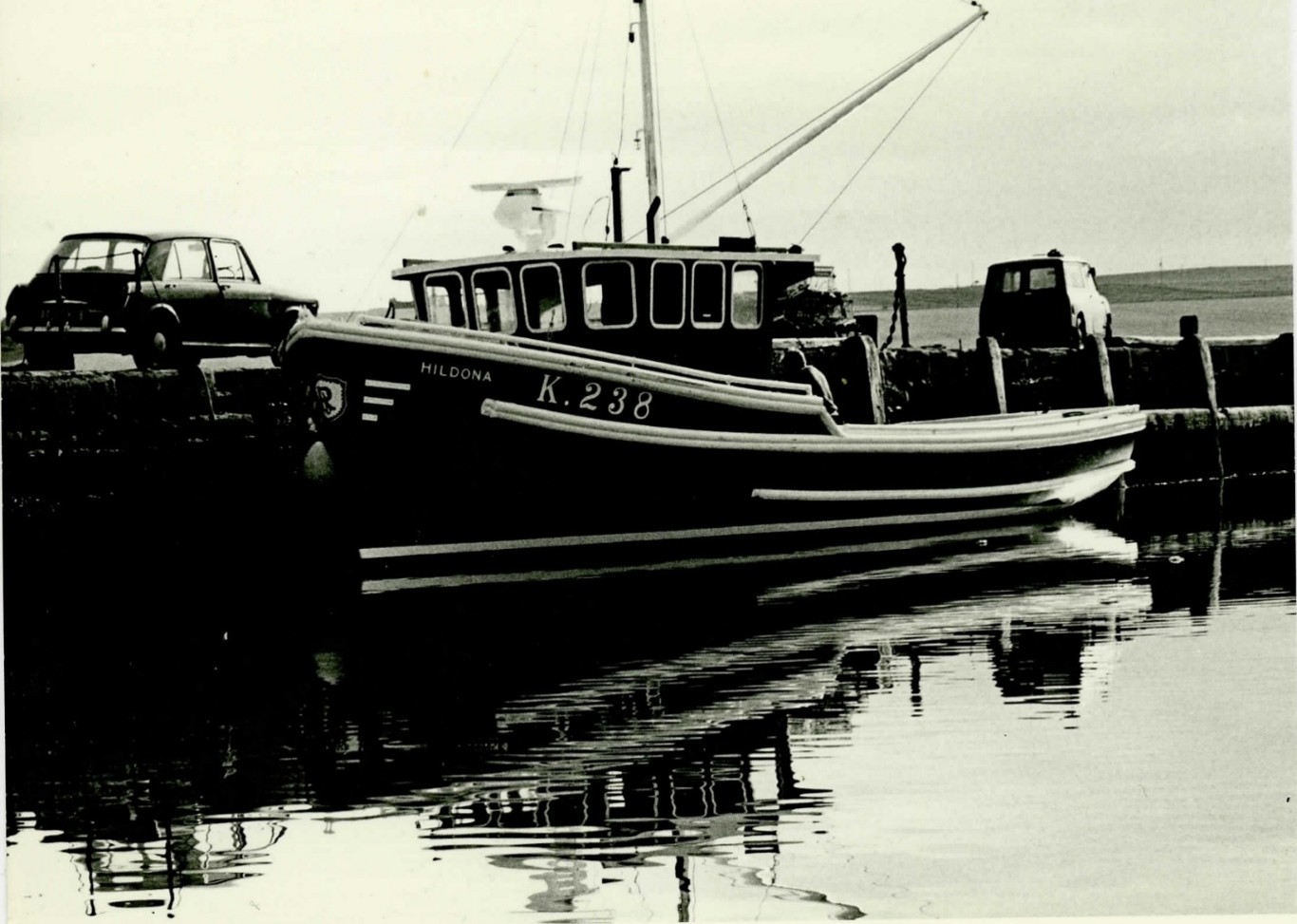
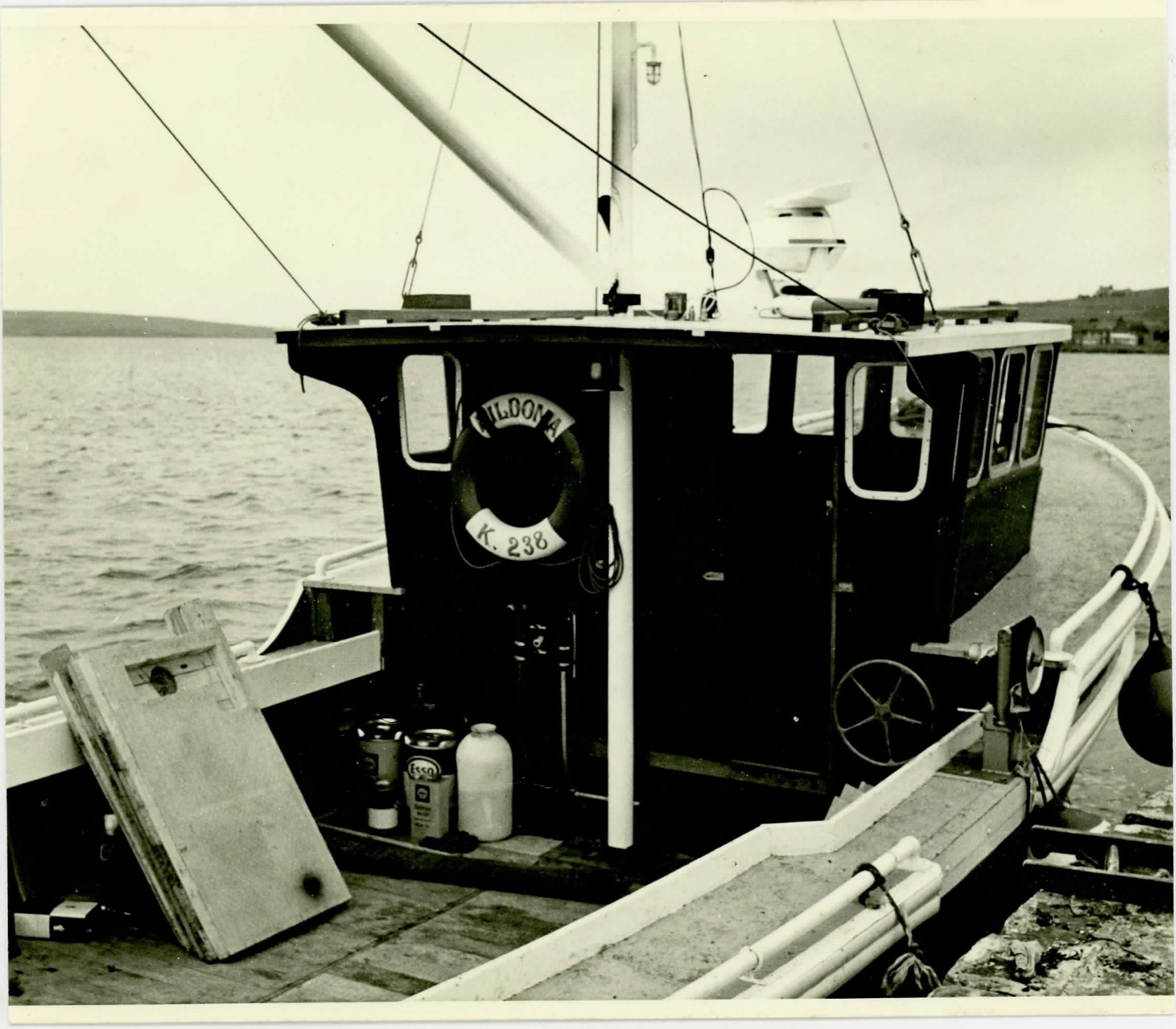
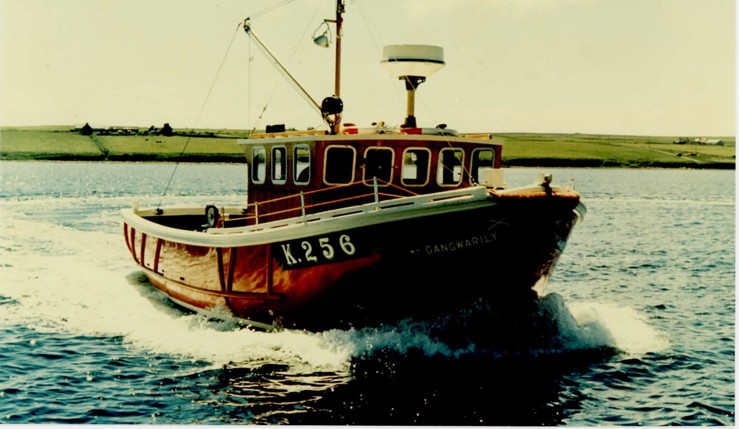
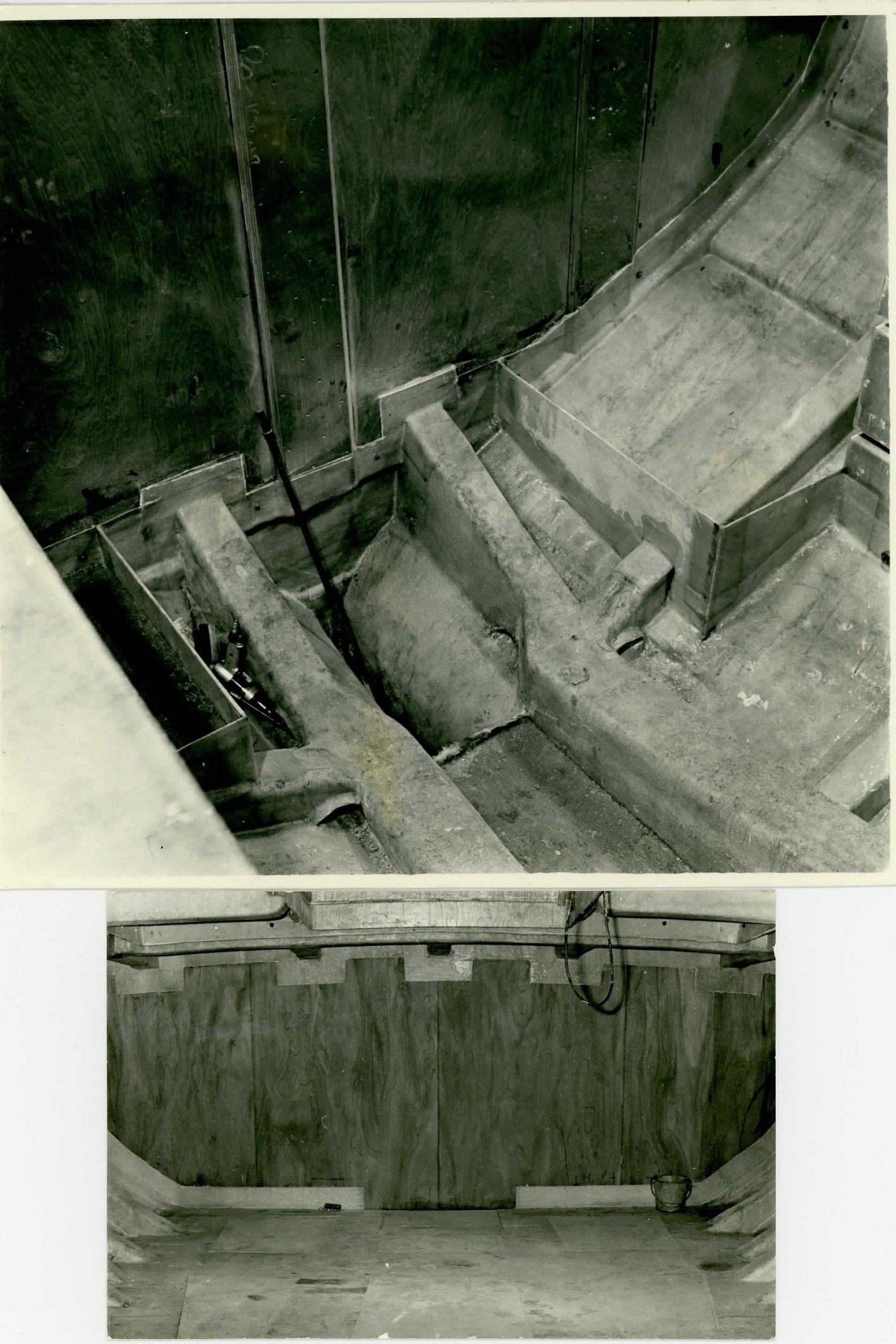
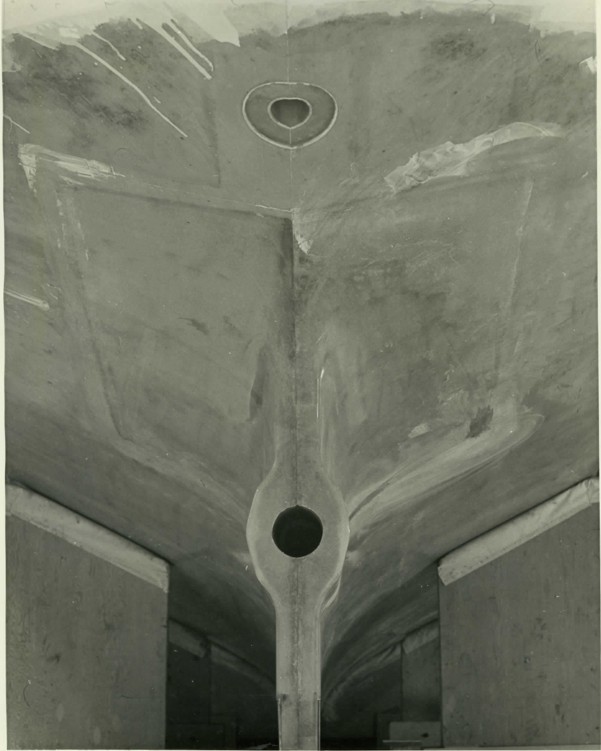
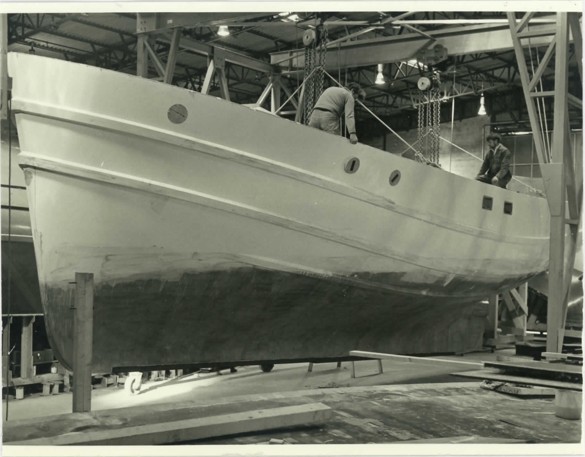
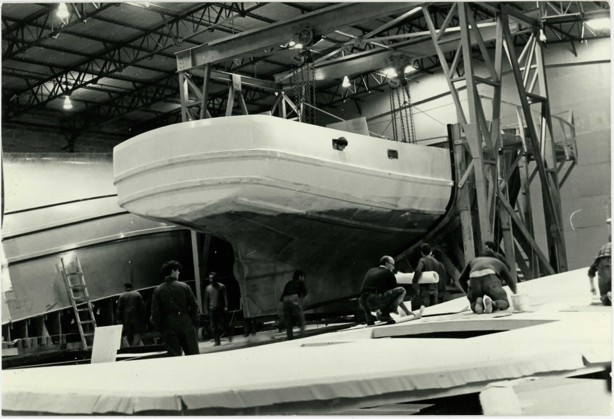
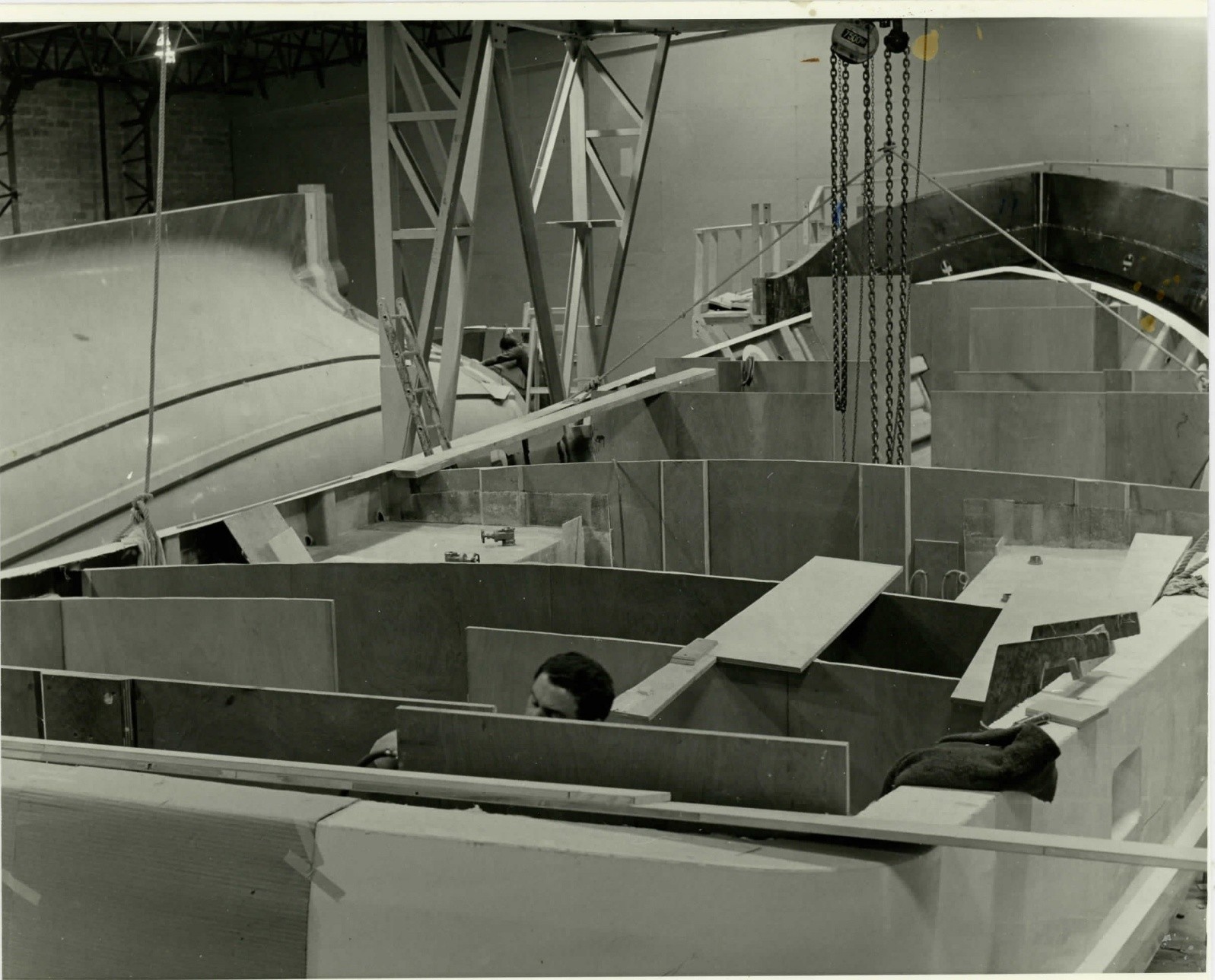
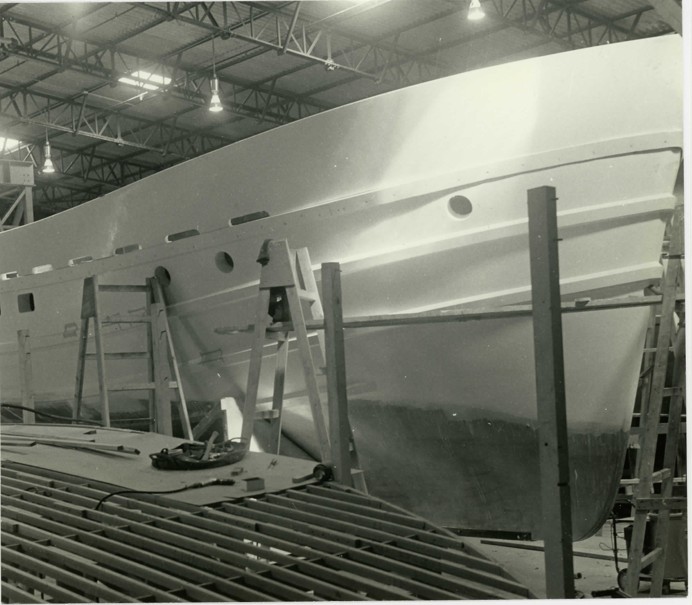
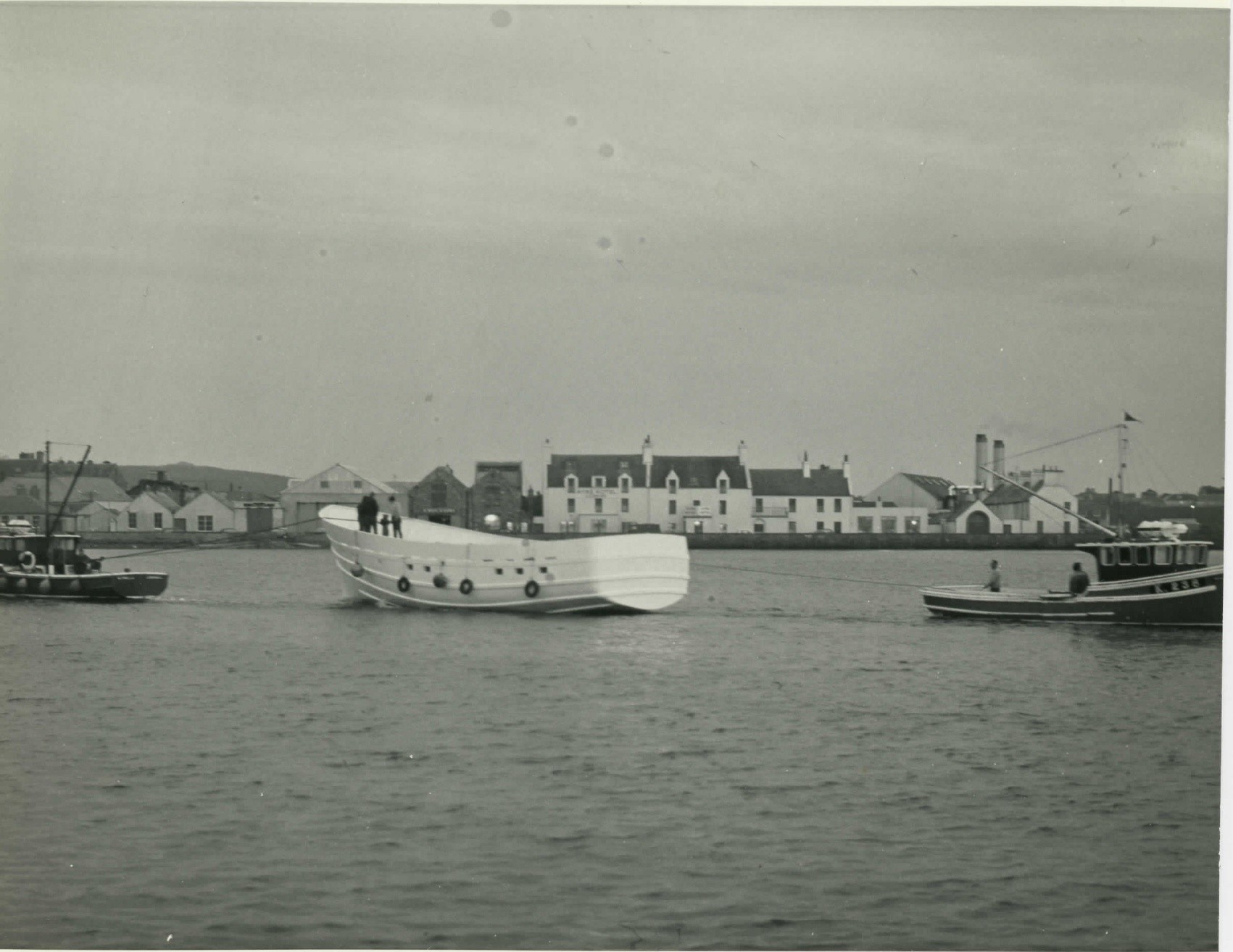
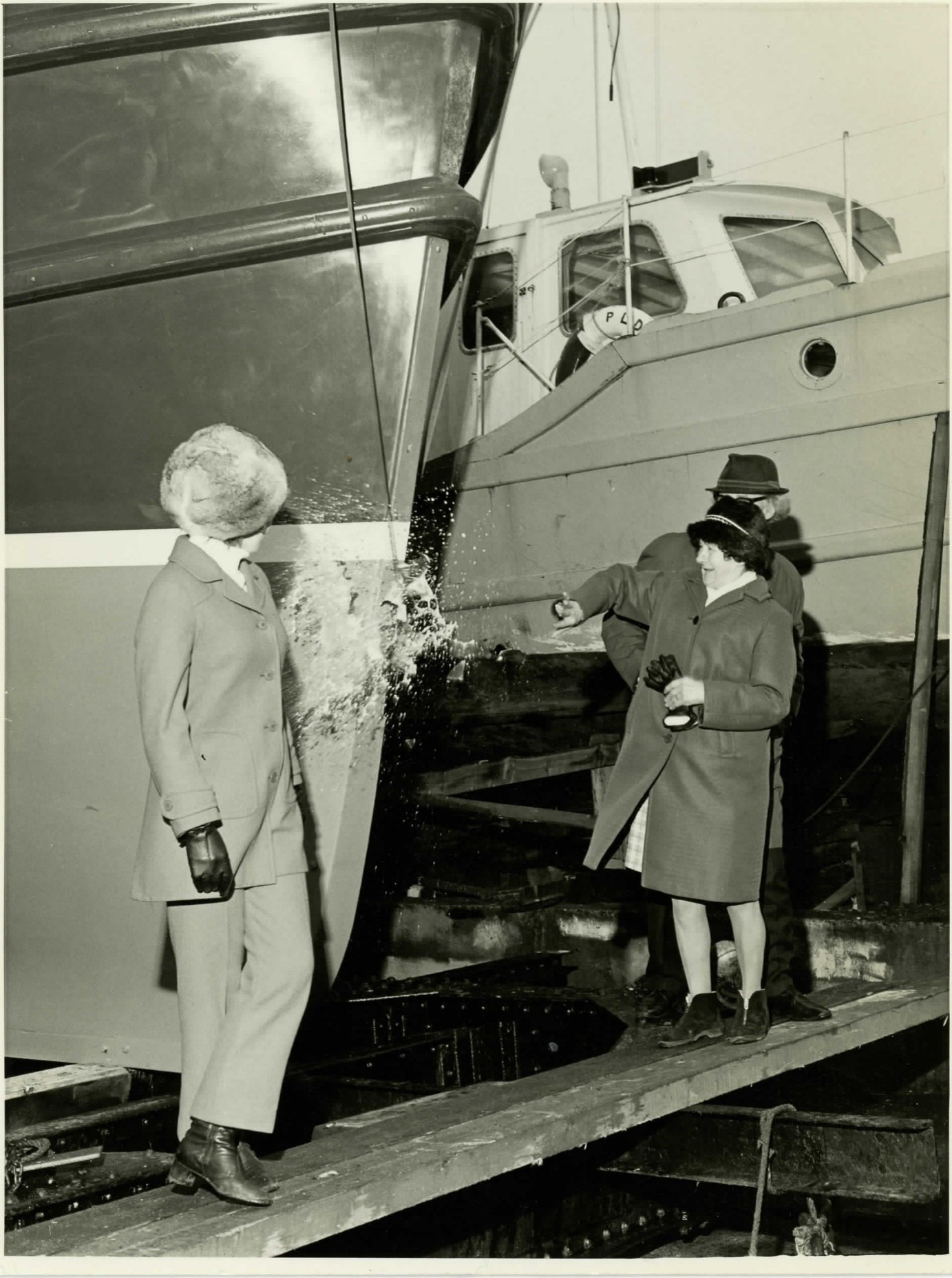
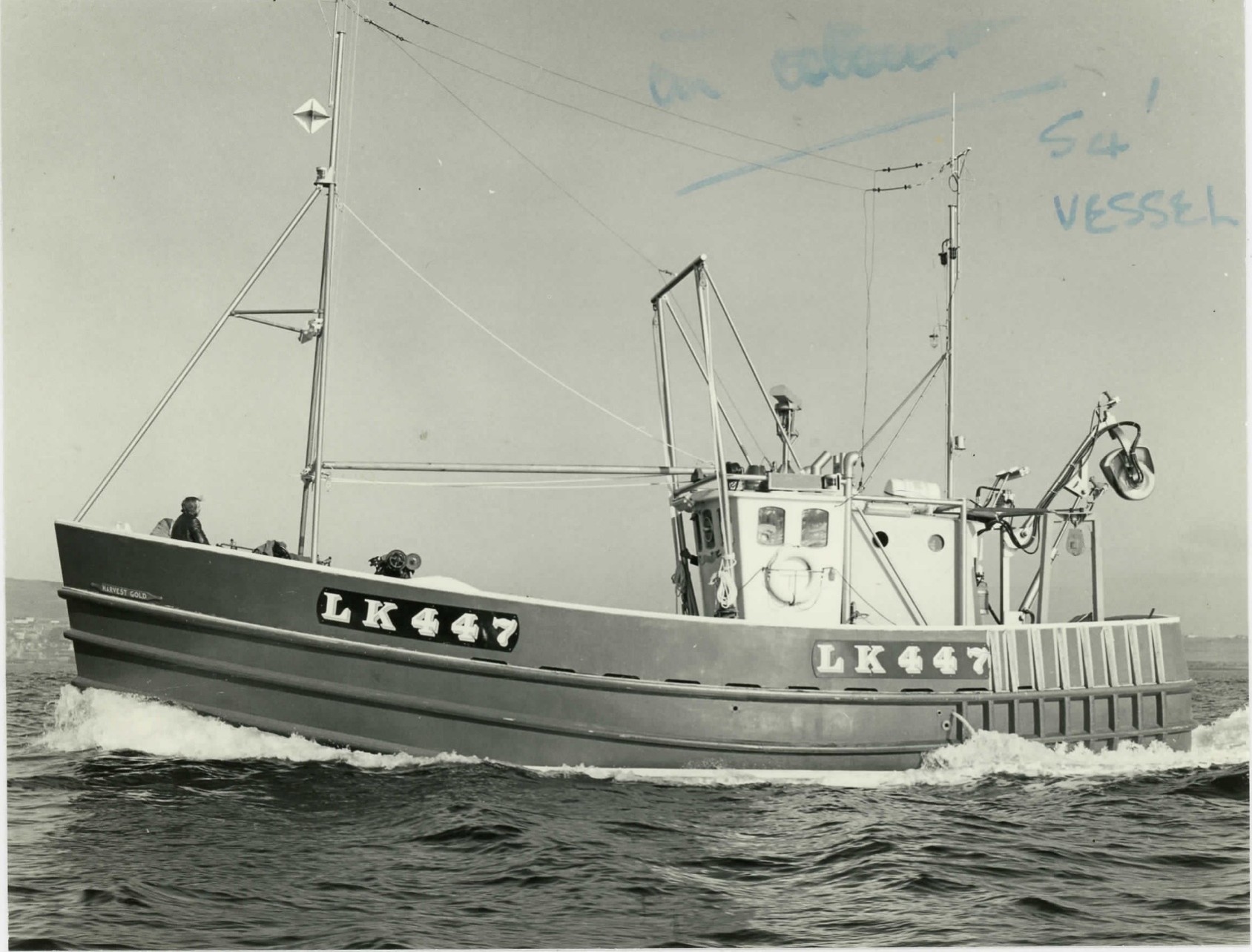
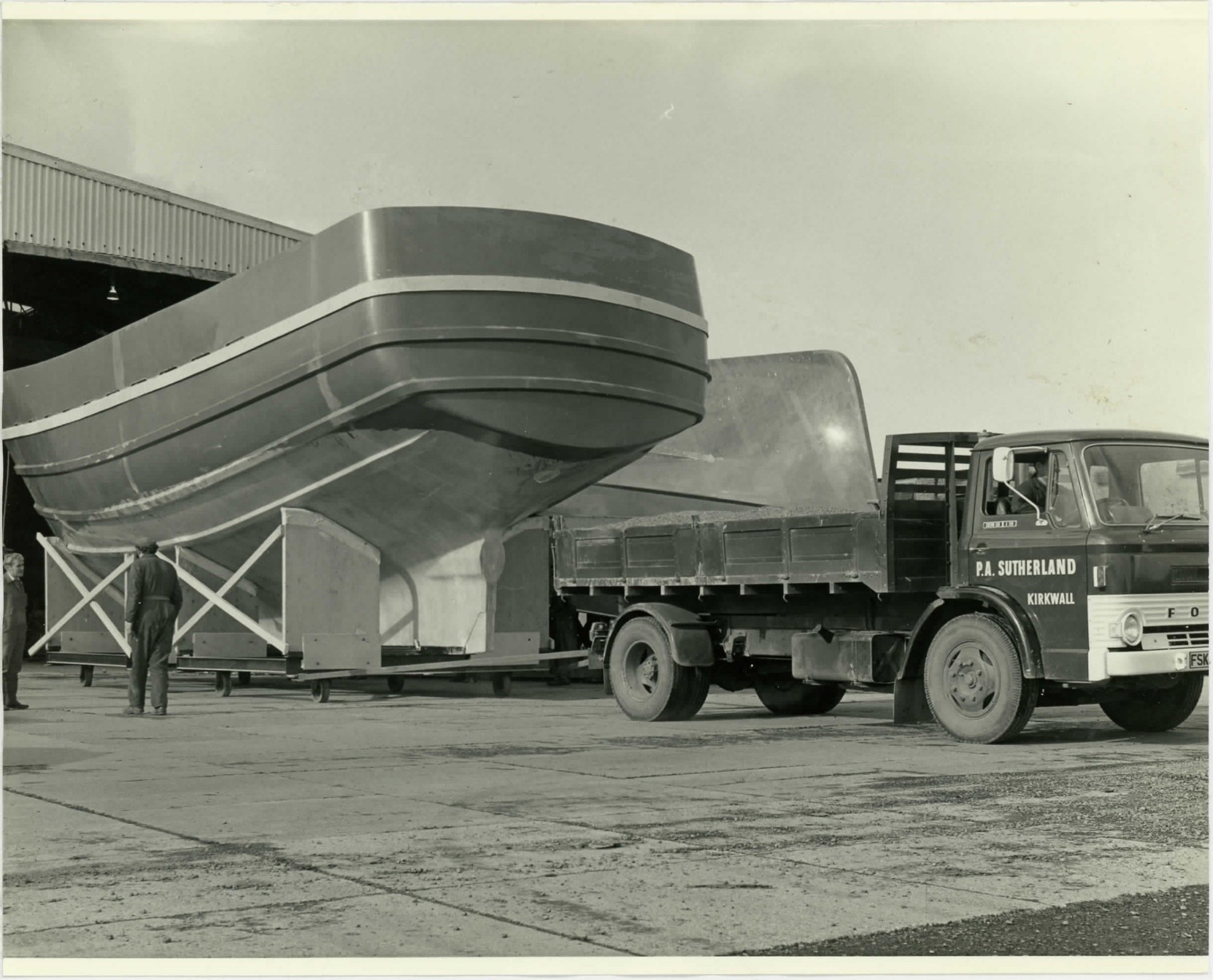
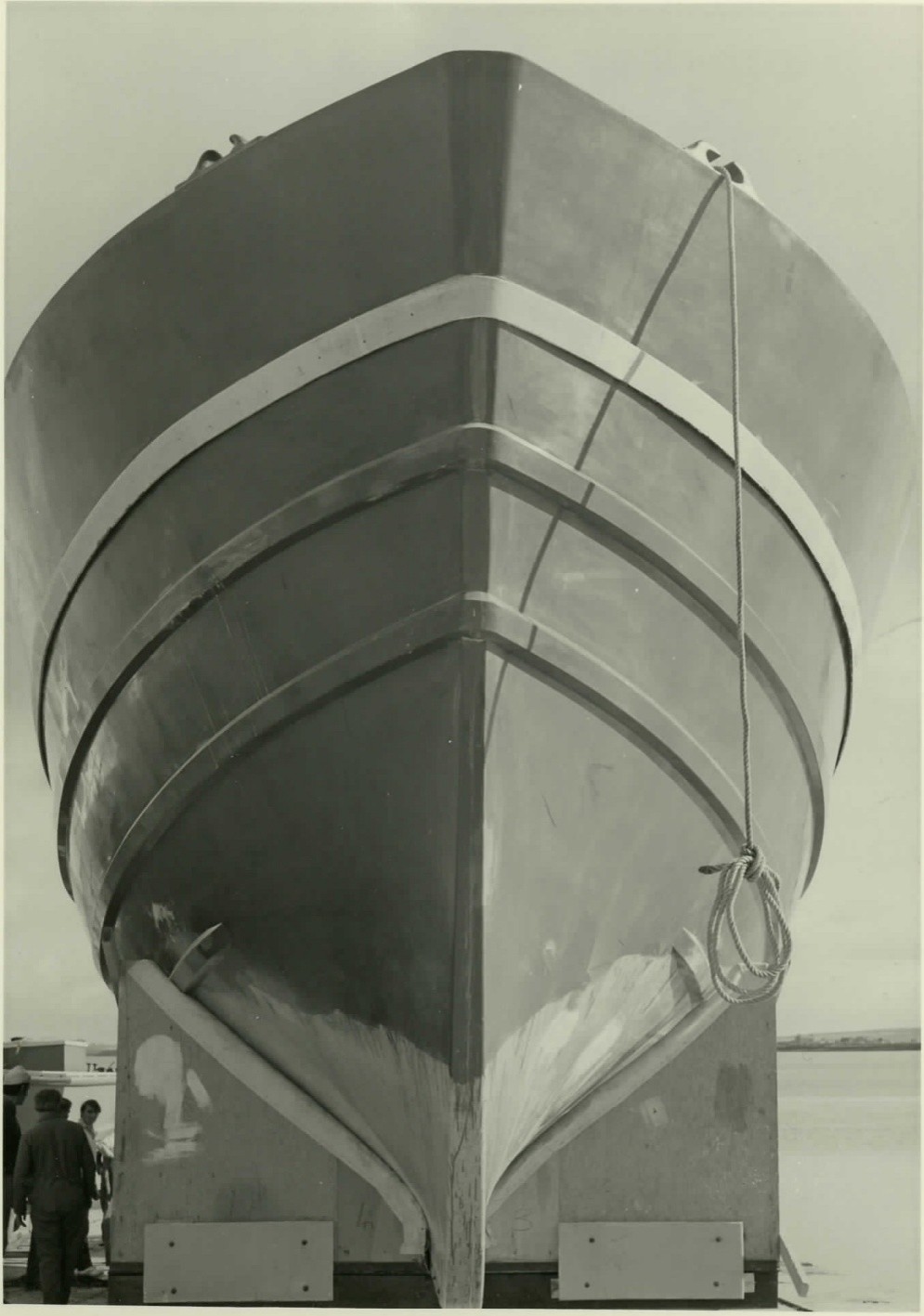
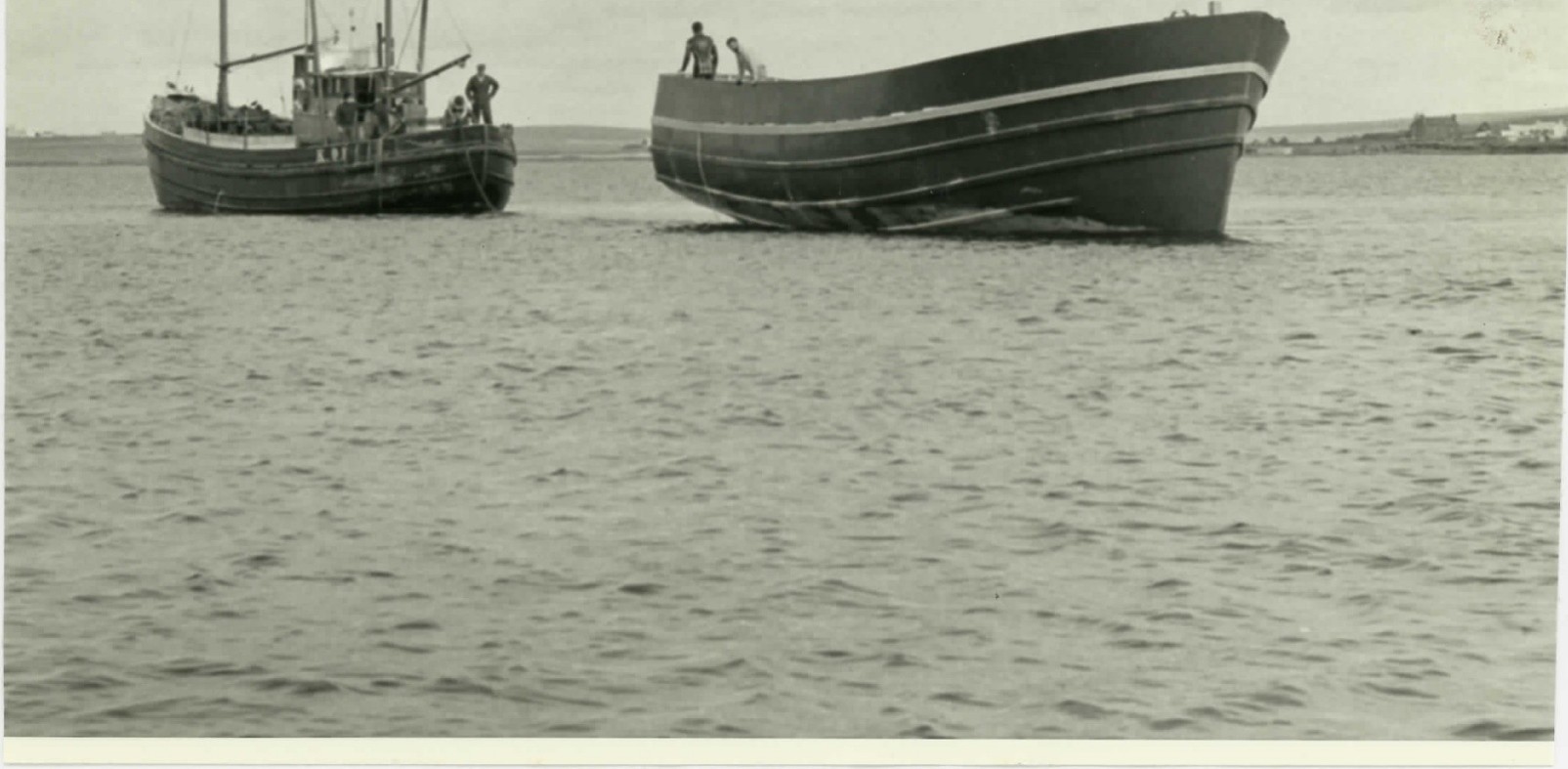
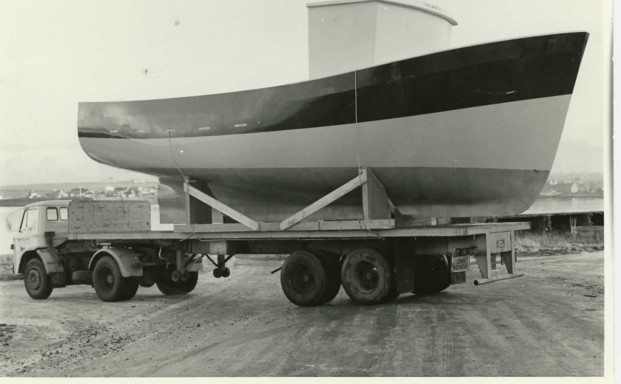
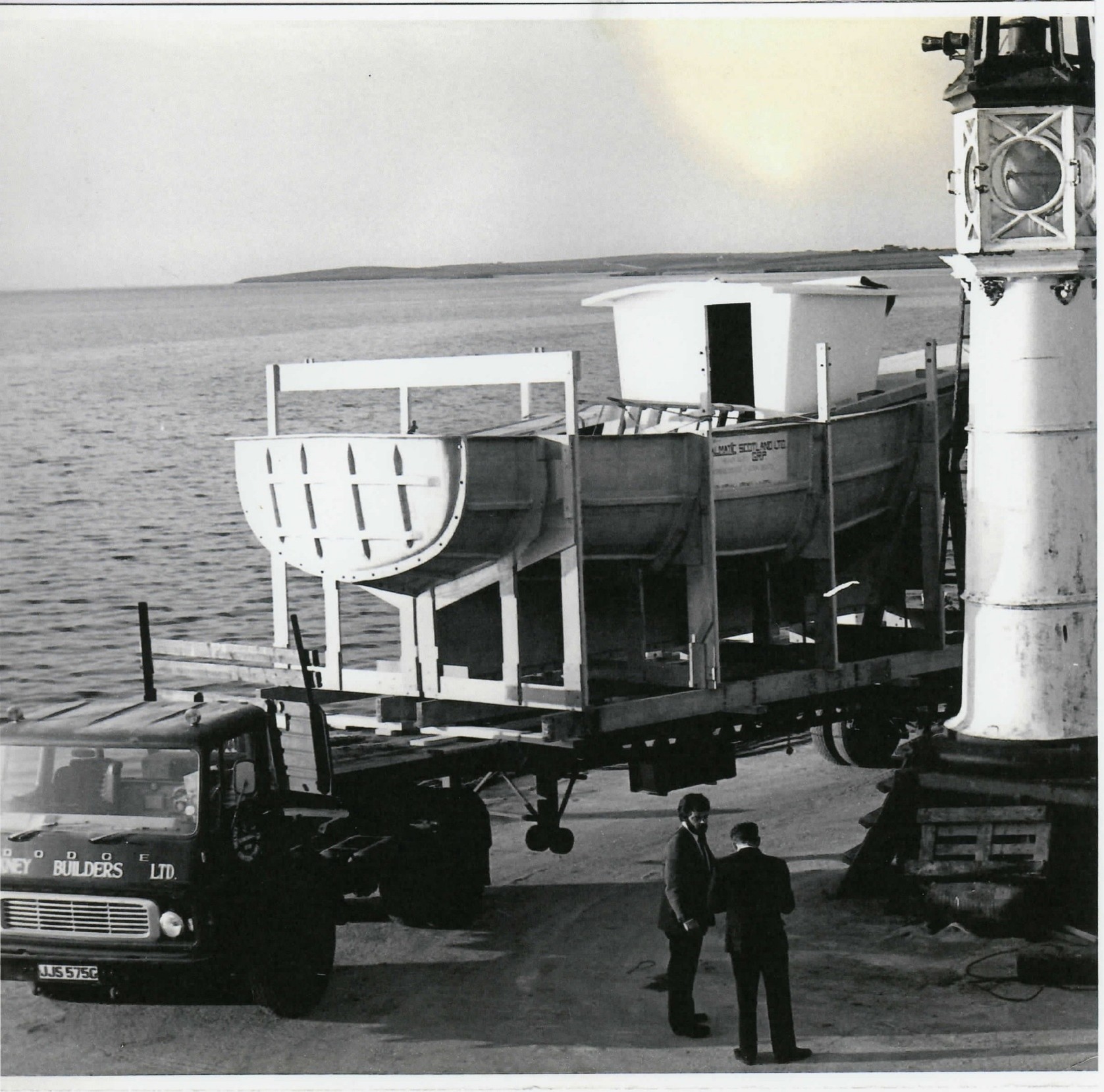
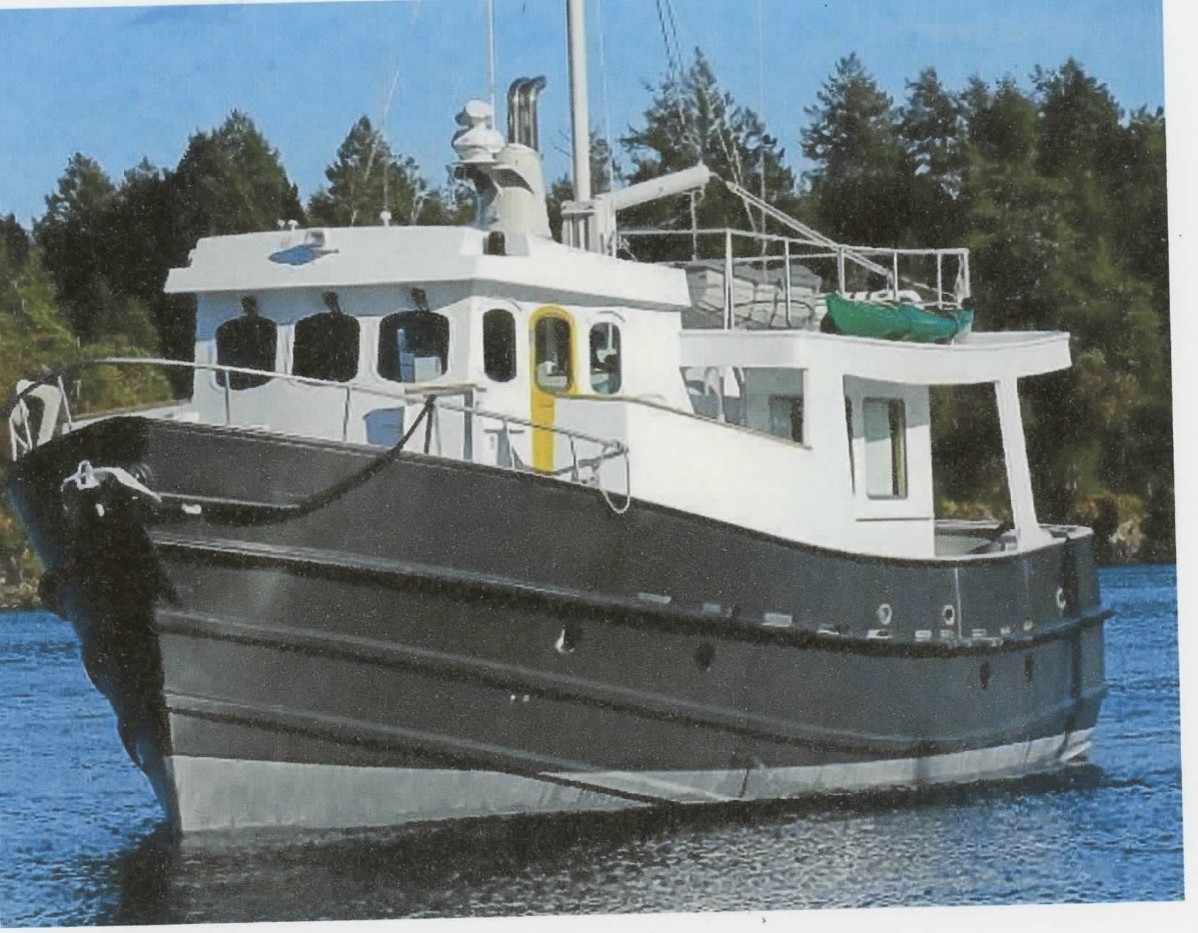
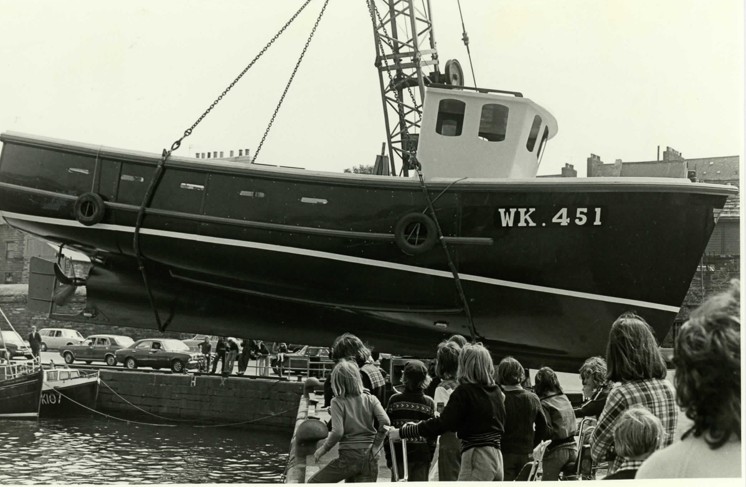
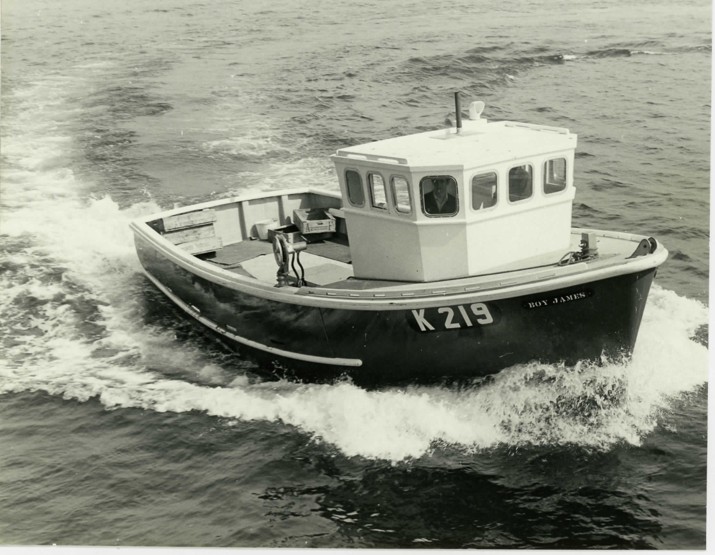
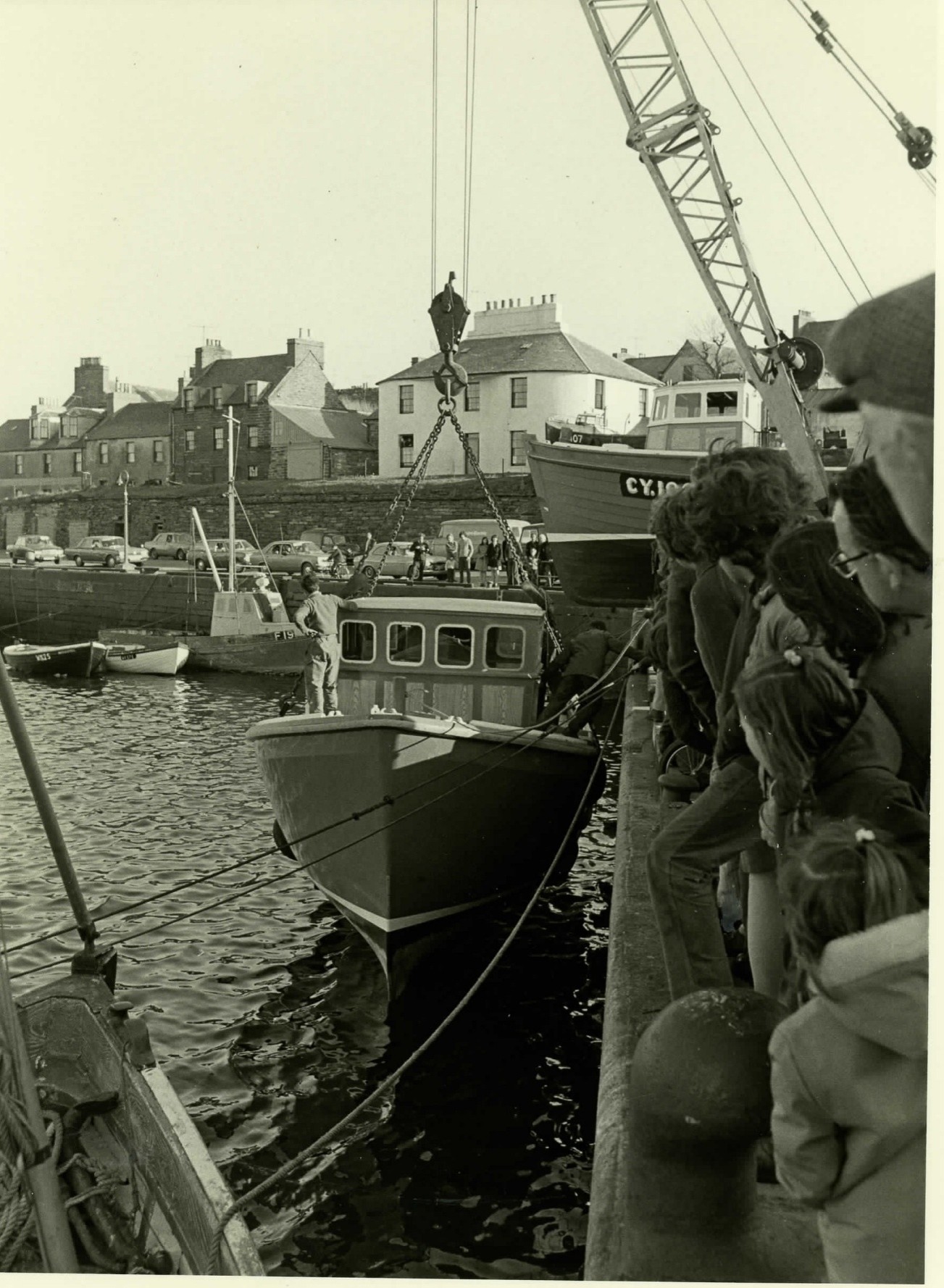
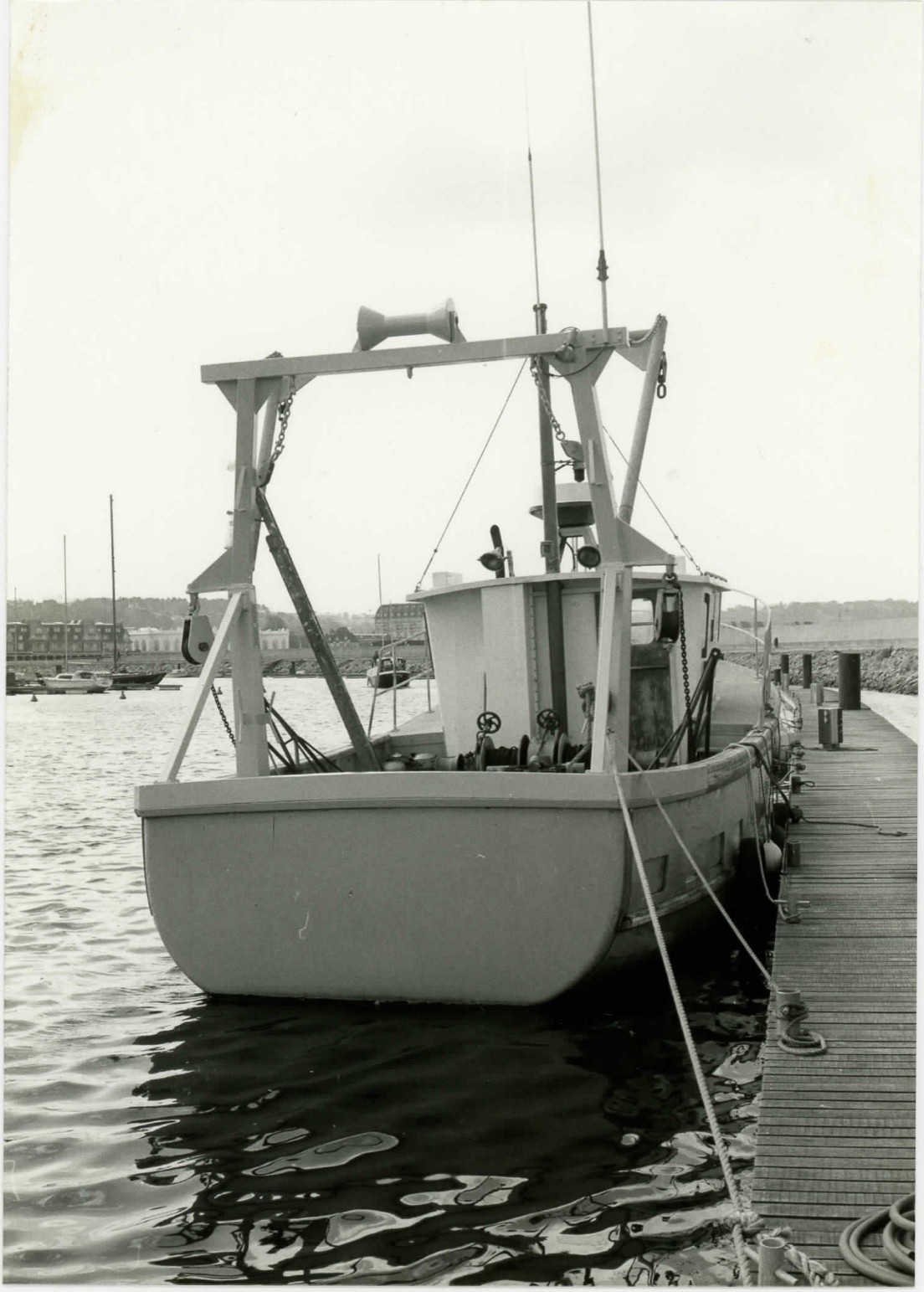
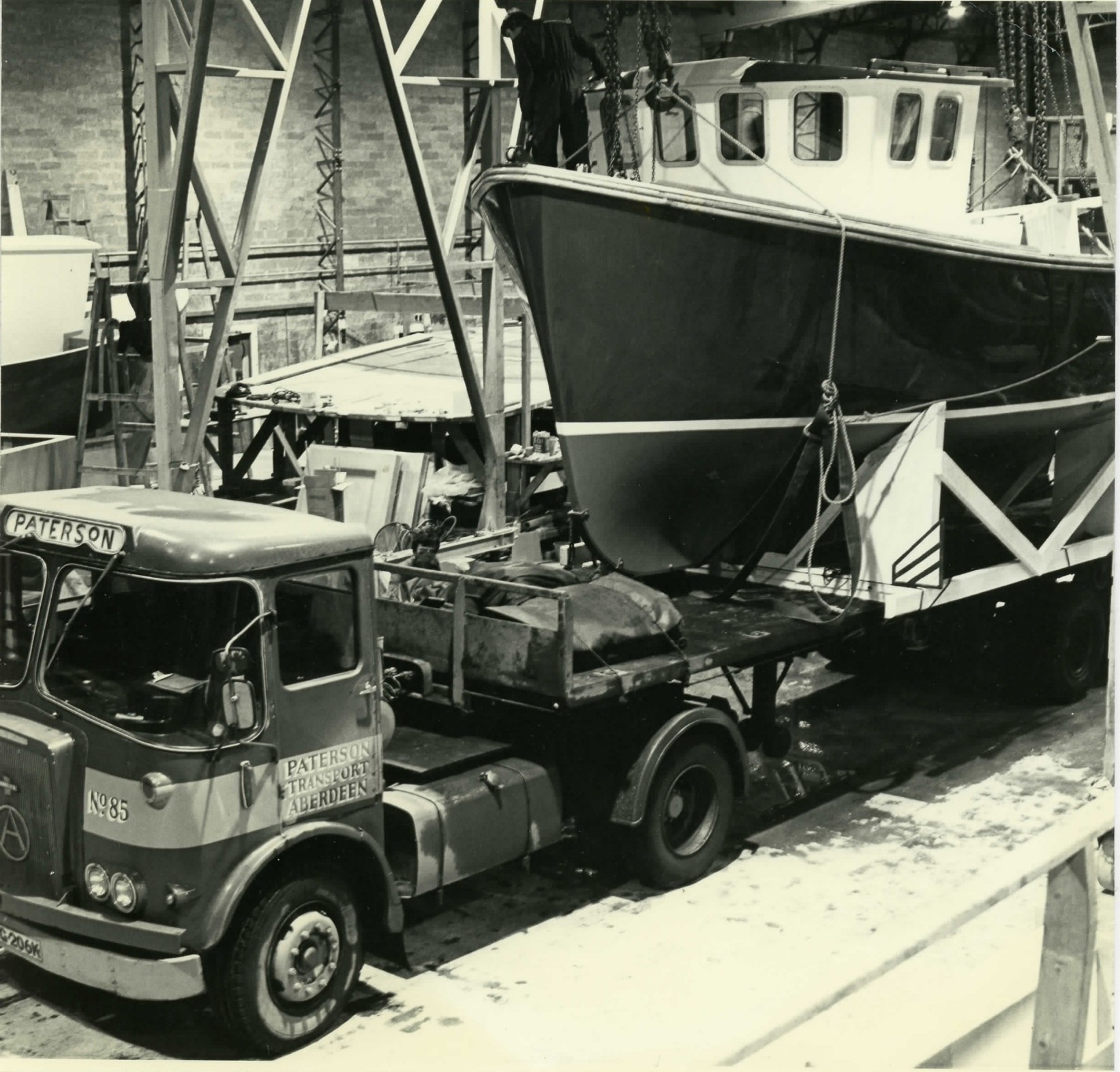
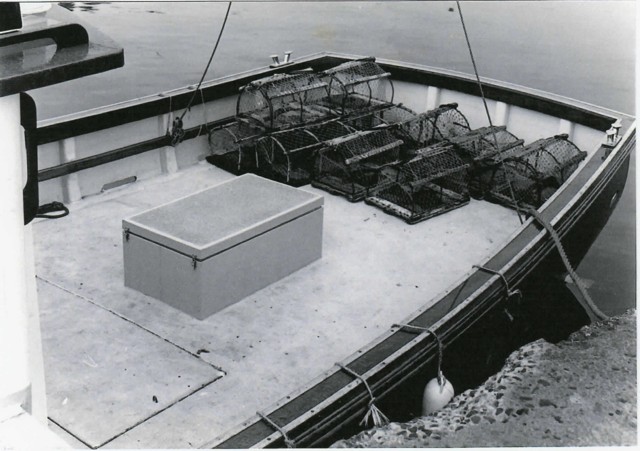
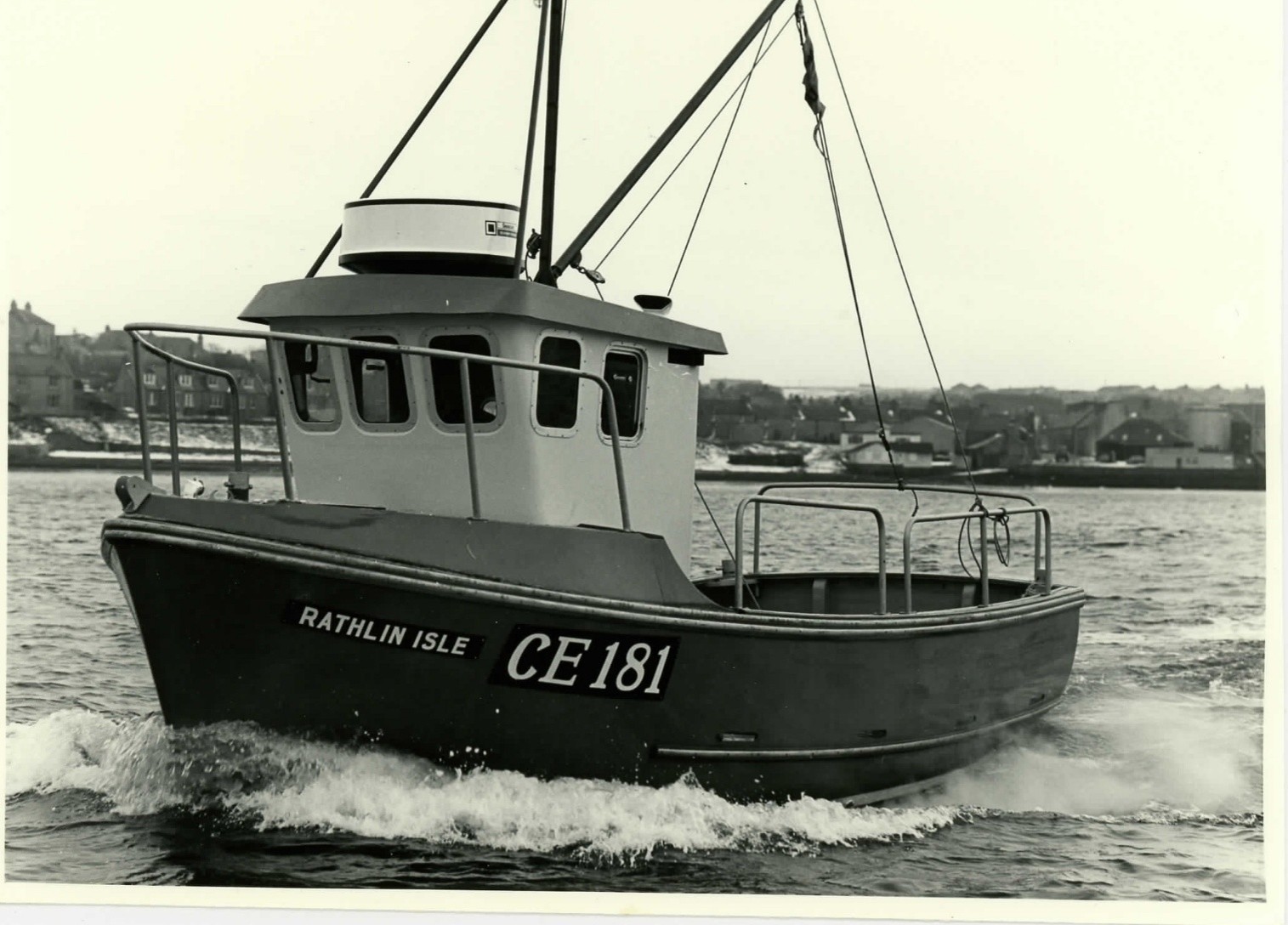
In March 1970, the 10 trainees returned to Orkney with a foreman and manager seconded from Halmatic Ltd, coinciding with the completion of the building modifications. In May 1970, the 36-foot creel boat moulds arrived in Orkney, and work began to prepare them for production. At the same time, tooling (plugs) was started on a larger 50/54-foot trawler design, created by G.L. Watson of Glasgow. The first 36-foot creel boat hull moulding was delivered to Duncan’s Boatyard in Burray, Orkney, and handed over to its local owner, Billy Rendall, in April 1971. The design proved highly successful in Scotland and England, with many examples going to the west coast of Scotland and others to Cornwall, Shetland, and beyond. The 50/54-foot trawler took 12 months to put into production, as the entire vessel was to be built of GRP, including hull, decks, fuel and water tanks, whaleback, and wheelhouse. The first 50-foot trawler was for a Shetland fisherman, Harvest Gold, skippered by Robbie Watt, and was completed by Anderson’s Boatyard in Stromness in early 1973, proving a great success. The first 54-foot hull was for a motor yacht, Spey Orcades, and was fitted out by Jones of Buckie.
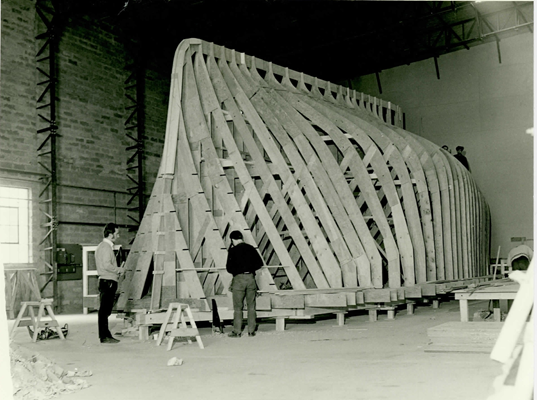
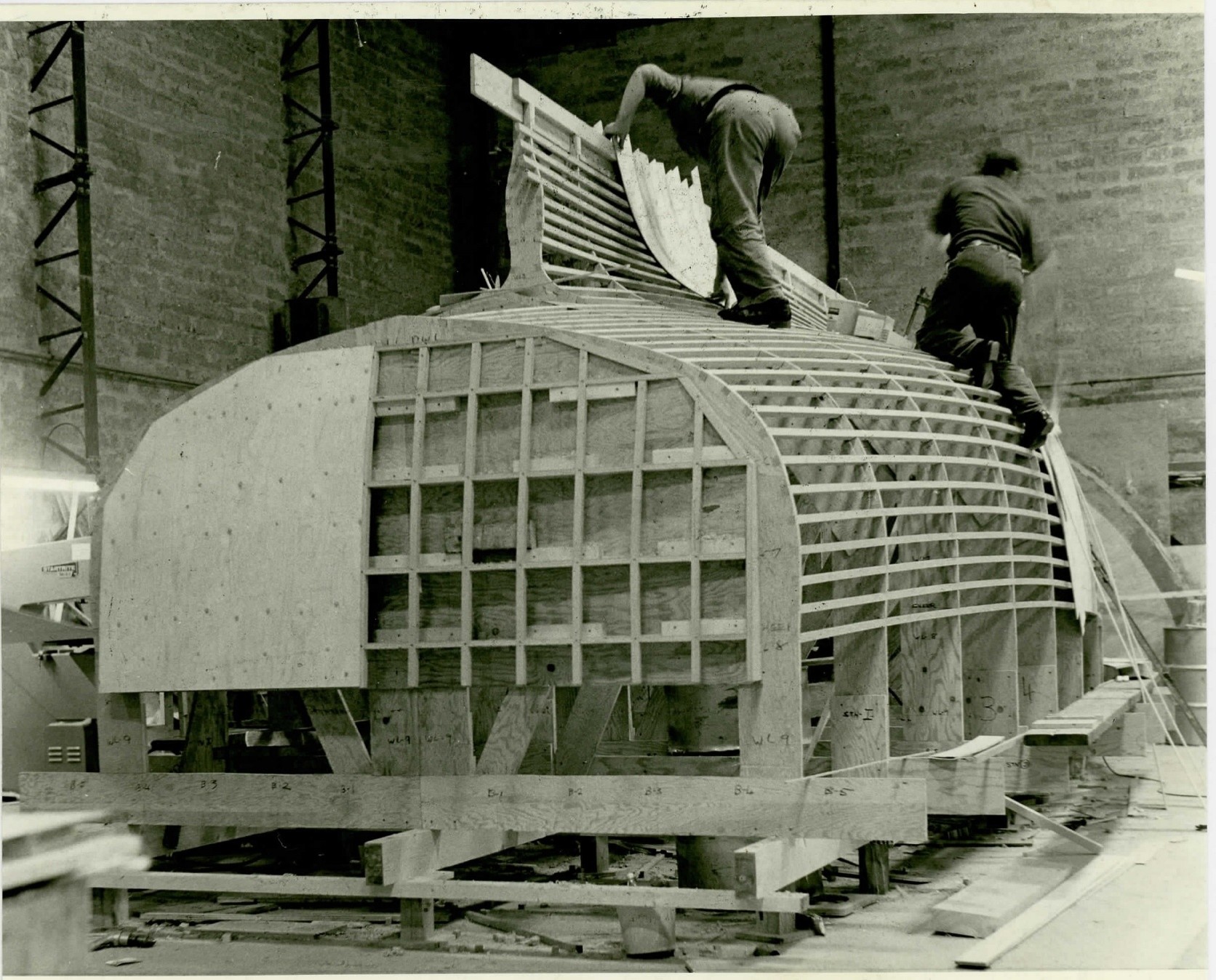
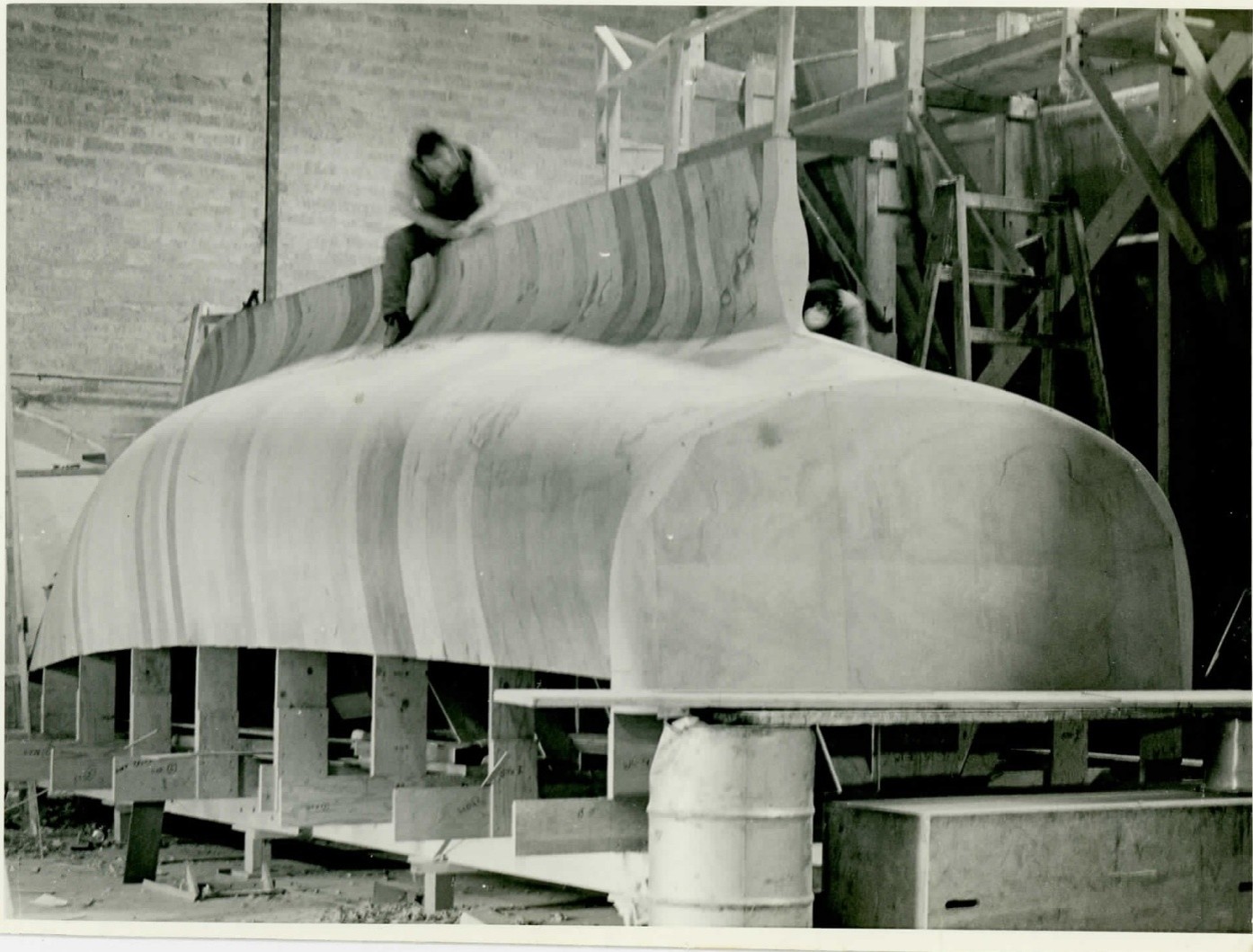
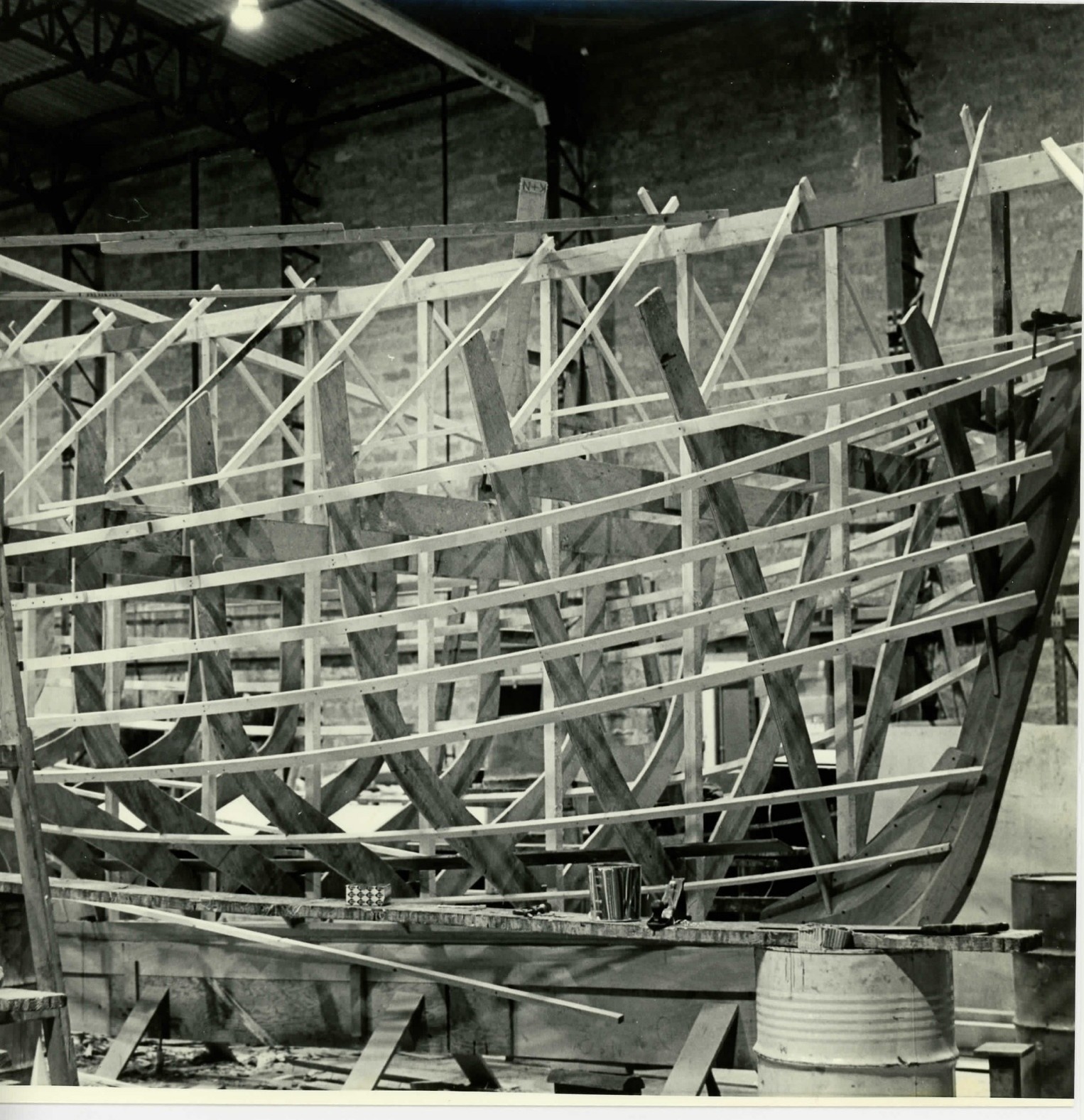
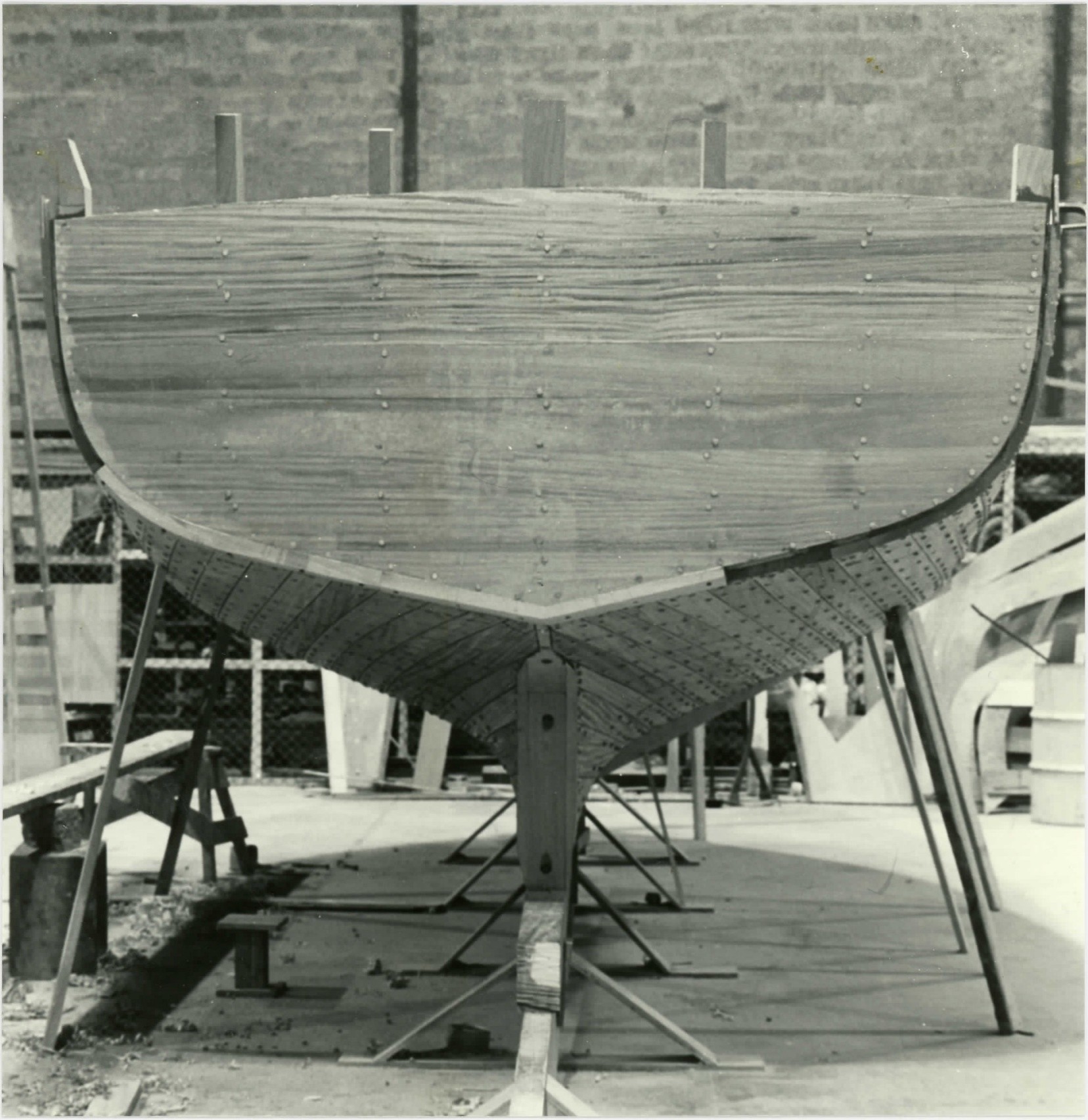
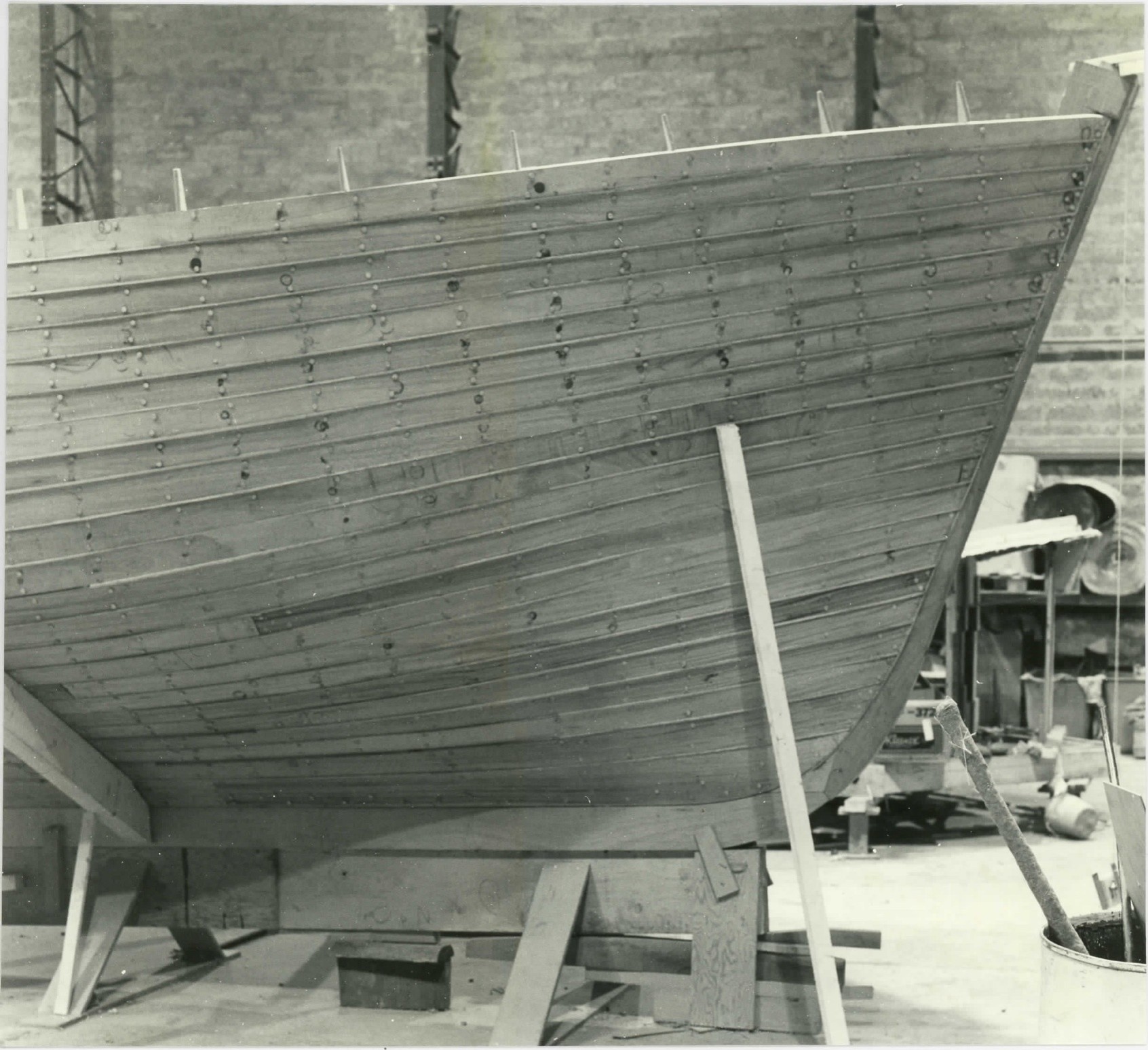
After transferring the original lines from the design plan by G.L Watson to full size stations, the frames, keel, bow and transom were set up prior to fitting stringers.
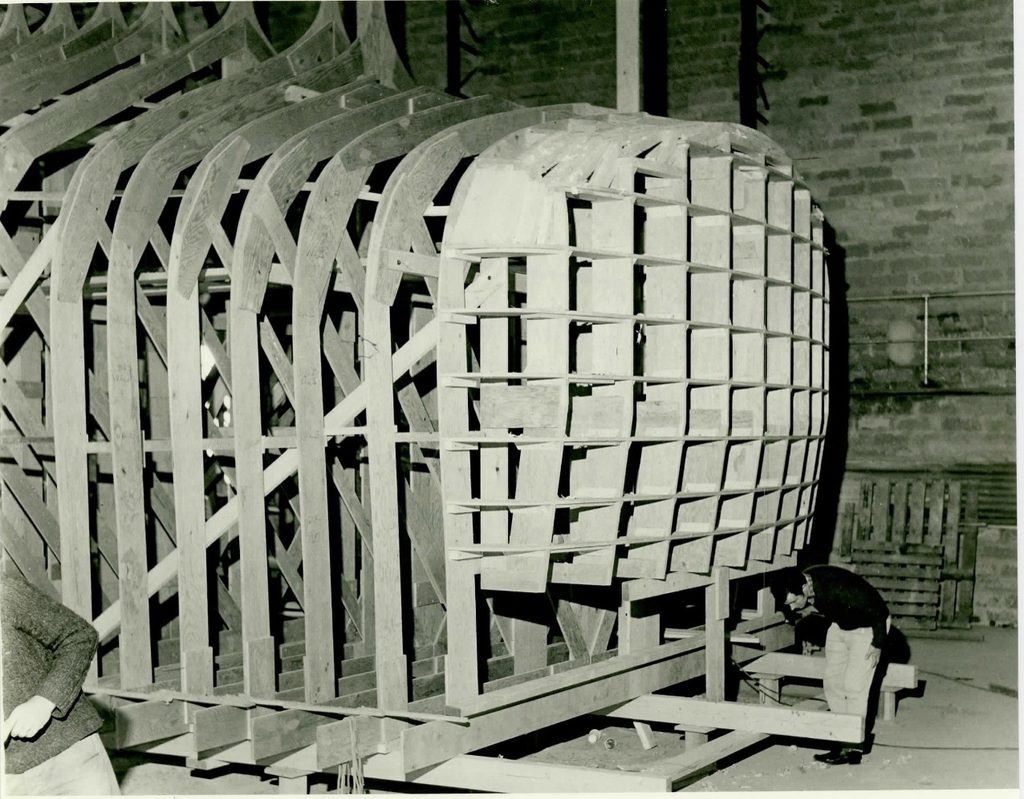
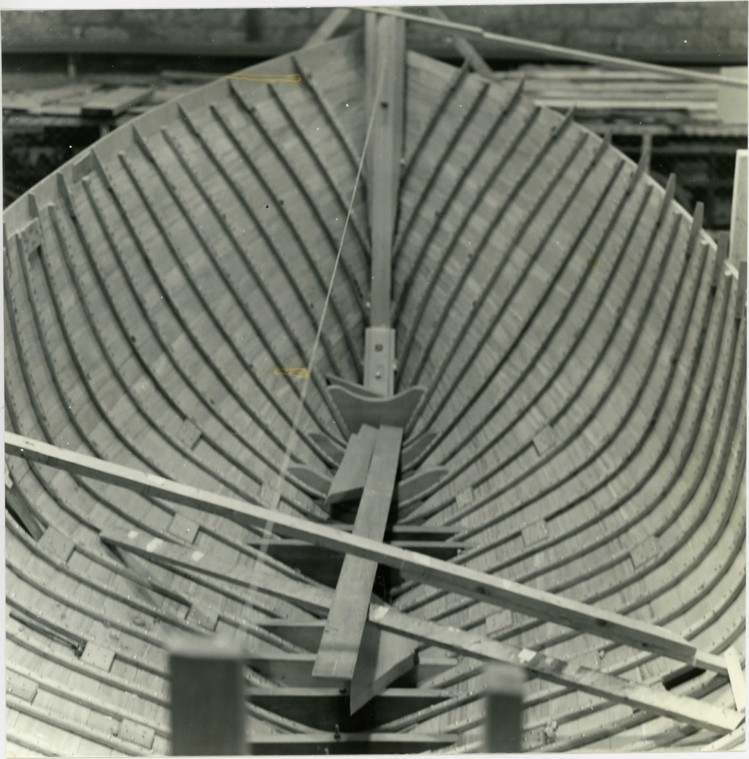
The transom section prior to cladding with two layers of diagonal strips of 4 mm plywood.
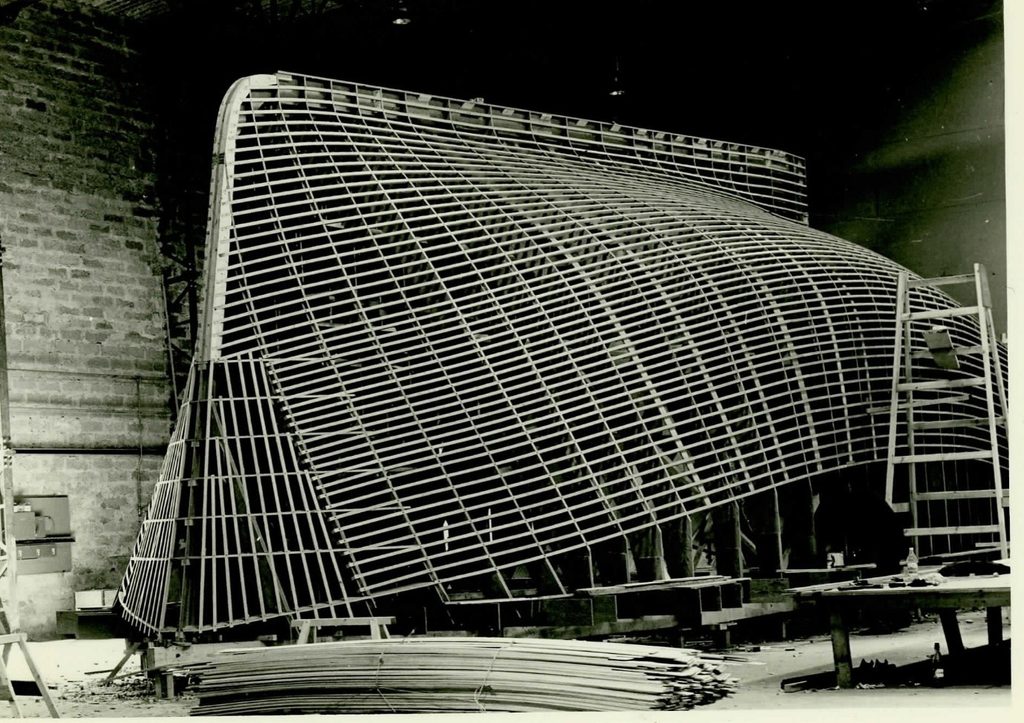
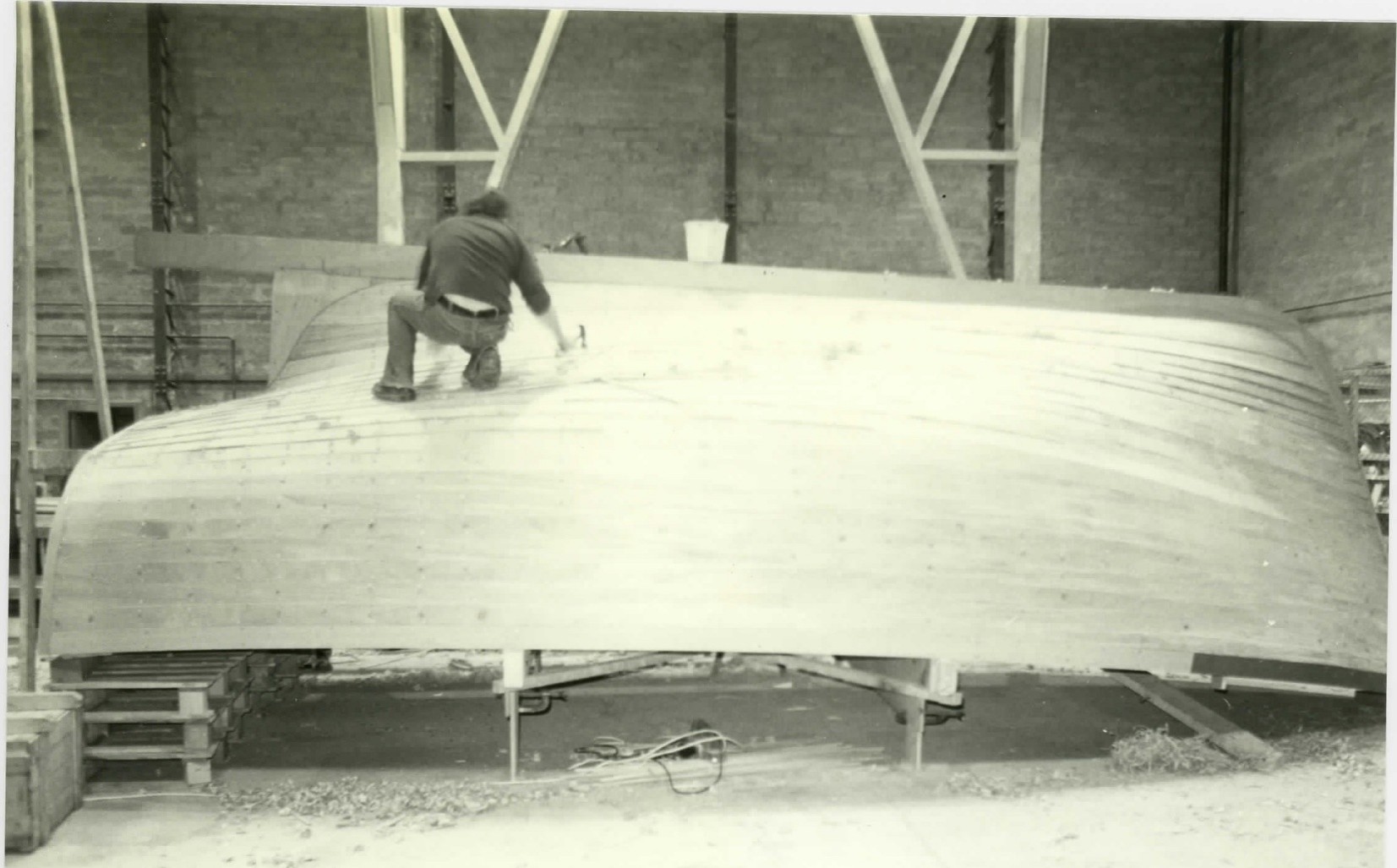
Stringers fitted to the frames of the 54ft plug prior to cladding with two diagonal layers of 4mm plywood.
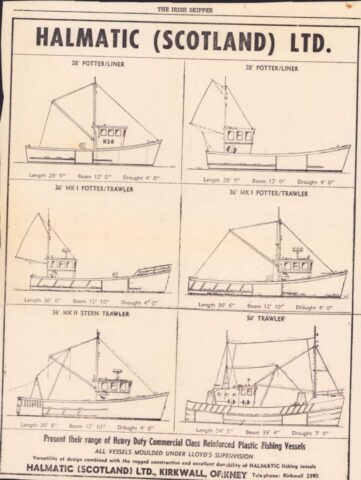
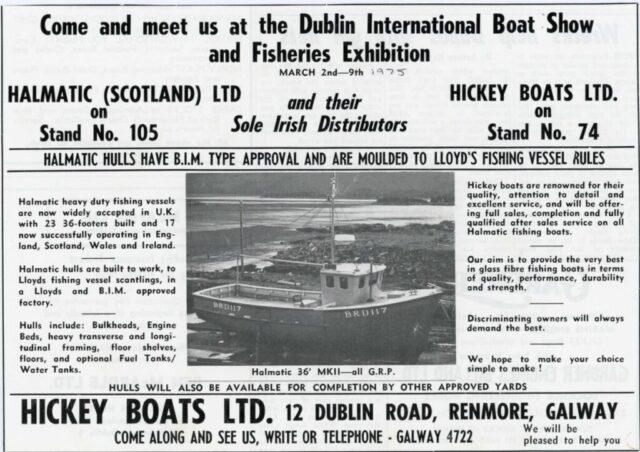
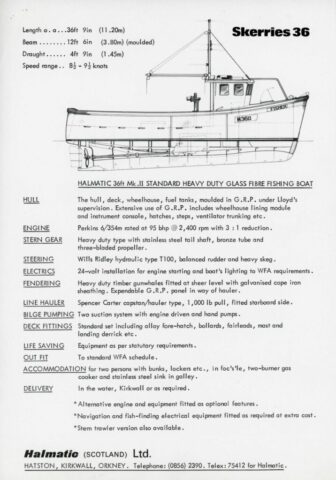
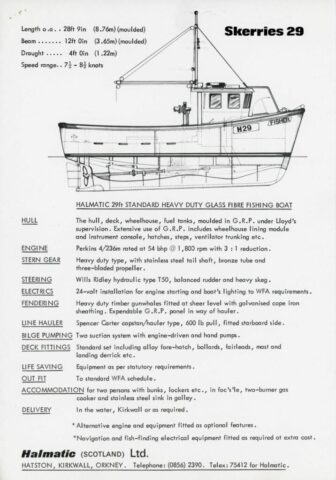
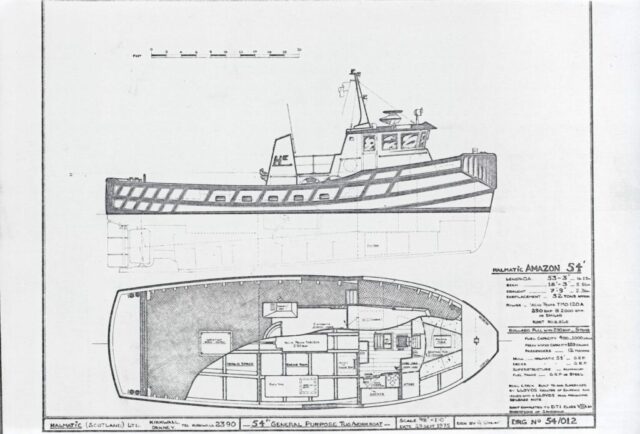
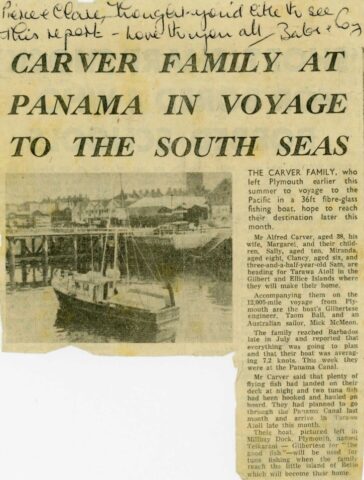
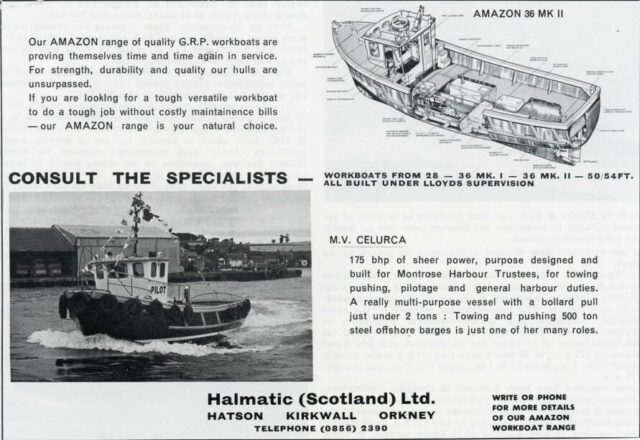
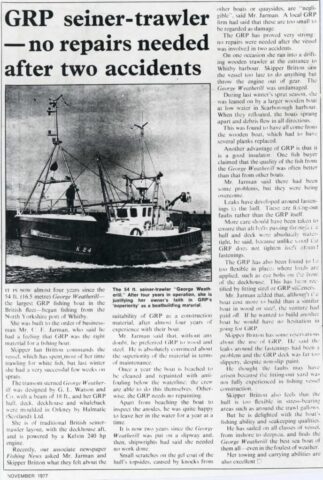
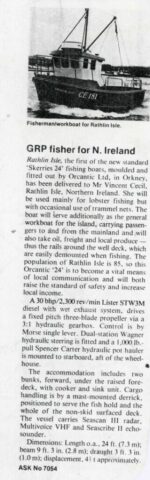
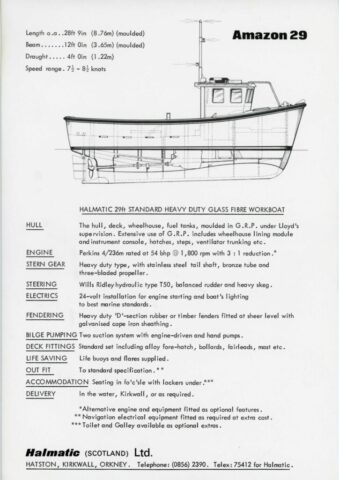
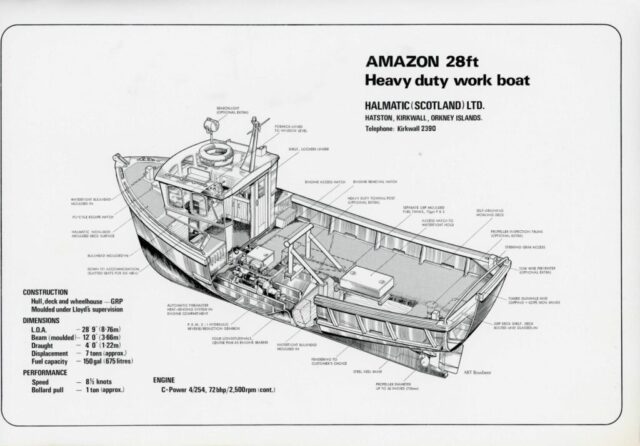
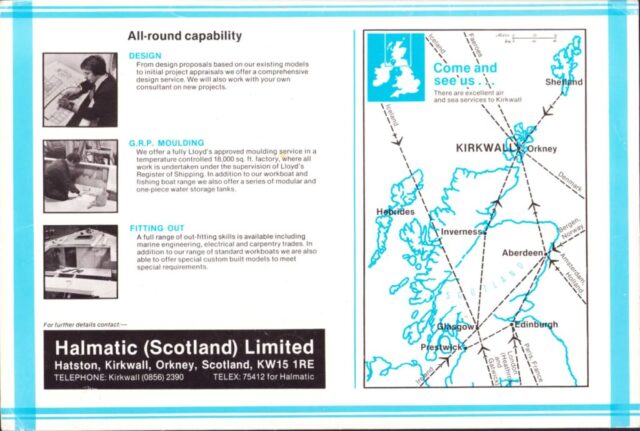
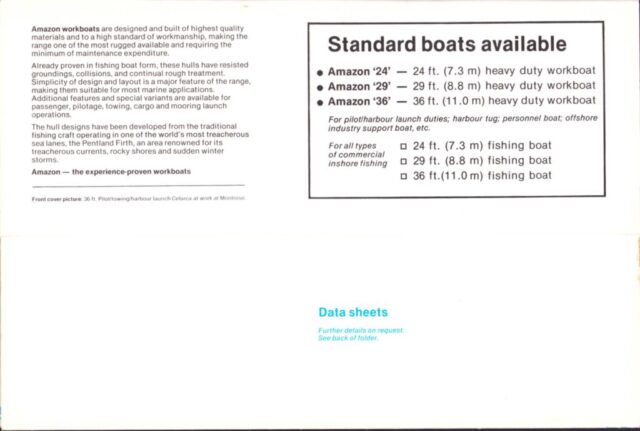
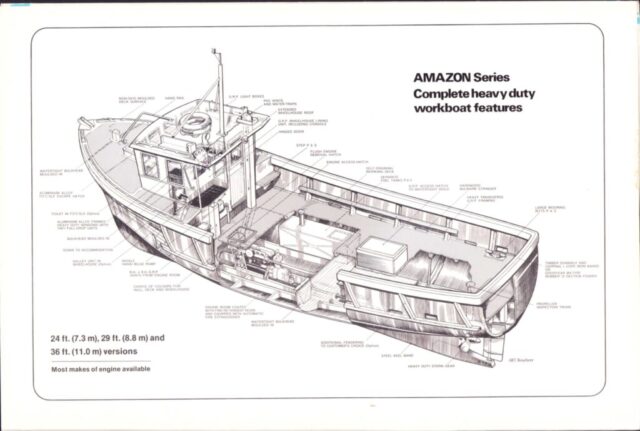
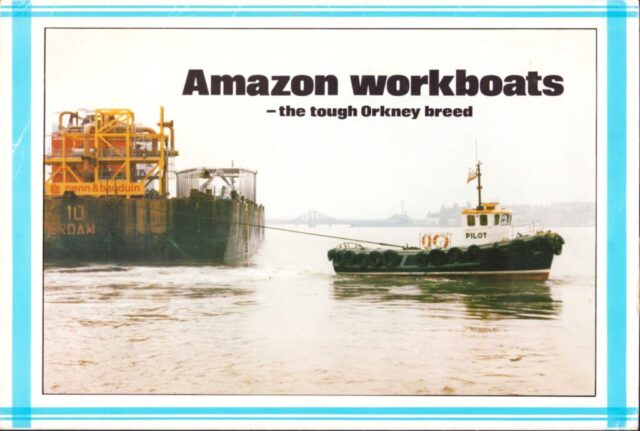
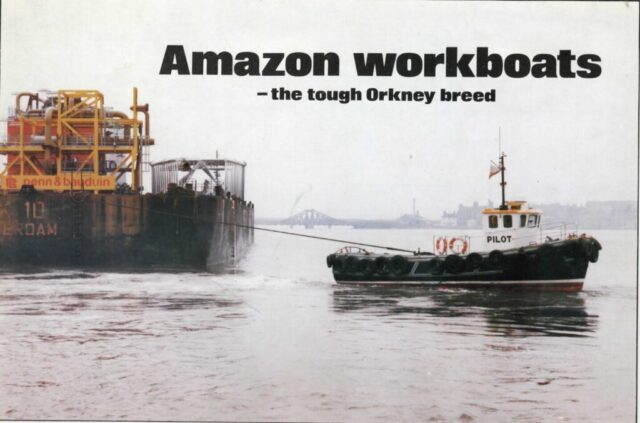
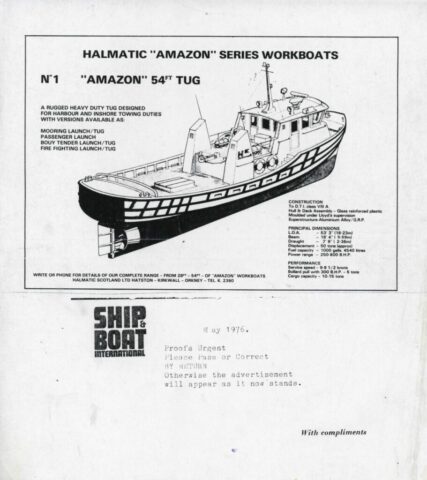
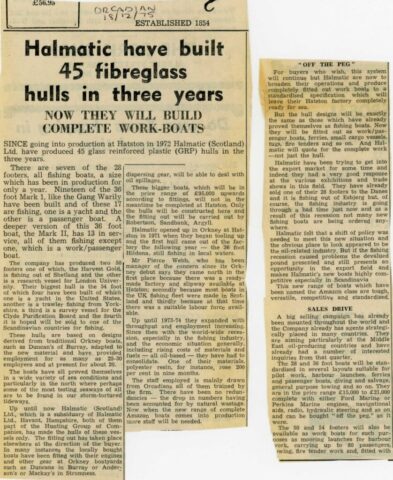
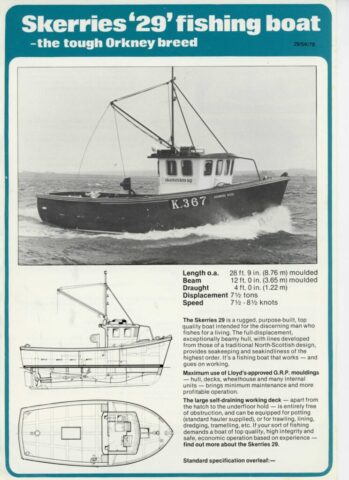
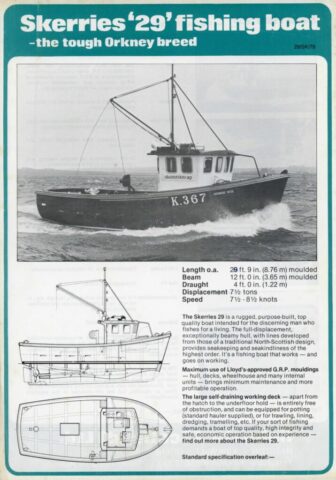
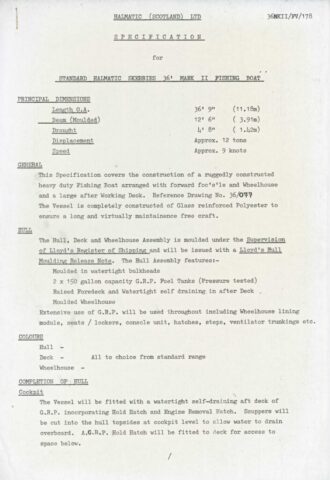
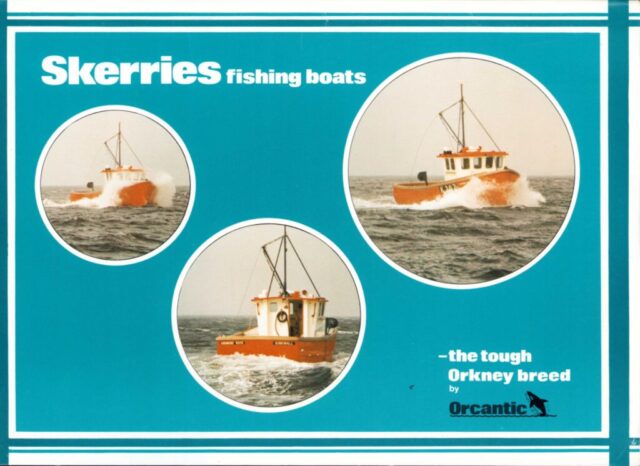
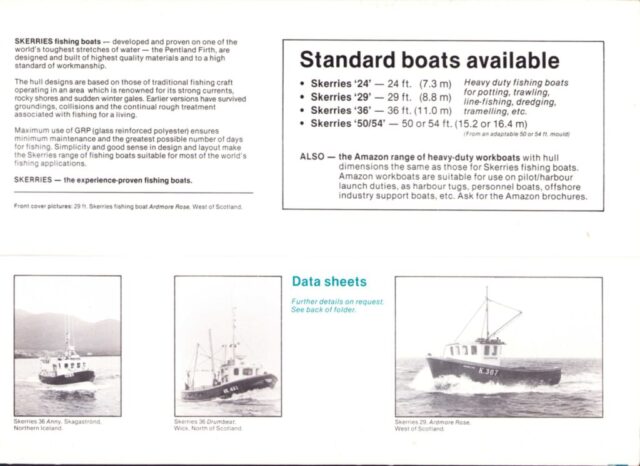
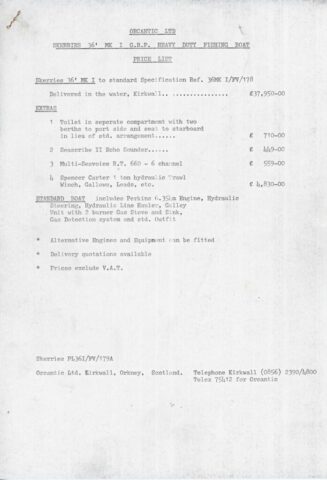
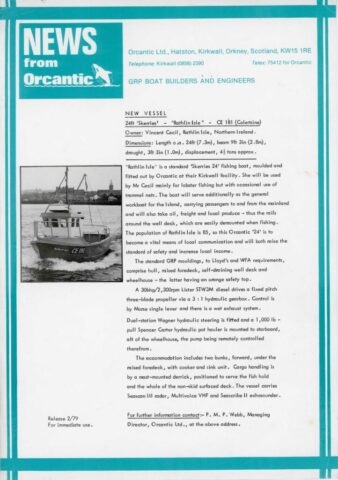
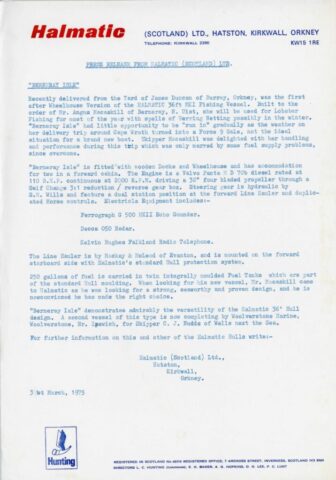
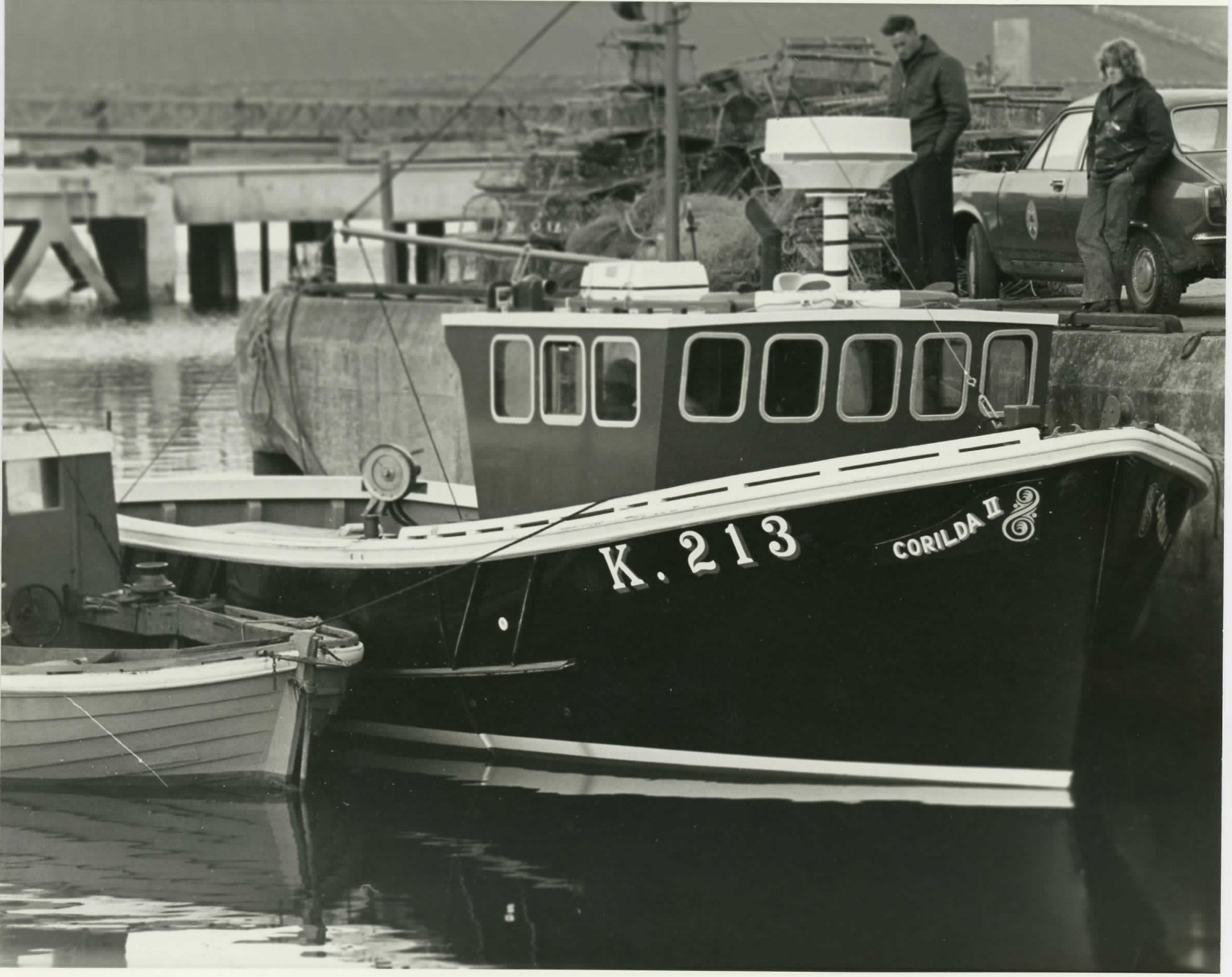
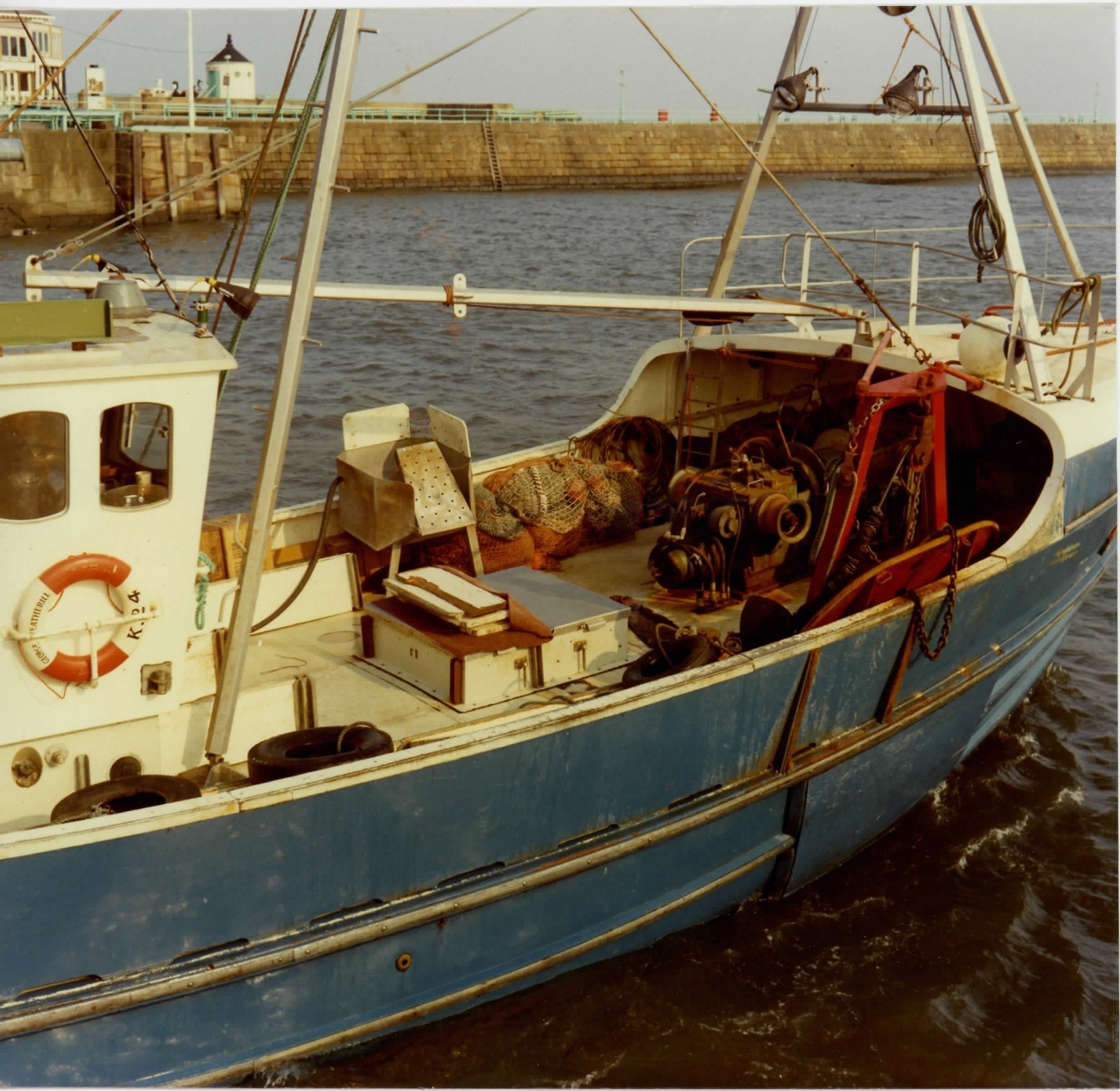
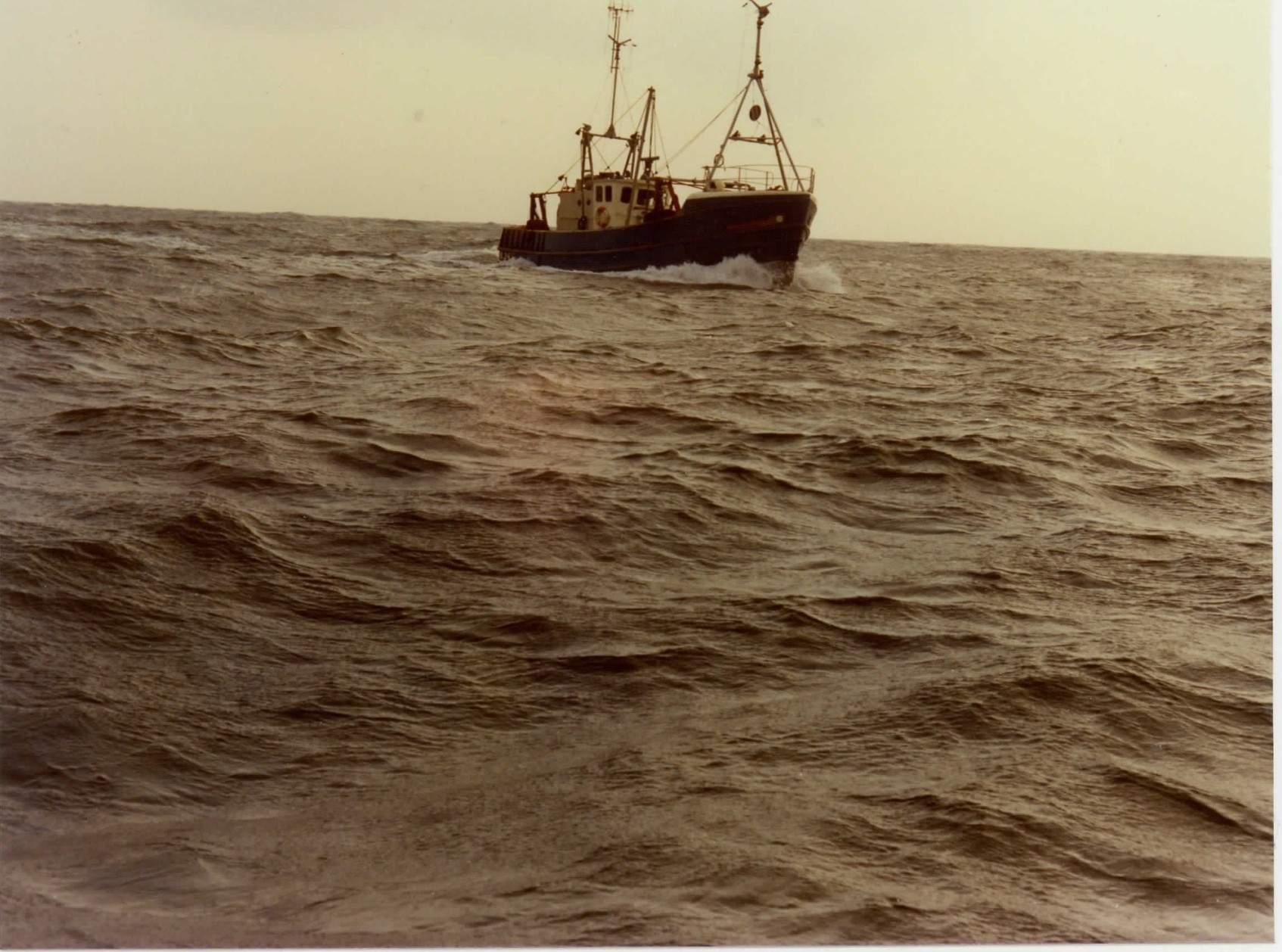
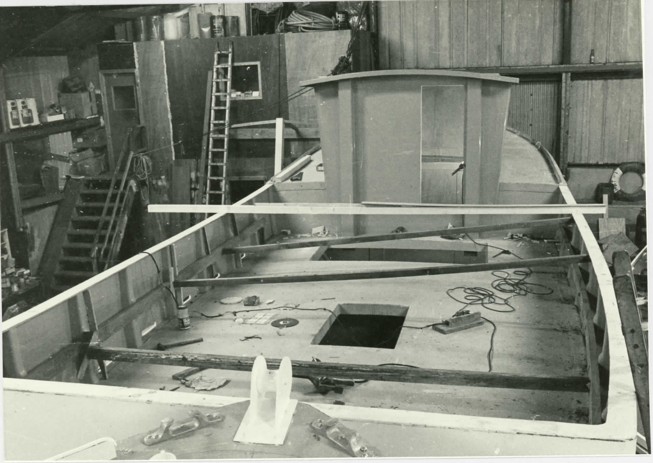
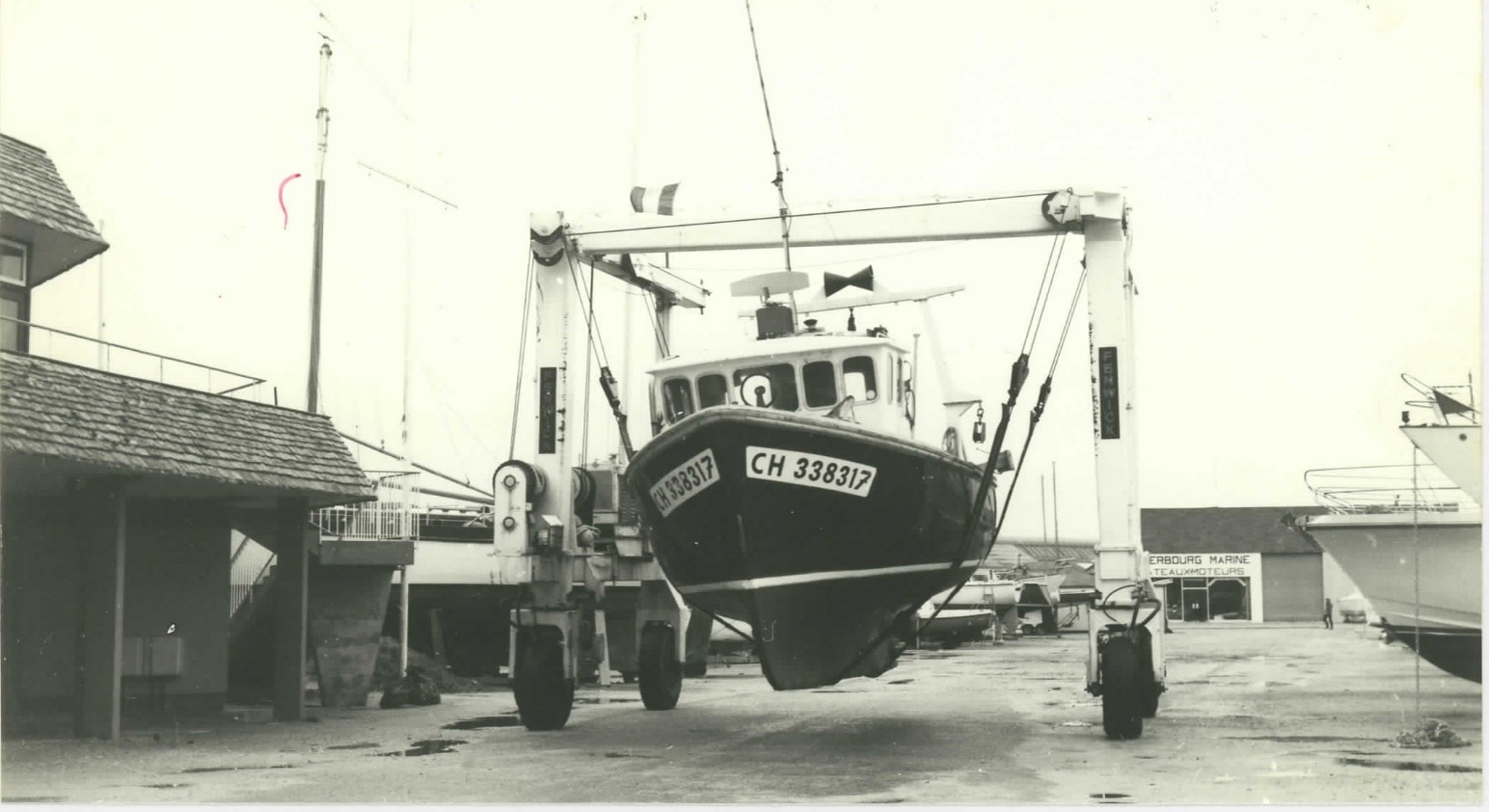
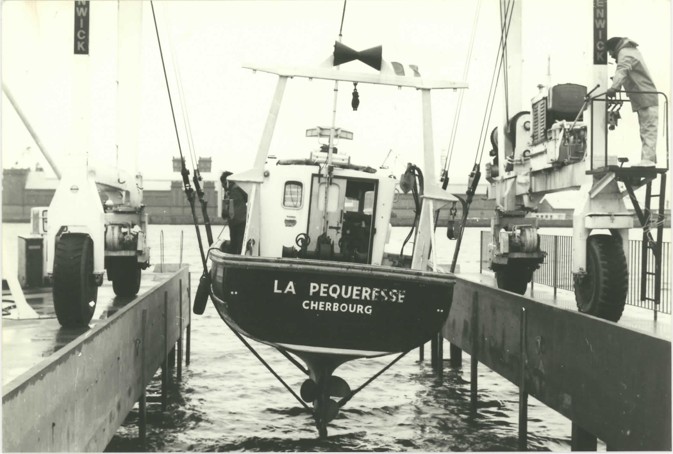
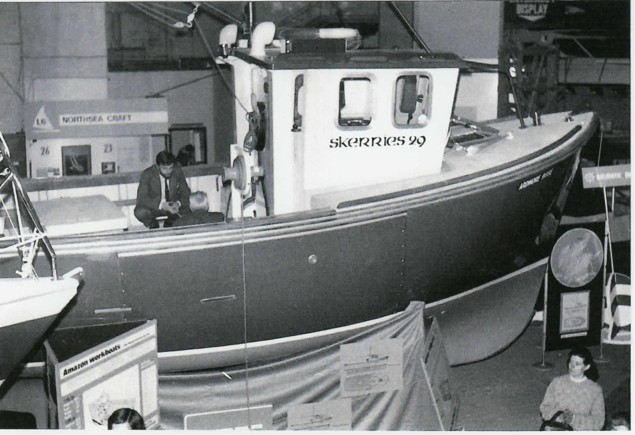
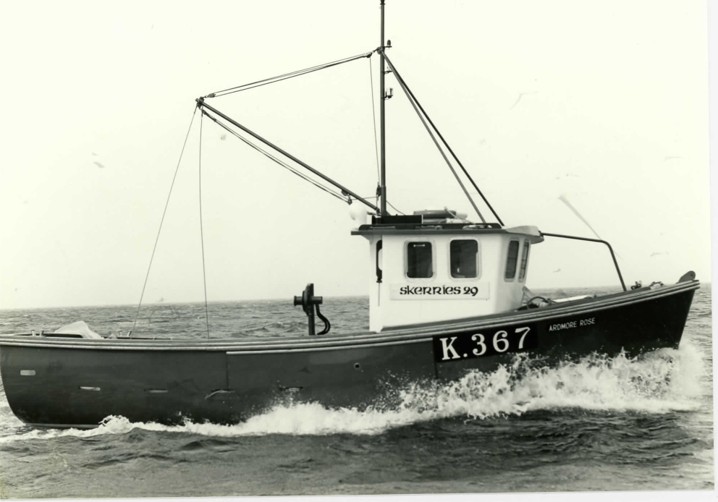
The success of the 36-foot design led to the development of a deeper Mk 2 version for trawling, which also proved popular, with versions built for Ireland, Cornwall, Fleetwood, and the west coast of Scotland. From 1972 to 1975, the company prospered, appointing sales agents in Ireland, Denmark, France, Iceland, and the Middle East, and gradually developing sales through extensive selling missions to Scandinavia, the Faroes, Iceland, and Europe. Further designs were added to the range, and by 1976, this included a 24-foot vessel (from a plug built by Ian Richardson and Ali Clouston), a 29-foot vessel (from a design by J McGaughey of Wick, later known as the Skerries 29), 36-foot Mk 1 and 2, and 50/54-foot fishing vessels. By this time, the workforce had expanded to approximately 35, and the original range of vessels was marketed as the Skerries range of fishing vessels and Amazon workboats.
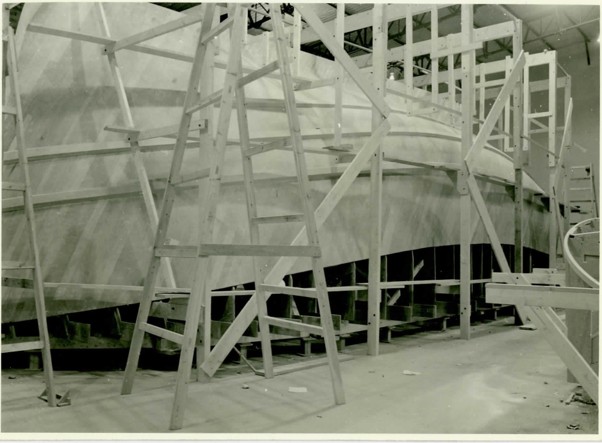
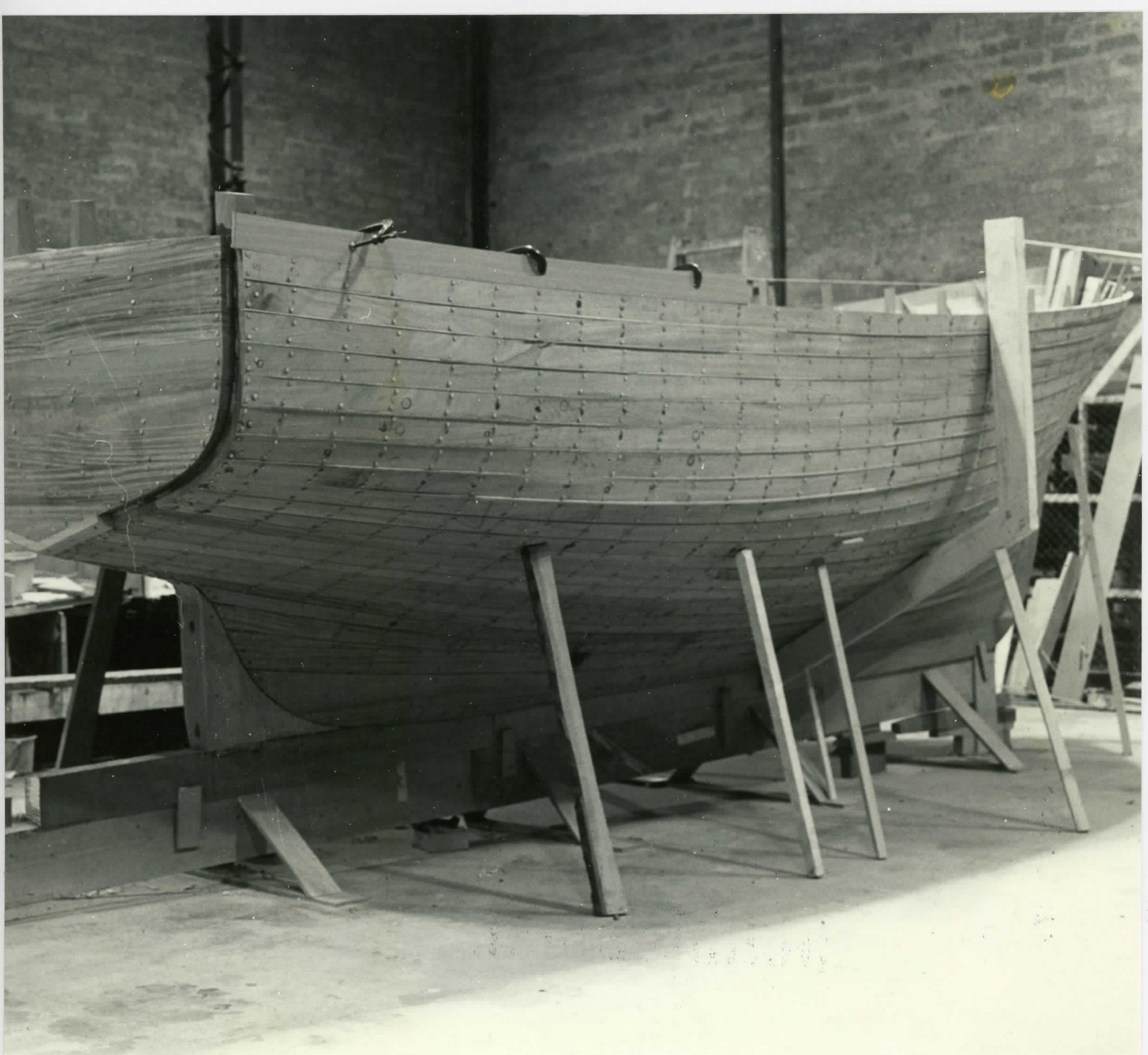
The 54ft plug with all the layers of plywood fitted. The full length features are also visible. At this stage everything has been faired off and sanded.
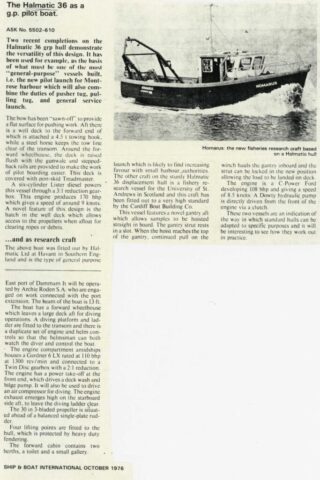
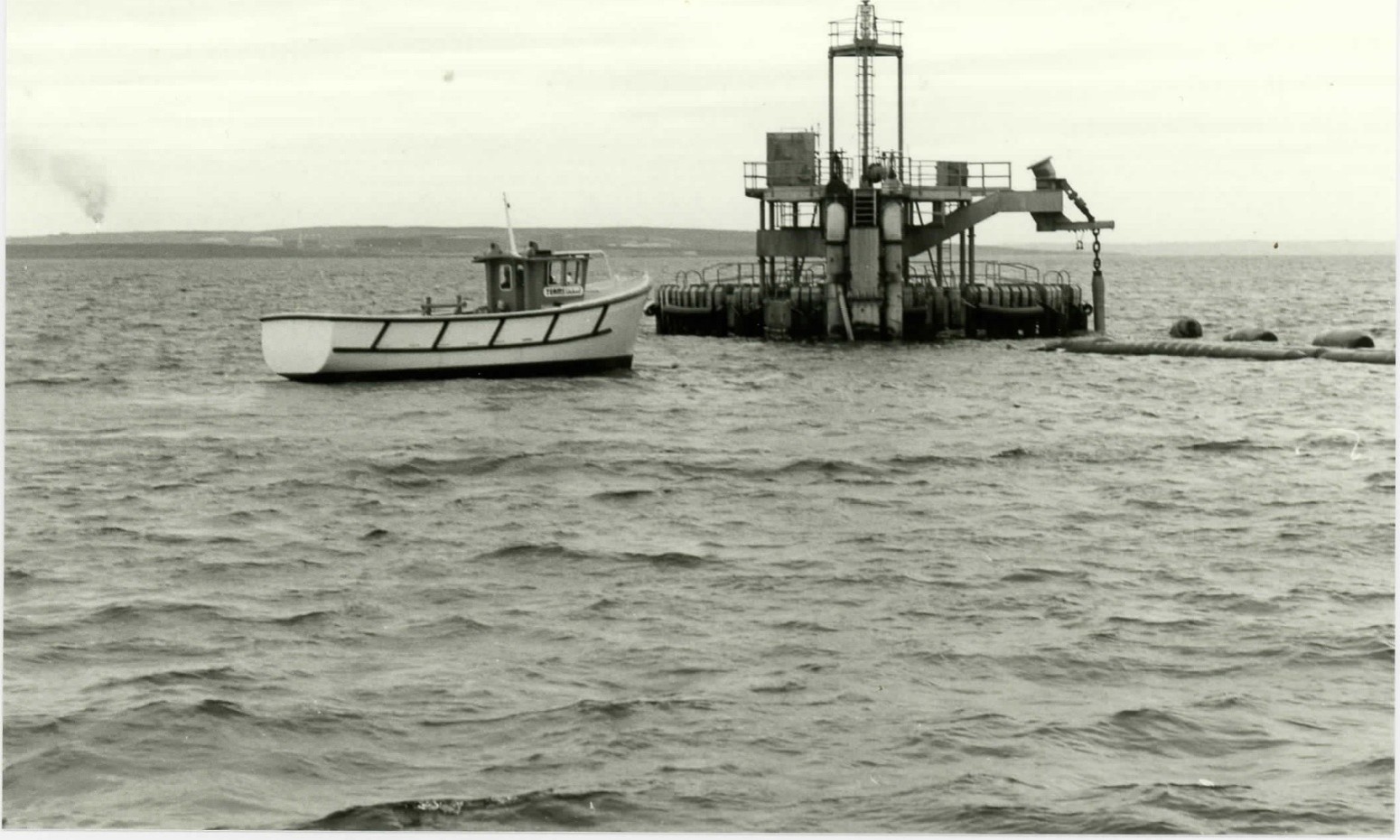
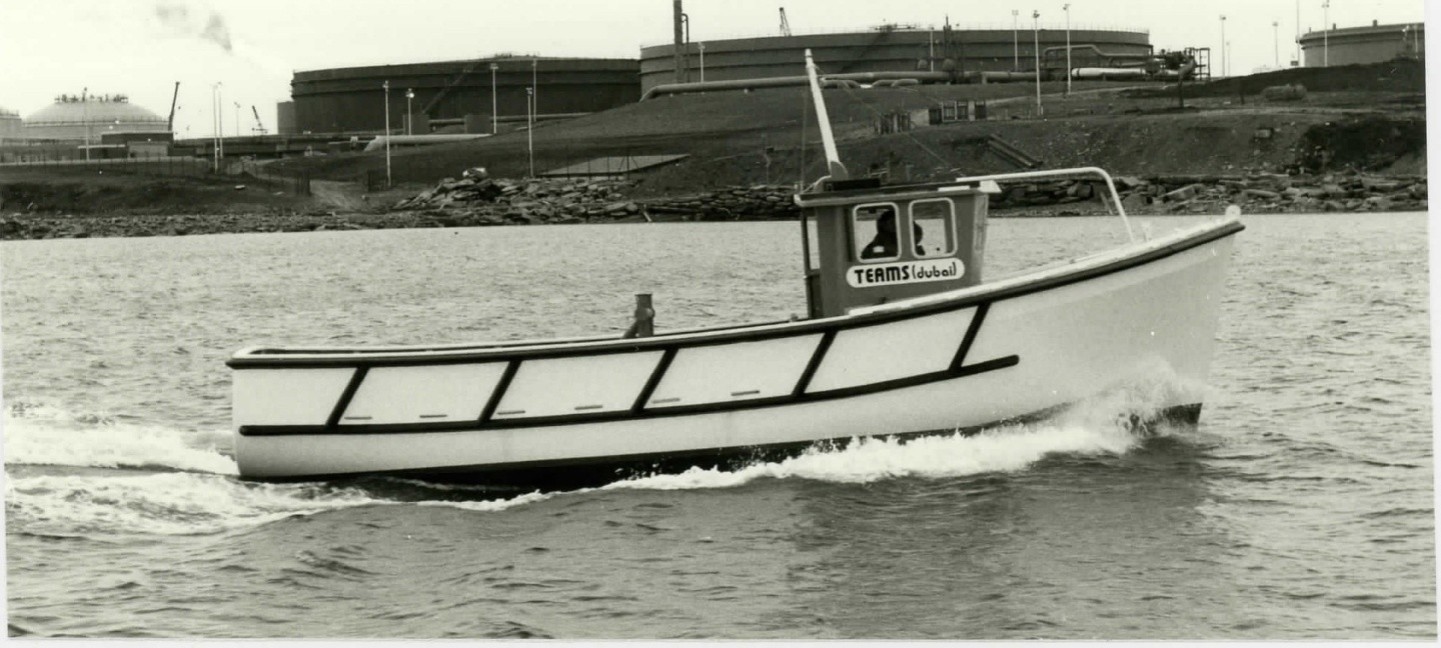
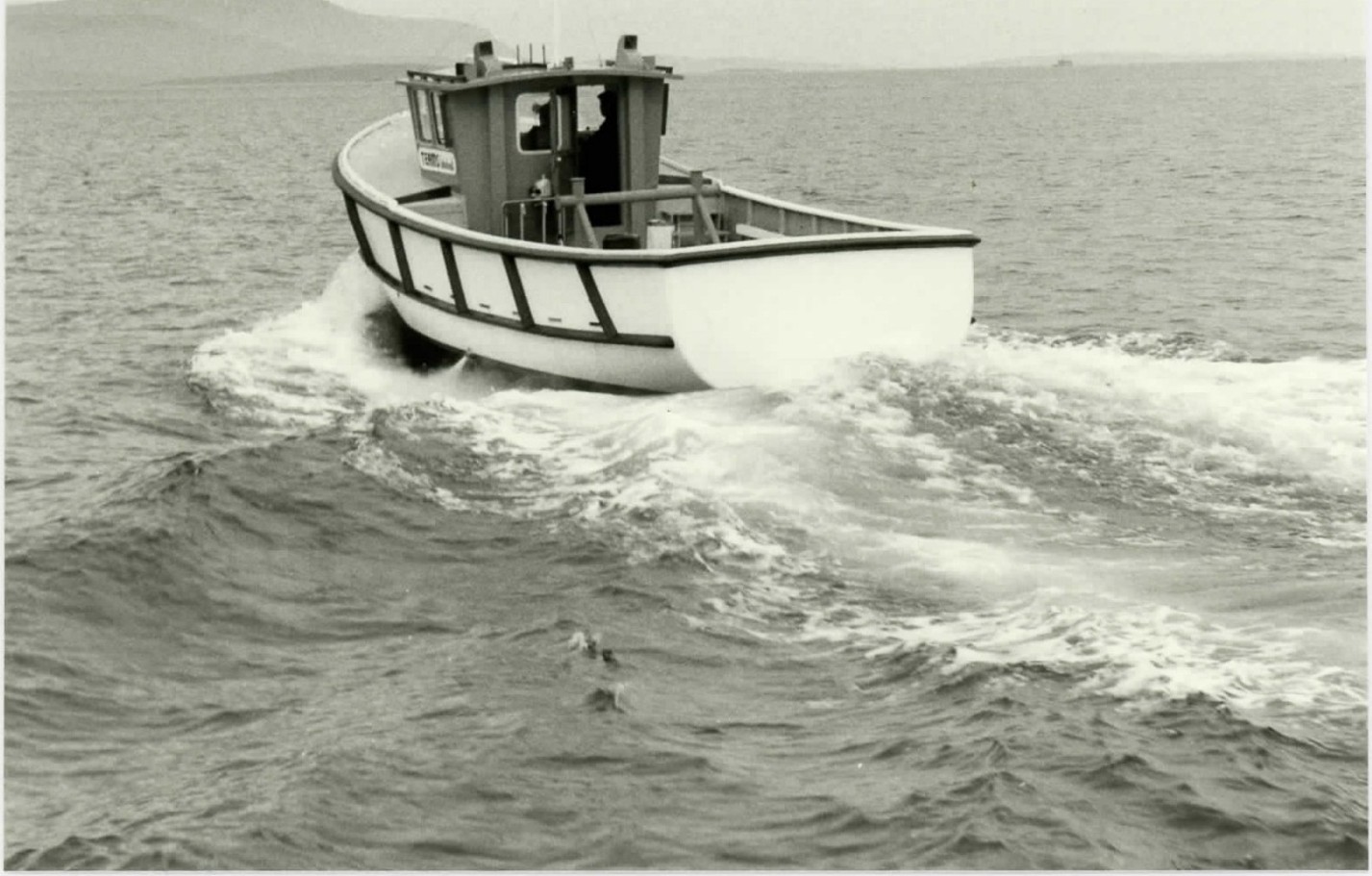
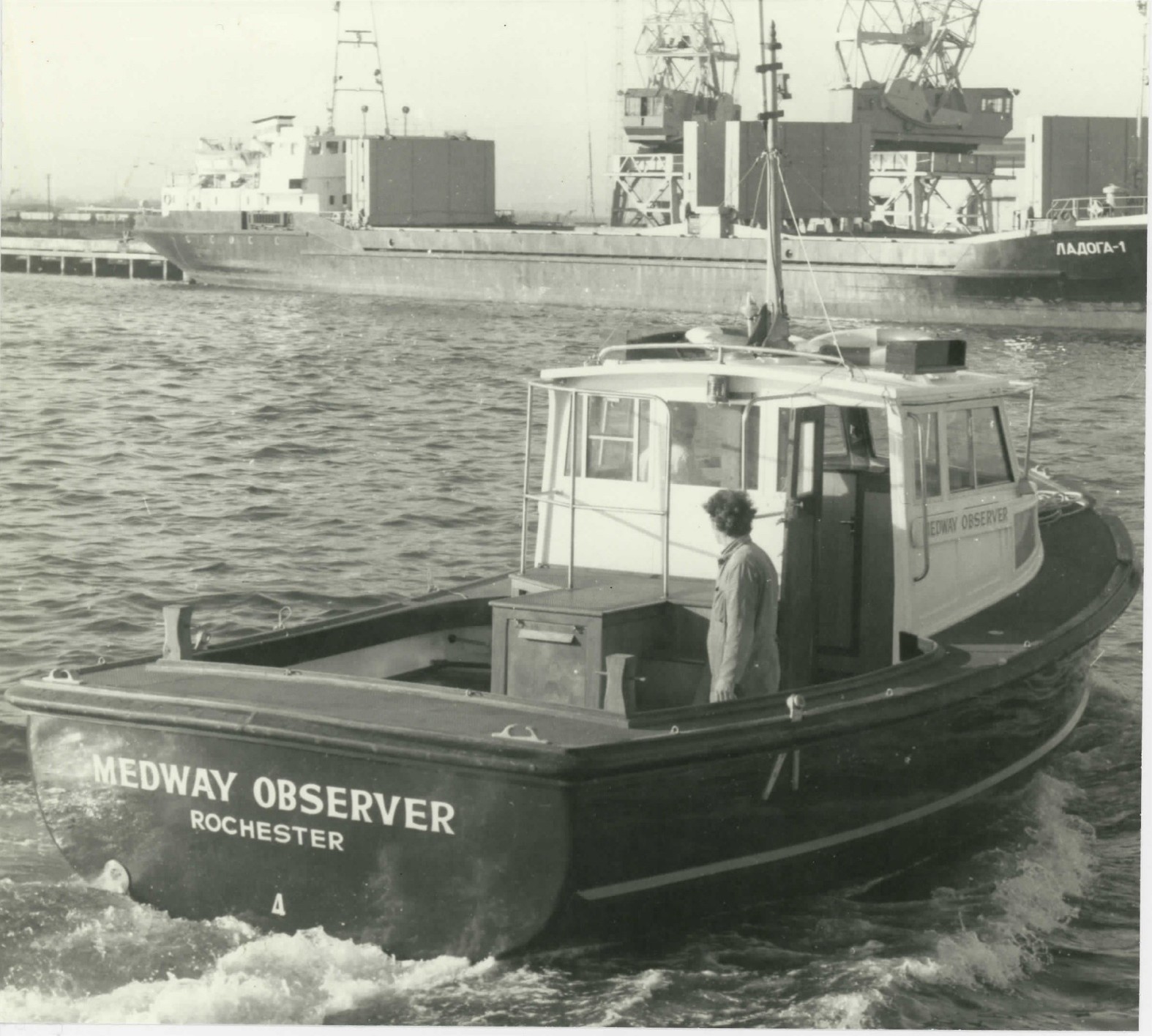
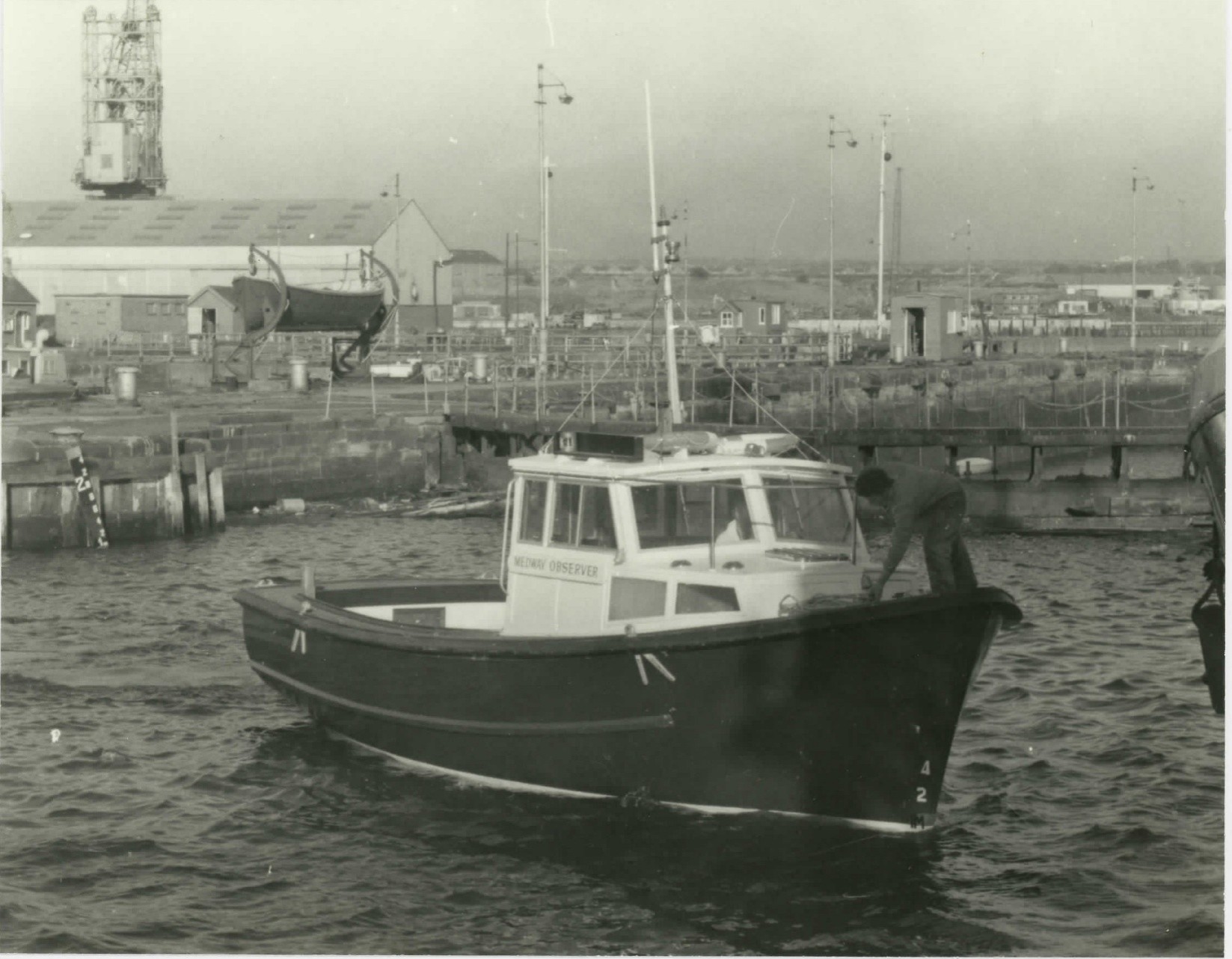
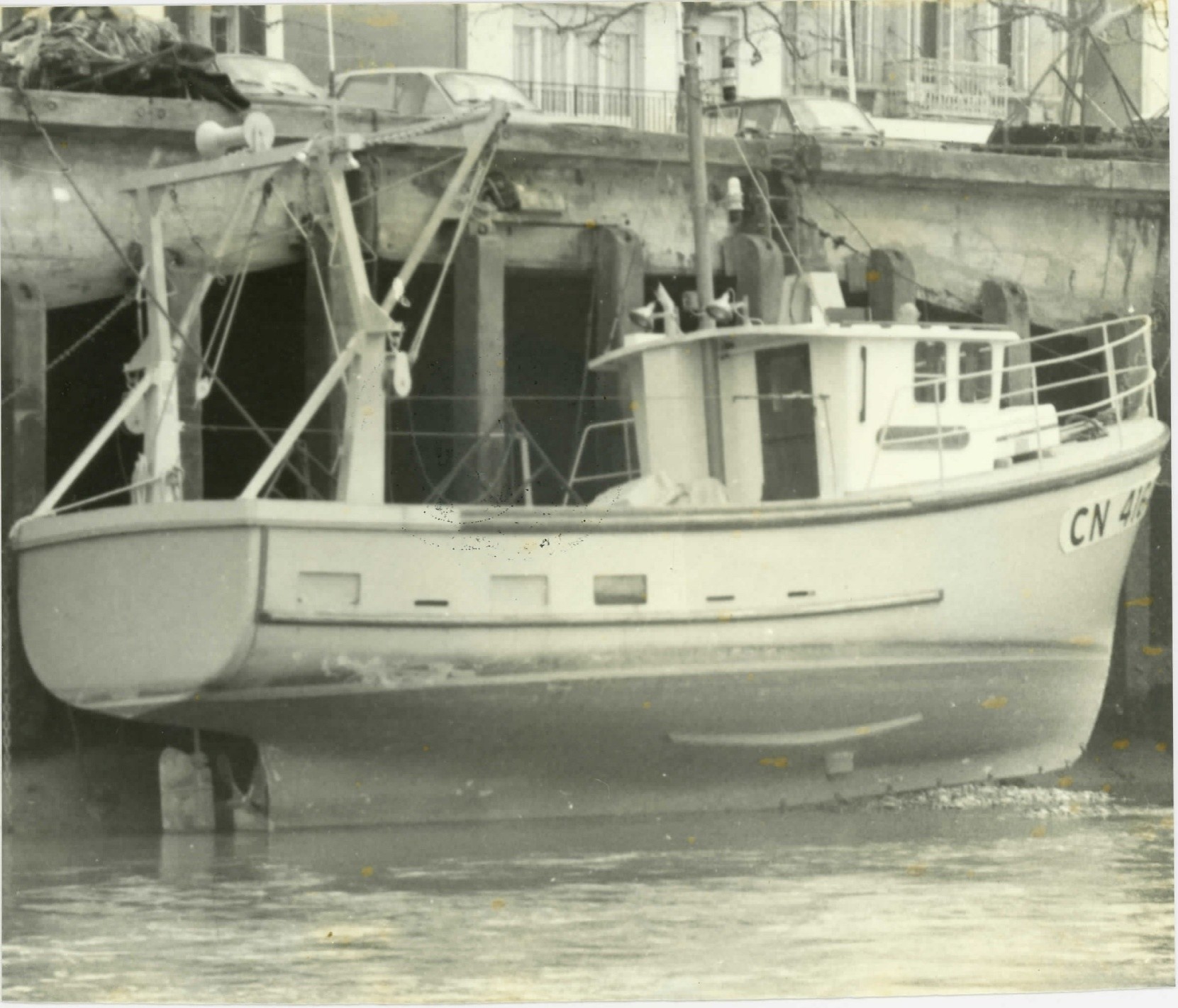
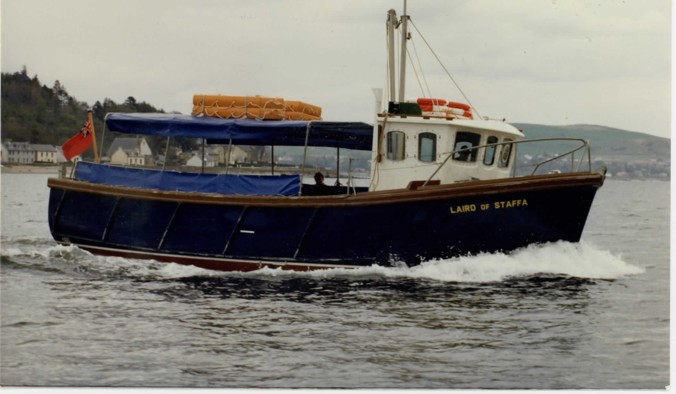
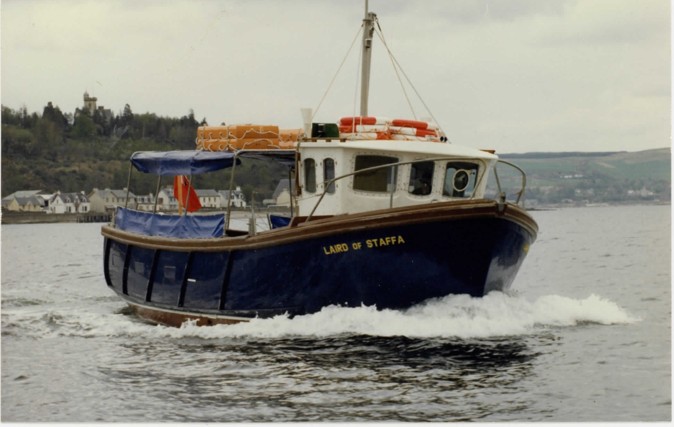
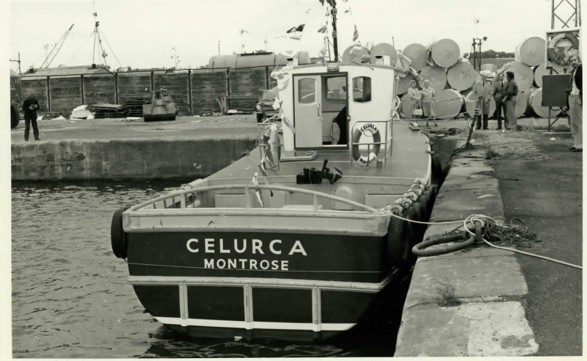
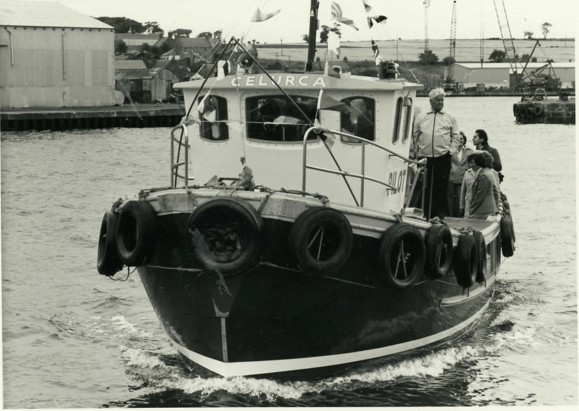
Workboat sales were also encouraging, with hulls completed for 24-foot workboats, a 29-foot Medway pilot and line boat, 36-foot Mk 1 and 2 vessels for Montrose pilots, a passenger boat for Staffa, a workboat for Clyde PA, and three workboats for the Middle East. The 50/54-foot range included a deep-sea cruise yacht for the USA, a 50-foot research vessel, and a 54-foot research vessel for the Clyde River Purification Board.
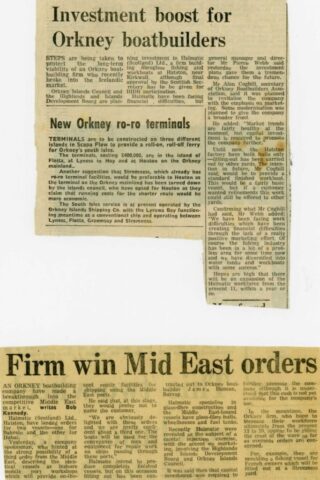
The company’s fortunes worsened in 1977. The effects of EEC legislation on the fishing industry seriously affected sales levels for fishing boats. Government cutbacks enforced on the White Fishing Authority (now SFA) meant that grant and loan assistance for new vessels was halved. The dockers unions secured new and excessive manning and working arrangements with dock employers, forcing them to double handling charges on loading and discharging ships at local ports, which nearly doubled the delivery charges for a 36-foot hull. P&O Ferries took over shipping services from the old North of Scotland Shipping Co Ltd and introduced new RO-RO ships, which heavily increased delivery charges on incoming raw materials. The construction of the Flotta Oil Terminal in Orkney caused the loss of 65% of the company’s skilled labour force, who opted for higher-paid jobs. At the time, the company was unable to offer higher wages to retain key workers due to a ban on wage increases imposed by Edward Heath’s Conservative government. As a result, the company faced declining sales, higher incoming raw material costs, higher outgoing freight costs, and a severe loss of long-serving, loyal, and skilled craftsmen.
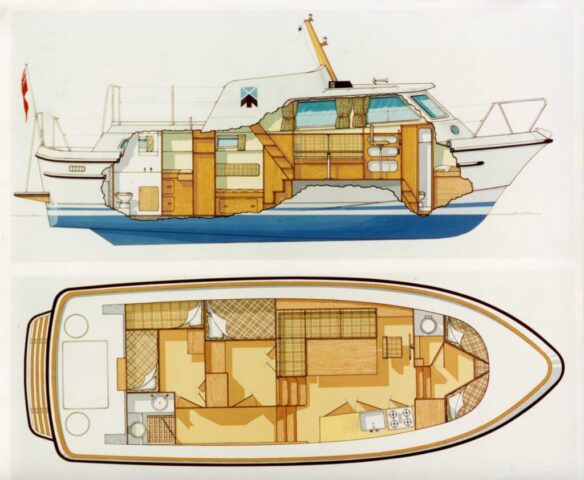
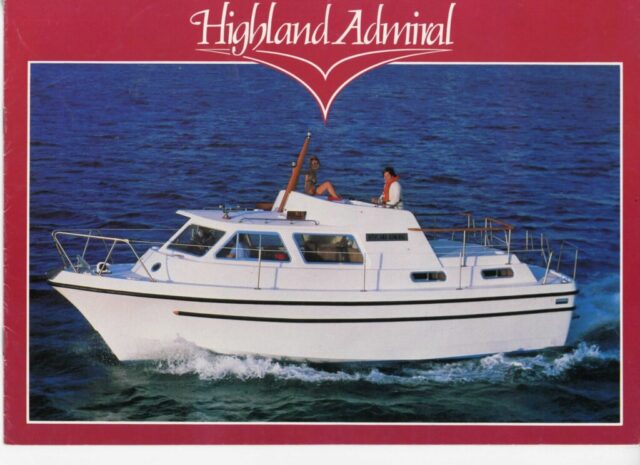
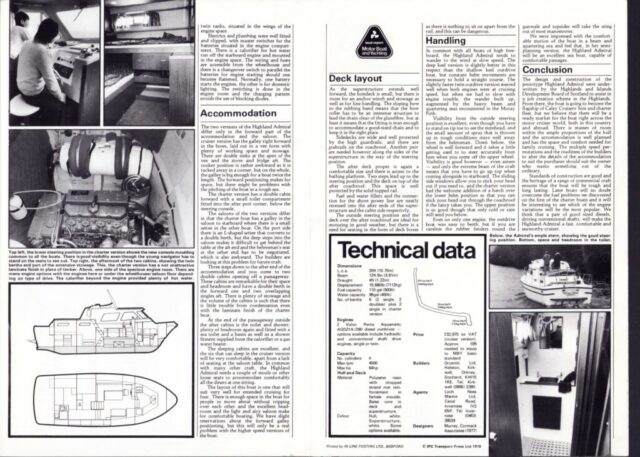
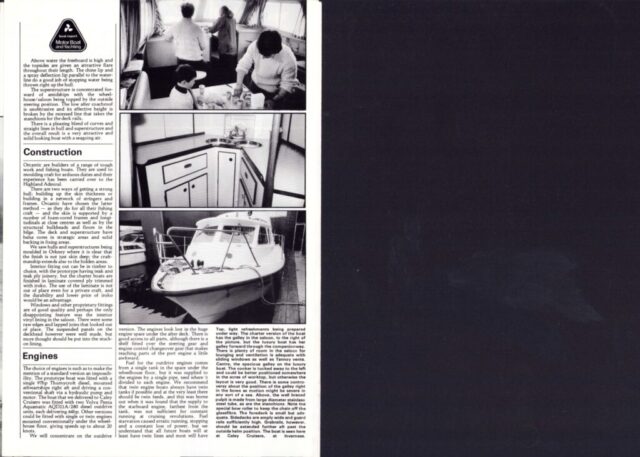
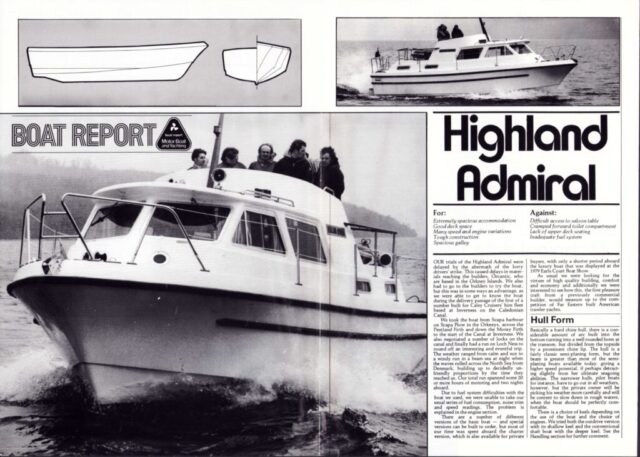
To overcome these problems, Orkney Islands Council took a share in the business and injected some limited new capital to enable the company to undertake diversification plans. To address declining fishing boat sales, a new 35-foot Highland Admiral cruiser yacht was introduced, designed for yacht charter businesses and private customers. A range of modular and one-piece GRP water storage tanks was also introduced. A system of bulk collection of incoming goods was implemented at Aberdeen to reduce freight costs, and a recruitment program was started to rebuild the labour force. Despite these efforts, when four Highland Admirals were completed and several large water storage tanks built, the company’s fortunes did not materially improve. The quality of the new labour recruited from the mainland was poor, with high incidences of turnover, wastage, and short-time working. The substantial markets for the Highland Admiral never materialized, likely because they were too expensive to ship to the south coast of England, where the biggest markets existed. The construction of the water tanks, while ultimately successful, was expensive due to numerous after-sales claims.
Losses began to accumulate in 1978, and these became serious in 1979 when the fishing boat sales almost dried up.
In 1979 (July) the Company was finally liquidated and many other similar companies followed due to a slump in fishing boat orders.
Gallery
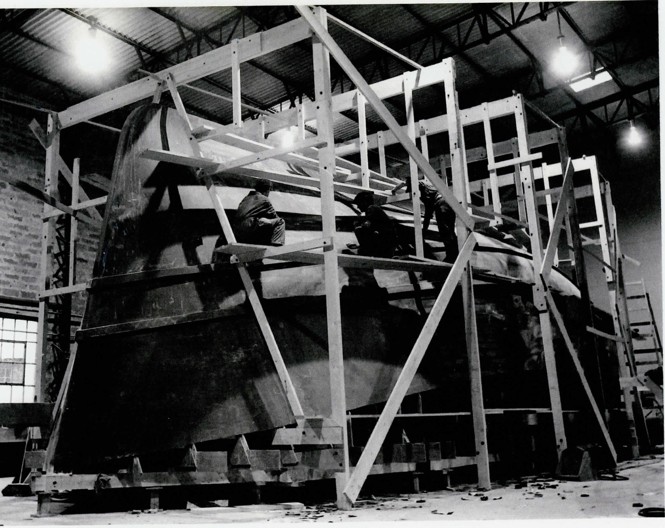
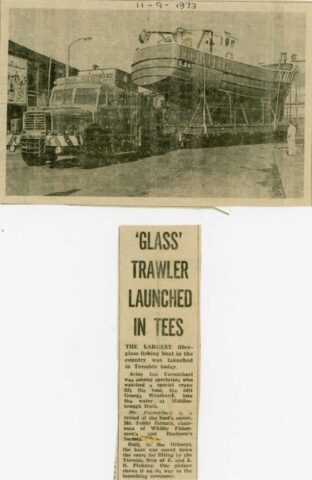
Press & Articles